

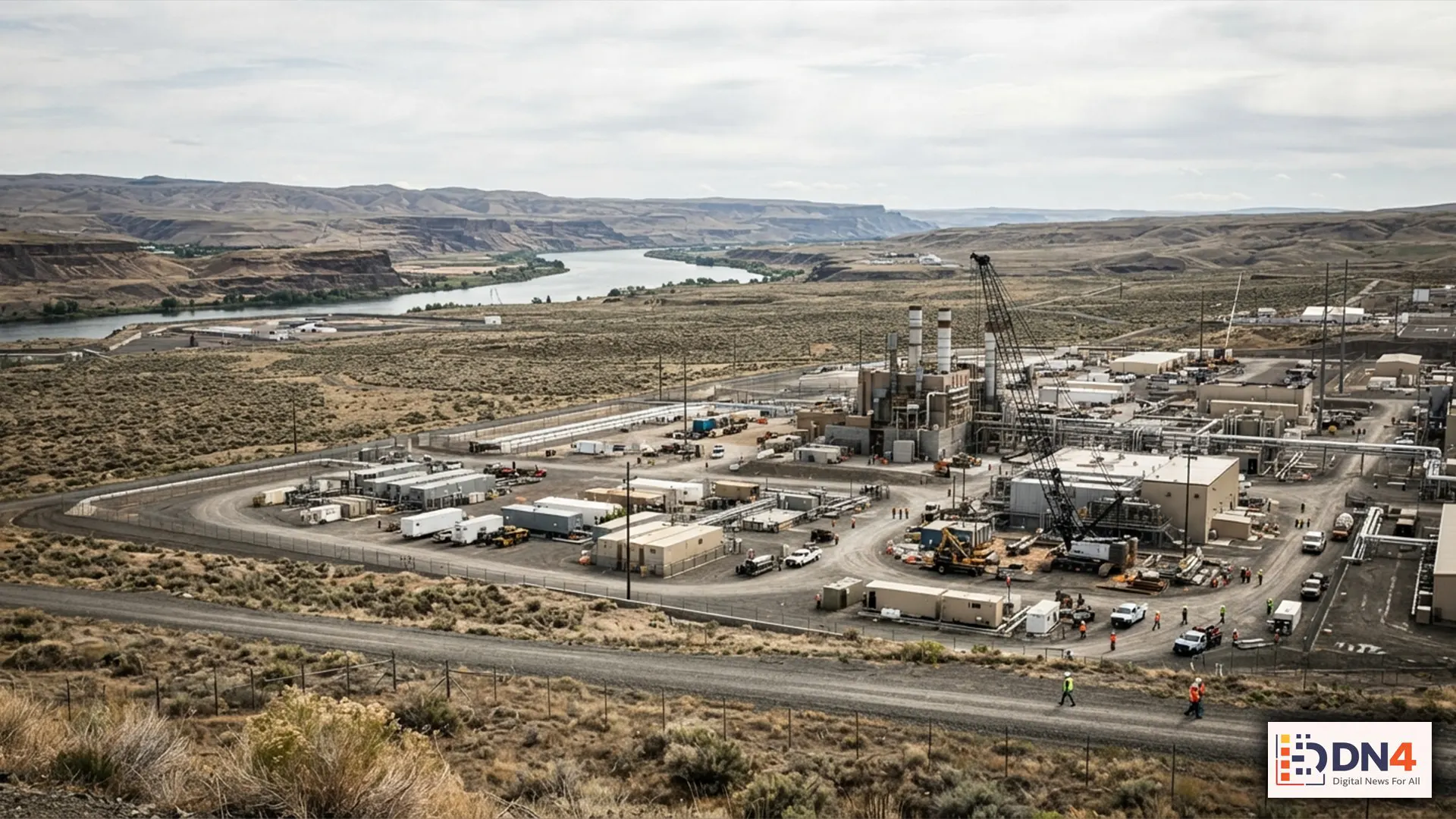
America’s nuclear legacy is still being cleaned up decades after plutonium production ended at the Hanford Site in Washington. In 2026, the massive remediation effort is showing tangible progress, but government watchdogs are also raising questions about costs, aging infrastructure, project planning and whether the Department of Energy is moving as efficiently as possible.
Hanford contains about 55 million gallons of radioactive waste stored in underground tanks, according to the U.S. Government Accountability Office. The site is therefore both an environmental challenge and a long-term national security responsibility.
Important Cleanup Progress
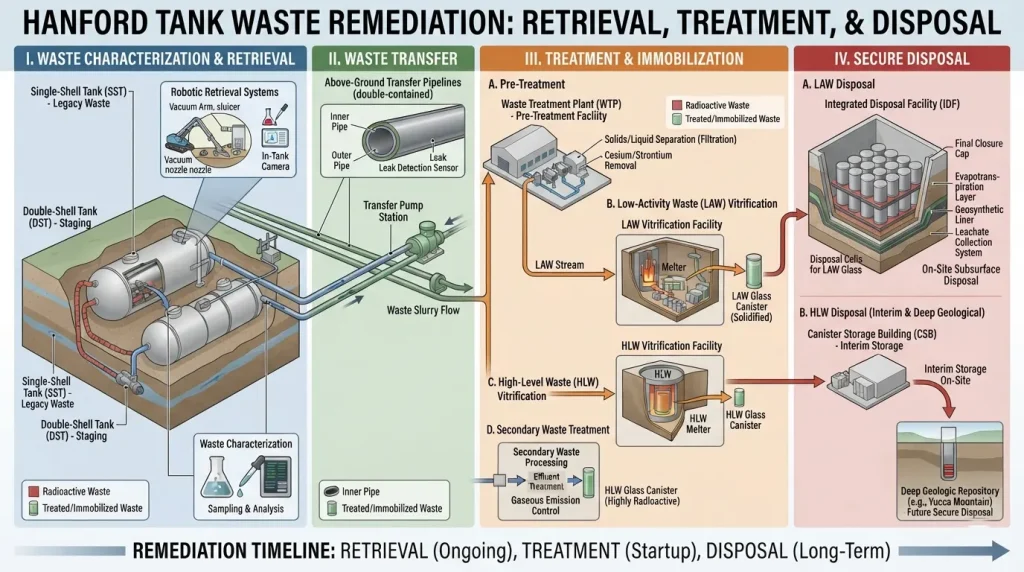
There are signs that the decades-long mission is entering an important operational phase. In May 2026, the Department of Energy reported that crews had removed radioactive waste from the 23rd underground tank, transferring approximately 41,000 gallons from single-shell Tank A-102 to a double-shell tank for safer storage. DOE said total waste removed from the 23 tanks reached about 3.4 million gallons.
The Department of Energy also reported that the Waste Treatment and Immobilization Plant had solidified more than 100,000 gallons of tank waste into glass by May. Vitrification immobilizes radioactive material in a durable glass form designed for disposal.
Why Watchdogs Are Concerned
Progress does not eliminate the financial and management challenges. A May 2026 GAO assessment found that many DOE environmental-management facilities are 50 to 70 years old and beyond their original design life. Across the cleanup program, DOE reported more than $1.5 billion in repair needs as of June 2025, while annual maintenance costs had risen to more than $950 million in 2026.
GAO has also questioned whether DOE consistently considers the full range of possible solutions before committing to large cleanup projects. Its July 2026 review recommended greater use of independent experts to help evaluate alternatives and identify potentially less expensive approaches.
The Cost of a Decades-Long Mission
The broader DOE nuclear cleanup mission is enormous. GAO estimates that cleanup across the United States will cost more than $640 billion and continue for decades. The agency has warned that better project planning, international lessons and stronger oversight could reduce risks and costs.
For Hanford specifically, DOE is evaluating approaches for grouting and disposing of approximately 24 million gallons of low-activity tank waste. The GAO estimates grouting alone could cost $480 million to $1.1 billion, before transportation and disposal expenses.
A New Planning Approach
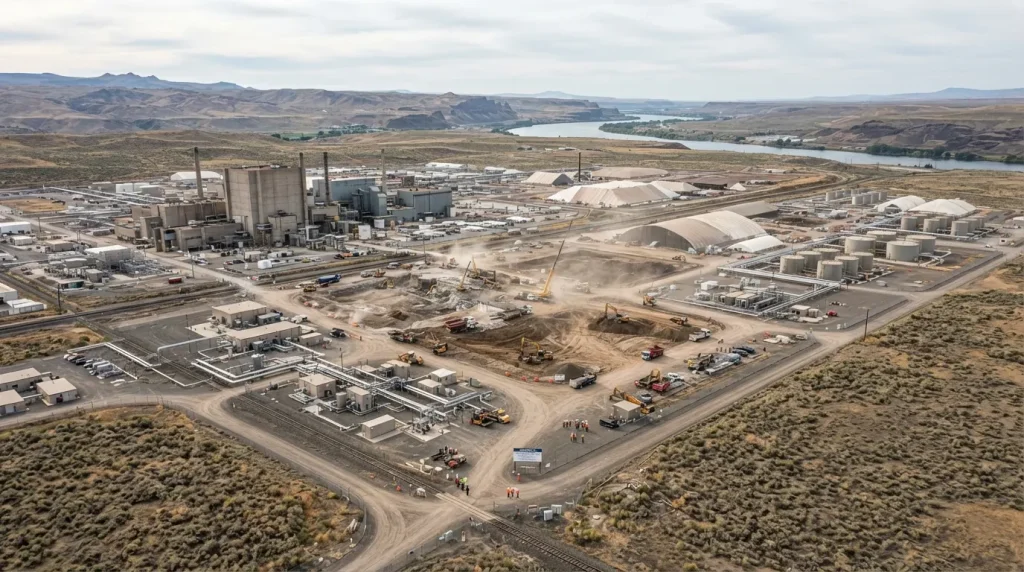
DOE and its regulatory partners announced a revised Hanford cleanup planning framework in July. The new approach is intended to prioritize risk-reduction projects, improve coordination and provide greater flexibility as cleanup conditions evolve.
That shift comes as officials attempt to balance speed with safety. Aging tanks, contaminated groundwater, radioactive materials and complex infrastructure mean that accelerating work cannot come at the expense of worker or environmental protection.
Why Hanford Still Matters
Hanford’s cleanup is about more than removing old waste. It represents the long-term consequences of America’s nuclear weapons program and the government’s responsibility to manage those consequences safely.
Hanford is making measurable progress, but the mission remains far from finished. The challenge for DOE is to maintain momentum while demonstrating that cleanup decisions are safe, transparent, cost-conscious and supported by rigorous oversight.
#Hanford #NuclearCleanup #RadioactiveWaste #DOE #EnvironmentalCleanup #NuclearSafety #WashingtonState #EnergyPolicy