


Mortgage borrowers face a difficult decision in August 2026: lock in a rate now or wait for a potentially better deal. The Federal Reserve kept its federal-funds target range at 3.50% to 3.75% at its July 29 meeting. The Federal Reserve’s latest policy statement shows that policymakers continue to weigh inflation, employment and economic uncertainty.
However, the Fed does not directly set the interest rate consumers receive on a 30-year mortgage. Mortgage pricing is also influenced by Treasury yields, mortgage-backed securities and broader financial-market conditions. That means a Fed rate decision does not automatically translate into cheaper home loans.
When Should You Lock a Mortgage Rate?
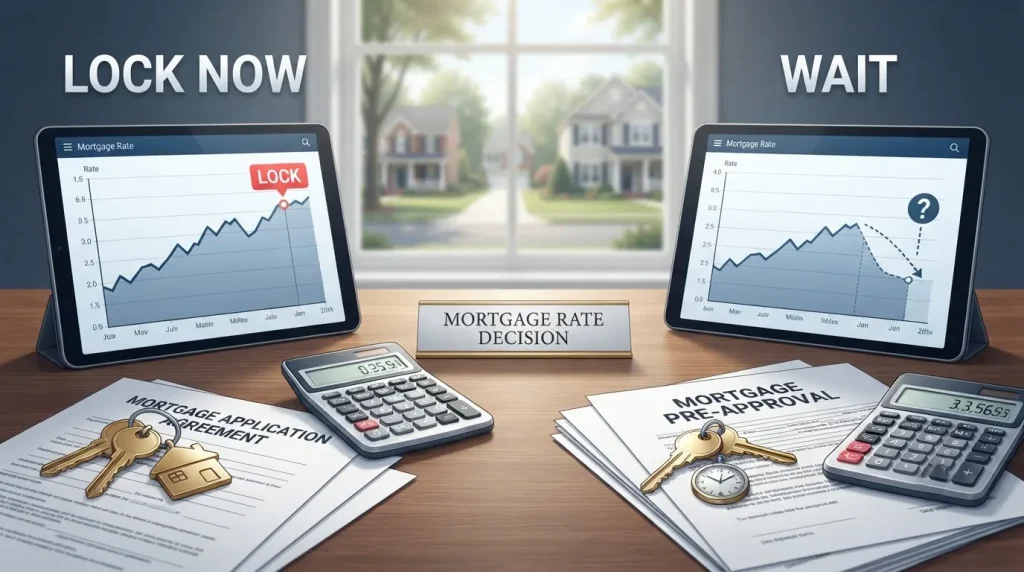
For buyers who have found a home, have an accepted offer and are comfortable with the payment, a mortgage rate lock can provide valuable certainty. The Consumer Financial Protection Bureau’s mortgage rate-lock guidance explains that a lock generally protects the borrower from rate changes before closing, subject to the lender’s terms and closing timeline.
Before locking, ask about the lock period, extension charges and whether the lender offers a float-down option if rates decline. Borrowers should also compare the rate and costs shown on their CFPB Loan Estimate rather than focusing solely on the headline interest rate.
Could Refinancing Make Sense?
Existing homeowners should evaluate refinancing based on the complete cost of the new loan. A lower interest rate can reduce monthly payments, but closing costs, points and a new loan term can change the overall economics.
The CFPB mortgage resources explain the key costs borrowers should review when comparing loan offers. Homeowners should request multiple estimates and compare interest rates, upfront charges, lender credits and projected monthly payments.
Calculate the Refinance Break-Even Point
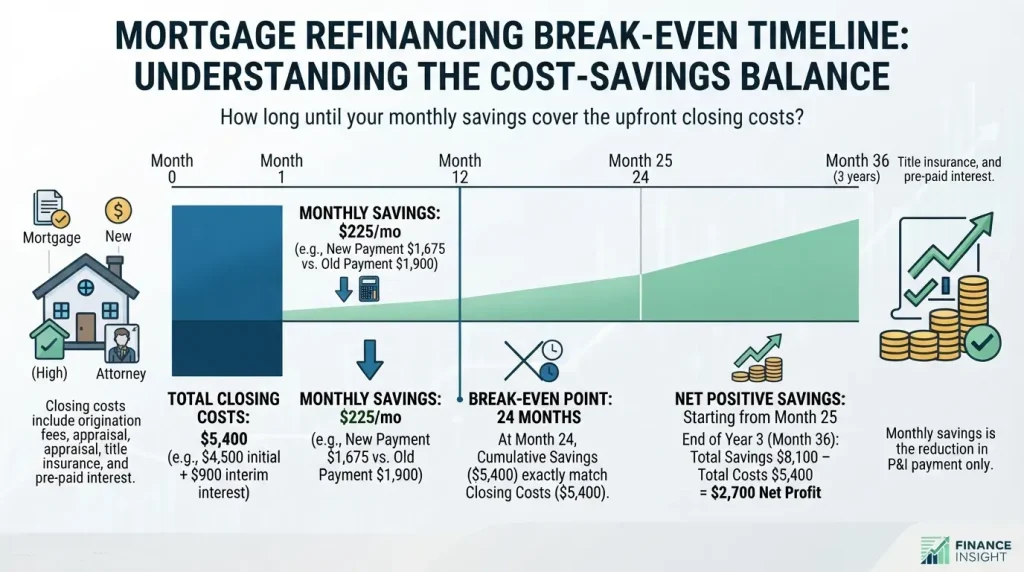
A useful starting point is the break-even calculation: divide total refinancing costs by expected monthly savings. For example, $6,000 in refinancing costs divided by $300 in monthly savings equals a 20-month break-even period.
If you expect to remain in the home well beyond that point, refinancing may warrant a closer look. But borrowers should also consider whether restarting or extending the loan term could increase total interest paid. The CFPB’s explanation of no-cost refinancing highlights the trade-offs that can accompany reduced upfront costs.
What Borrowers Should Do Now
There is no guaranteed perfect moment to lock or refinance. Buyers who value payment certainty may prefer locking once they have a competitive offer and a realistic closing timeline. Homeowners considering refinancing should focus on total borrowing costs instead of trying to predict the next Federal Reserve move.
Before making a decision, compare several Loan Estimates, check the break-even period and ask lenders what happens if mortgage rates move after a lock. The Freddie Mac Primary Mortgage Market Survey can also provide useful context on broader mortgage-rate trends.
A mortgage decision should be based on your financial position, expected time in the home and tolerance for rate uncertainty—not simply on predictions about what the Federal Reserve might do next.
#MortgageRates #FederalReserve #Mortgage #Refinance #HomeBuying #PersonalFinance #HousingMarket #InterestRates #digitalnewsforall