

For everyday internet users, 2026 is another important year in the evolution of U.S. data privacy. Americans are increasingly navigating a patchwork of federal rules and state privacy laws that govern how companies collect, process, share and protect personal information.
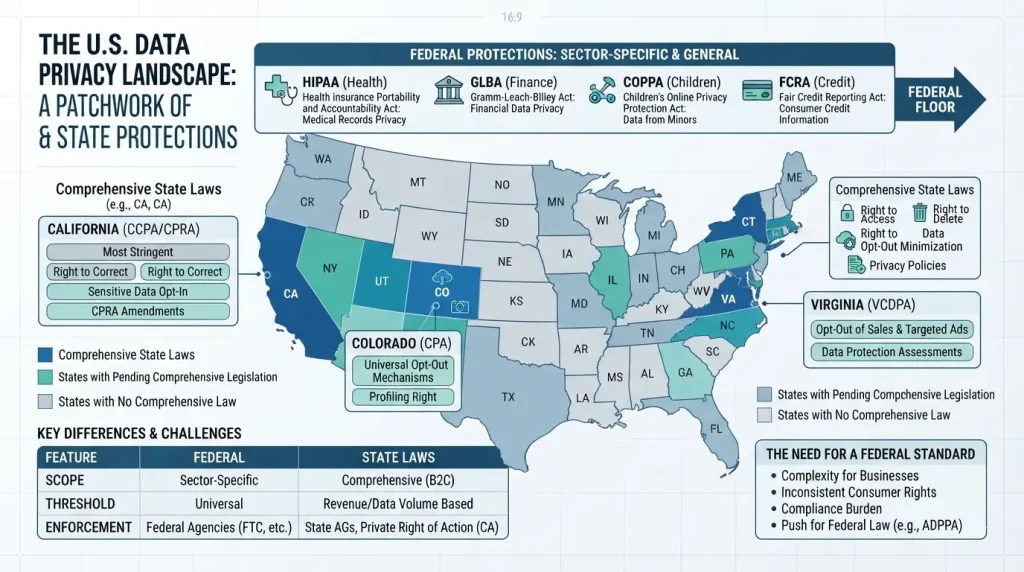
Unlike the European Union’s single comprehensive privacy framework, the United States does not currently have one overarching federal consumer privacy law covering every business and every type of personal data. Instead, protections come from federal agencies, sector-specific laws and an expanding collection of state statutes.
Why State Privacy Laws Matter
States have increasingly filled the gap by passing their own comprehensive privacy laws. The International Association of Privacy Professionals’ state privacy law tracker provides an overview of the rapidly expanding U.S. privacy landscape.
These laws can give consumers rights to access information companies hold about them, request corrections, delete certain data and opt out of some forms of targeted advertising or data sales. However, eligibility, exemptions and deadlines vary from state to state.
What Federal Regulators Are Doing
Federal oversight remains important even without a single comprehensive privacy statute. The Federal Trade Commission, for example, enforces rules addressing deceptive or unfair data practices and specific privacy obligations in certain industries.
The FTC’s broader consumer-protection authority can also become relevant when companies make misleading claims about how they collect, secure or use personal information.
Other federal protections apply to specific categories of information. The U.S. Department of Health and Human Services’ HIPAA Privacy Rule establishes federal protections for certain health information handled by covered entities and business associates.
What About Children’s Data?
Children’s online privacy has received particular attention from federal regulators. The FTC’s Children’s Online Privacy Protection Rule, commonly known as COPPA, establishes requirements for operators of certain websites and online services directed toward children under 13.
Parents should remember that privacy protections can depend on the type of service, the child’s age and the information being collected.
What Data Are Companies Collecting?
Modern websites and apps can collect far more than names and email addresses. Depending on the service, data collection can include location information, browsing behavior, device identifiers, purchase histories, preferences and information used to personalize advertising.
The FTC’s privacy and security guidance for businesses emphasizes principles such as data minimization, appropriate security practices and transparency about information collection and use.

What Can Consumers Do?
Consumers do not need to become privacy experts to reduce their digital exposure. Start by reviewing privacy settings on major accounts and devices. Limit unnecessary app permissions, use strong and unique passwords, enable multifactor authentication and think carefully before granting an application access to contacts, location or other sensitive information.
When a privacy law applies to you, you may also be able to submit a request to a company to access, correct or delete certain personal information. The Consumer Financial Protection Bureau also provides information about privacy rights related to financial institutions and consumer financial information.
The Privacy Landscape Is Still Evolving
The biggest challenge for consumers is that privacy rights can depend on where they live, what information is involved and which company is collecting it. Businesses may also have different obligations depending on their size, industry and activities.
That makes privacy increasingly similar to a state-by-state consumer-rights system rather than one uniform national rulebook.
Data privacy in 2026 is becoming more important—and more complicated. Consumers have more legal protections than they did in previous years, but those protections vary considerably. Understanding basic privacy settings, knowing what information companies collect and learning which rights apply in your state can help you take greater control of your digital footprint.
#DataPrivacy #PrivacyLaws #OnlinePrivacy #Cybersecurity #ConsumerRights #DigitalPrivacy #TechNews #InternetSafety