

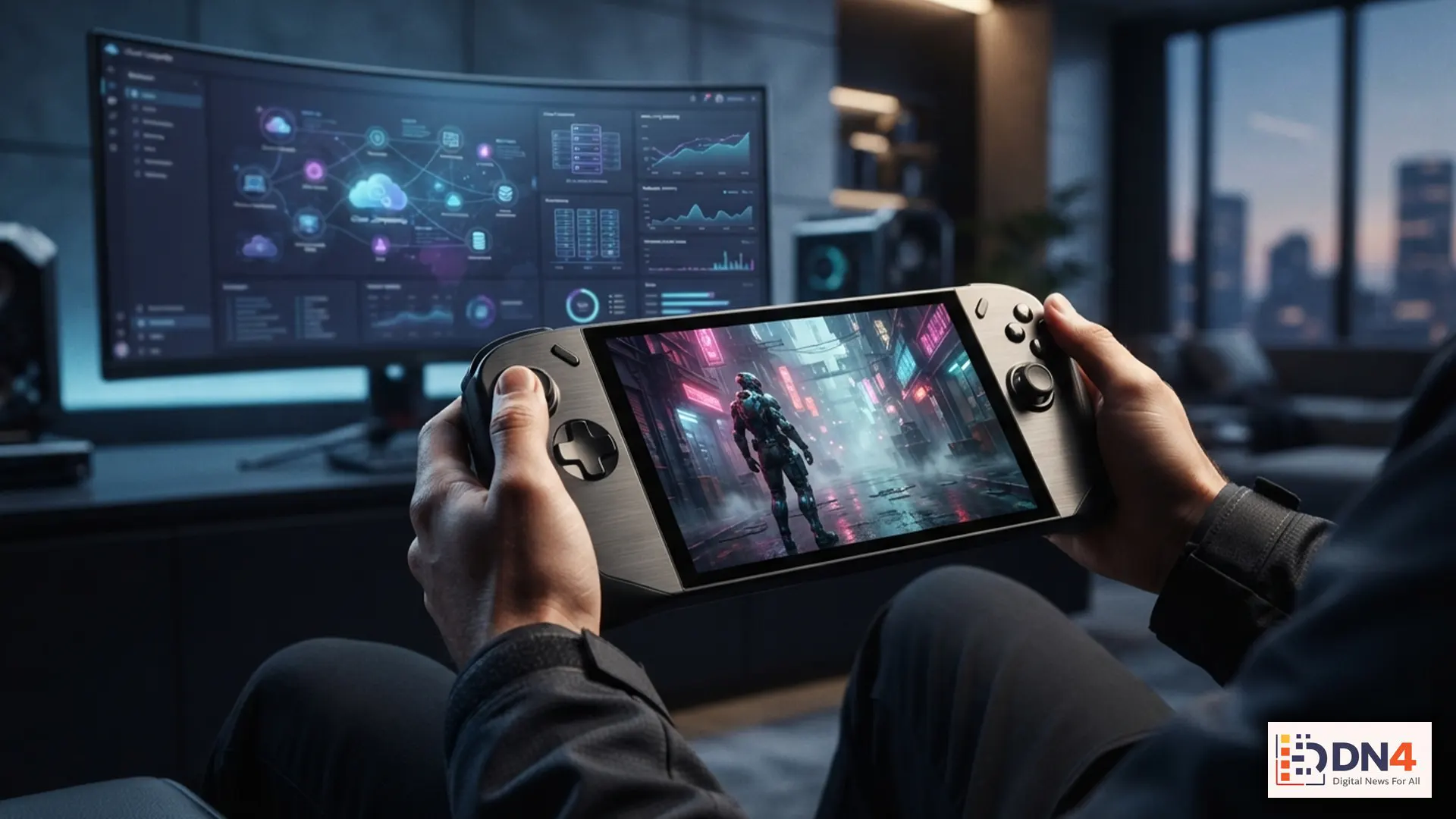
The traditional gaming console is no longer the only gateway to high-end games. Cloud services, faster wireless networks and increasingly capable handheld devices are changing where and how players access their libraries. From dedicated handhelds to gaming PCs and phones paired with controllers, the boundaries between console, mobile and cloud gaming are becoming increasingly blurred.
The shift is already visible across major platforms. NVIDIA GeForce NOW supports gaming on phones, tablets, PCs, TVs and handhelds, while allowing users to connect supported PC game libraries and stream them from NVIDIA’s cloud infrastructure.
Handhelds Are Becoming More Than Portable Consoles
Modern handheld gaming devices increasingly combine local hardware with cloud access. That gives players a choice: install games directly when the hardware can handle them, or stream demanding titles when they want to save storage, battery or processing power.
Microsoft is pushing this hybrid approach with its ROG Xbox Ally family. Xbox says supported games can be streamed through Xbox Cloud Gaming, while select titles can also be downloaded and played locally. Progress, saves and add-ons can move between compatible devices.
PlayStation Is Betting on the Same Future
Sony’s PlayStation Portal offers another example of the changing model. Initially designed primarily for Remote Play, the device expanded into cloud gaming for PlayStation Plus Premium subscribers in late 2025.
According to PlayStation’s official announcement, eligible users can stream select PS5 games from their digital library as well as games available through supported PlayStation Plus catalogs.
Sony subsequently reported that monthly PlayStation Portal cloud-streaming users grew 162% year over year in January 2026. A March 2026 update also added a 1080p High Quality mode, showing that Sony continues to improve the cloud experience on the handheld.
Why Cloud Gaming Makes Sense on Handhelds
The biggest advantage is processing power. Instead of rendering a demanding game entirely on the handheld, cloud servers perform the heavy graphical work and send the resulting video stream to the device.
That can allow relatively compact hardware to access games that would otherwise require a much more powerful PC or console. It can also reduce the need for large game installations and frequent updates on the handheld itself.
For players who already own a gaming PC or console, cloud and remote streaming can effectively turn another screen into an extension of that ecosystem.
The Internet Is Still the Weak Link
Cloud gaming’s biggest limitation is also its defining requirement: connectivity. Unlike a locally installed game, a cloud session depends on a continuous connection between the player and the remote server.
Research into cloud gaming has found that bandwidth, latency, network conditions and even the type of gameplay can influence the experience. A peer-reviewed research study on GeForce NOW and Xbox Cloud Gaming found that cloud gaming requires substantially more network capacity than conventional console gameplay and that connectivity conditions can affect performance.
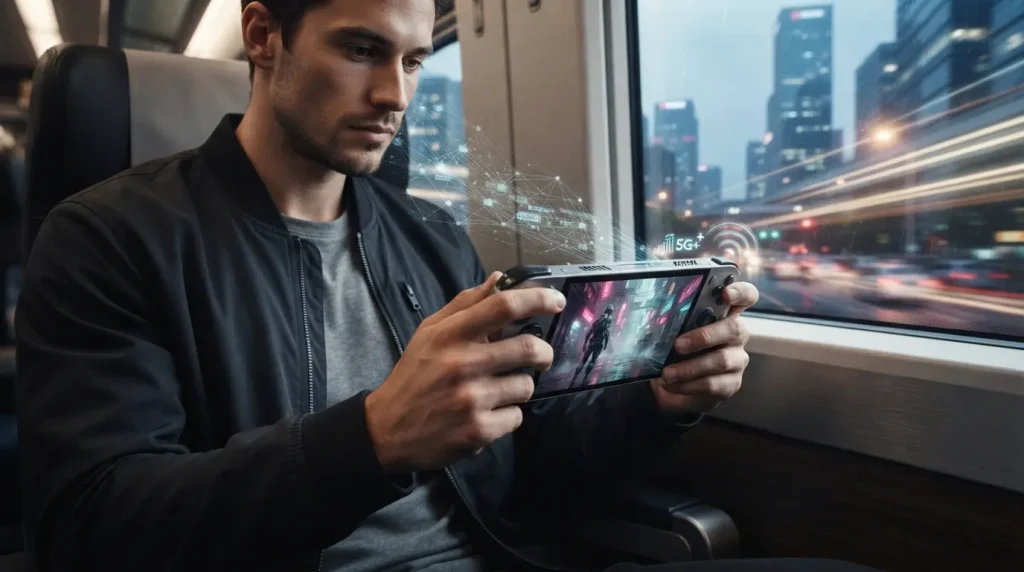
That makes cloud gaming particularly attractive in locations with fast, reliable broadband or strong 5G connectivity—but considerably less appealing when connections are unstable.
Are Traditional Consoles Actually Disappearing?
Not yet. The rise of handheld cloud gaming is better understood as an expansion of the gaming ecosystem rather than an immediate replacement for consoles.
Dedicated consoles still offer predictable performance, local game installations, high-quality graphics and reliable play without depending on an internet connection. They also remain important for players who want to own physical media or maintain large locally stored libraries.
At the same time, cloud gaming could reduce the need for every player to purchase the most powerful hardware. Take-Two Interactive CEO Strauss Zelnick recently predicted that the games industry could enter a more commercially significant streaming era within three years as latency technology improves.
The Future May Be Hybrid
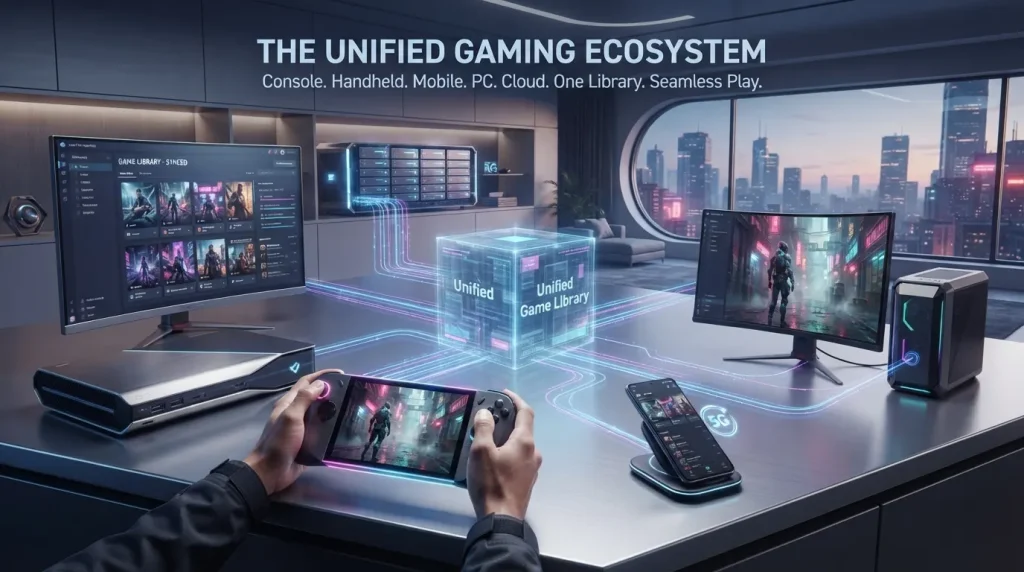
The most likely outcome is not a world without consoles but a world in which consoles, handhelds, smartphones and cloud servers work together.
A player could own a powerful home console, continue playing locally on the television, then pick up a handheld and stream the same game while traveling. Another player might skip a traditional console entirely and use a handheld as the main gateway to cloud services.
Cloud gaming handhelds are unlikely to kill traditional consoles overnight, but they are changing what players expect from gaming hardware. The real revolution may be less about replacing consoles and more about making the device itself less important than the game library and cloud service behind it.
#CloudGaming #HandheldGaming #Gaming #Xbox #PlayStation #SteamDeck #GeForceNOW #GamingNews