

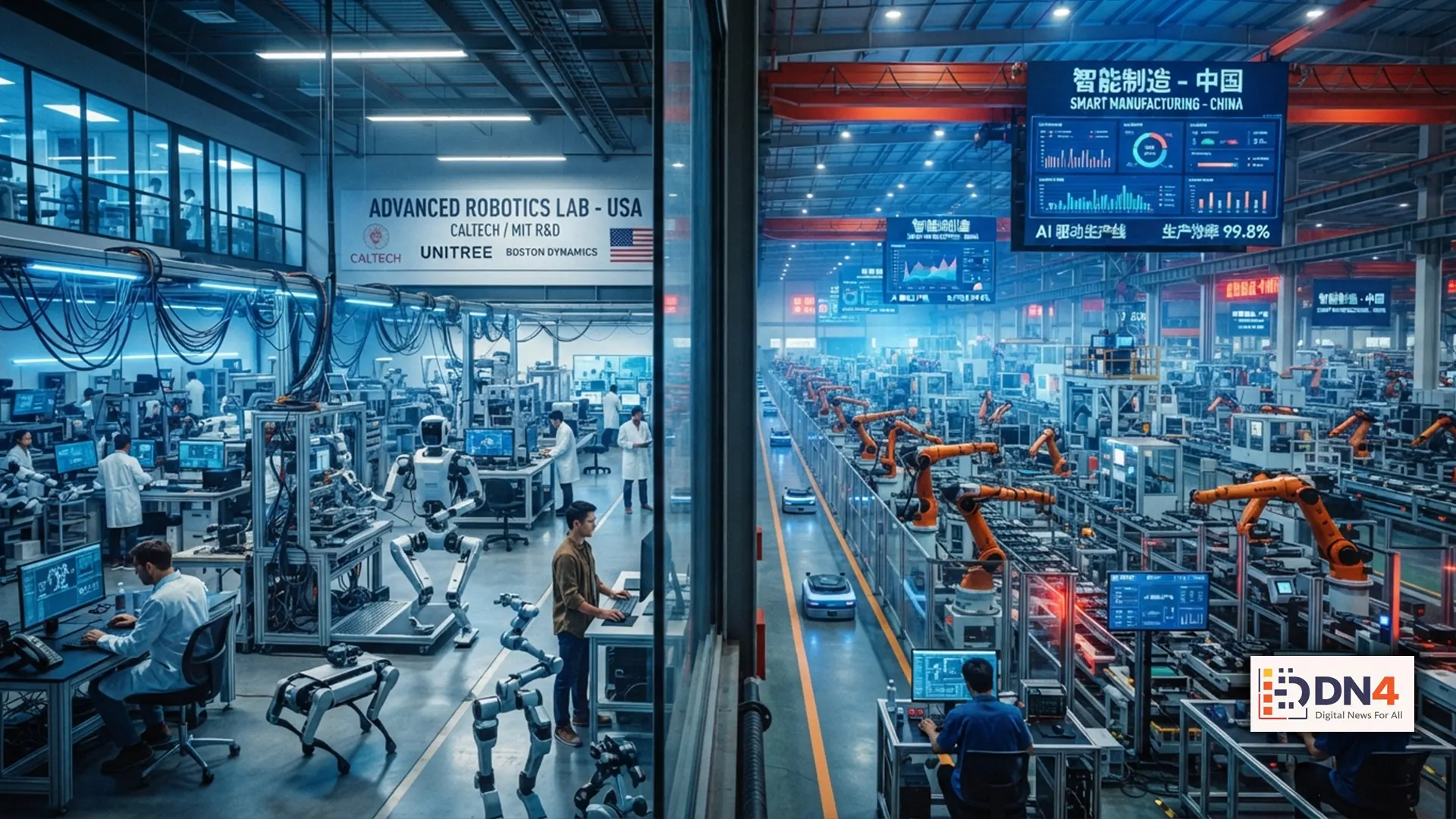
China’s rapid expansion in industrial robotics and advanced manufacturing has become one of the defining technology stories of the decade. Massive investments in automation, artificial intelligence (AI), semiconductor production, and smart factories are helping Chinese manufacturers increase efficiency while reducing production costs. Meanwhile, the United States continues to rely on its engineering leadership, research ecosystem, and private-sector innovation to remain globally competitive. The question is no longer whether China can compete—but whether American engineering can slow its remarkable industrial rise.
China’s Manufacturing Momentum
China has aggressively expanded robotics adoption through government-backed industrial policies, large-scale investment, and domestic technology companies. Automated factories, AI-driven production systems, and electric vehicle manufacturing have become strategic priorities, allowing Chinese firms to improve productivity and compete globally.
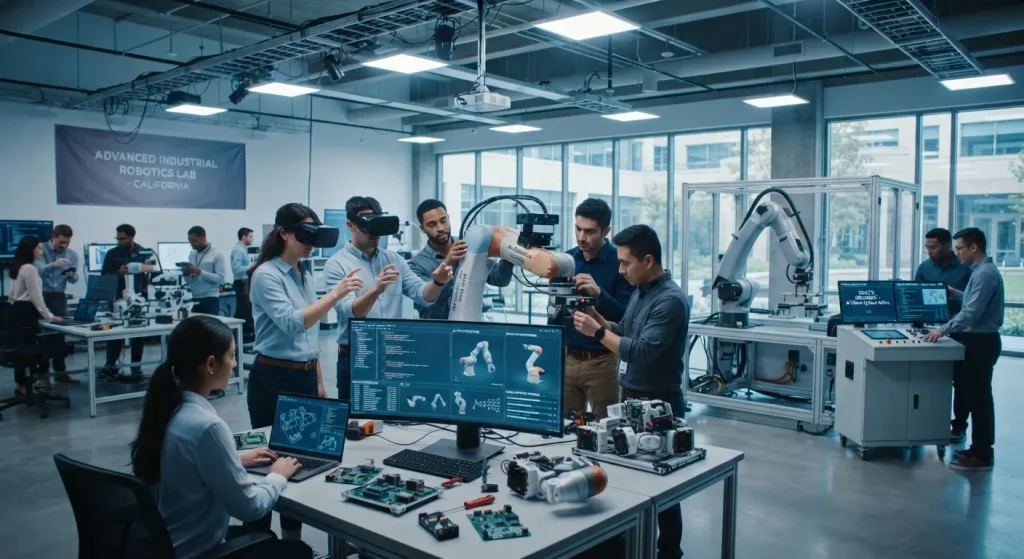
America’s Competitive Advantage
The United States remains a global leader in engineering research, advanced software, semiconductor design, aerospace, and cutting-edge robotics innovation. Universities, technology startups, and companies continue to pioneer next-generation manufacturing solutions, supported by significant public and private investment.
Innovation vs. Scale
While American firms often lead in breakthrough technologies, China benefits from unmatched manufacturing scale, integrated supply chains, and rapid commercialization. This combination enables faster deployment of industrial robots across factories, accelerating productivity gains.
- AI-powered factory automation
- Advanced semiconductor manufacturing
- Industrial IoT integration
- Robotics software innovation
- Supply chain resilience
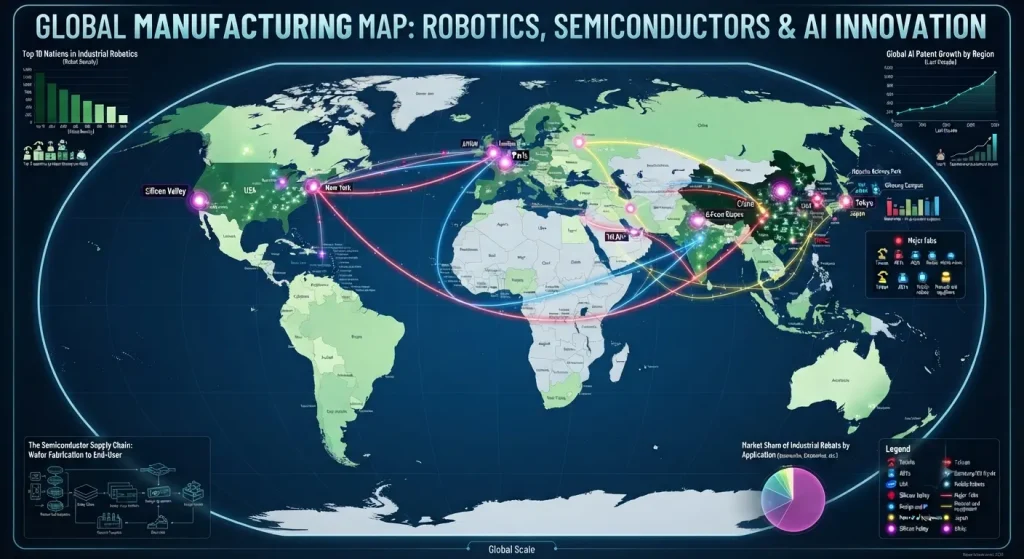
The Road Ahead
Rather than completely slowing China’s rise, American engineering is more likely to shape a highly competitive global innovation race. Success will depend on sustained investment in research, workforce development, semiconductor manufacturing, AI infrastructure, and international partnerships. Healthy competition may ultimately accelerate technological progress worldwide while offering manufacturers greater efficiency and resilience.
- International Federation of Robotics
- U.S. National Institute of Standards and Technology
- McKinsey & Company Manufacturing Insights
- OECD Technology Reports
- World Economic Forum
- Brookings Institution
The competition between American engineering and China’s industrial manufacturing capabilities will define the future of global technology leadership. While China continues expanding production capacity at an extraordinary pace, U.S. innovation remains a powerful force in advanced robotics, AI, and semiconductor development. Rather than producing a single winner, this rivalry is likely to accelerate innovation, reshape global supply chains, and transform manufacturing for decades to come.
#ChinaRobotics #IndustrialAutomation #Manufacturing #ArtificialIntelligence #AdvancedManufacturing #SmartFactories #Engineering #Innovation #Technology