

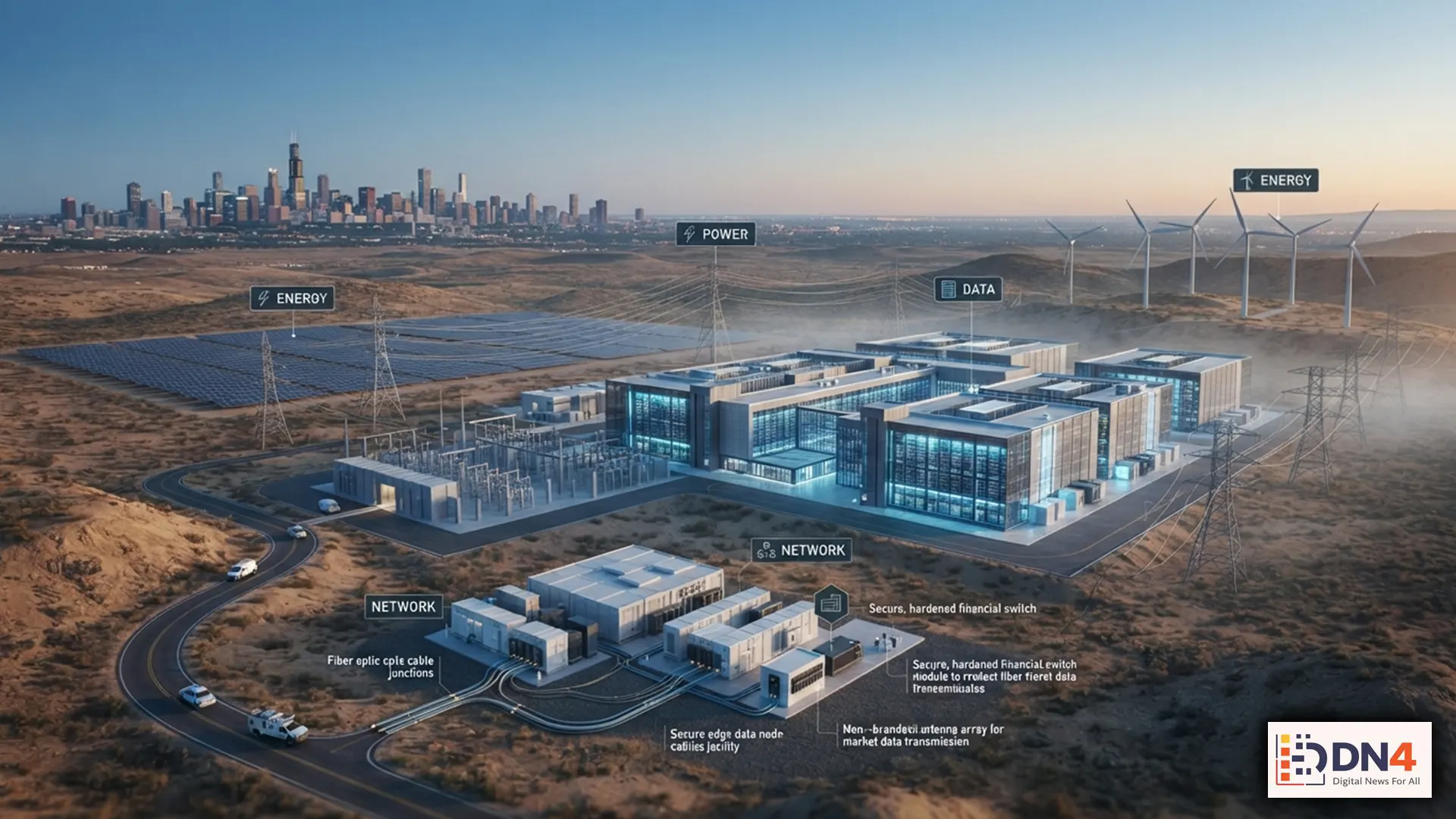
Bank of America’s infrastructure financing ambitions highlight a growing reality in the U.S. economy: America’s next technology boom will require enormous amounts of physical infrastructure. Artificial intelligence, data centers, semiconductor manufacturing, electricity generation and modern transmission networks all depend on capital-intensive projects that can take years to build.
Bank of America has positioned itself as a major source of financing for the infrastructure and energy transition. Its official sustainability and environmental-finance resources outline the bank’s broader commitments involving clean energy, sustainable finance and infrastructure.
Why $250 Billion Matters
A financing figure measured in hundreds of billions of dollars is significant because infrastructure projects rarely happen through a single source of capital. Banks can provide loans, underwriting, project finance and other financial services that help companies and governments raise the money required to build large facilities.
For technology companies, that capital can support data centers, cloud infrastructure and semiconductor-related projects. For energy companies, it can help finance generation, transmission, storage and grid modernization.
The U.S. Department of Energy has emphasized the importance of modernizing the nation’s electricity grid as power demand and the complexity of the energy system increase.
AI Is Becoming an Infrastructure Story
The rapid expansion of artificial intelligence is changing the economics of technology infrastructure. AI models require large computing clusters, and those facilities consume significant amounts of electricity and require advanced cooling systems.
The Department of Energy’s analysis of data-center electricity demand highlights the rapid growth in power consumption associated with data centers and the challenges that growth creates for the U.S. electricity system.
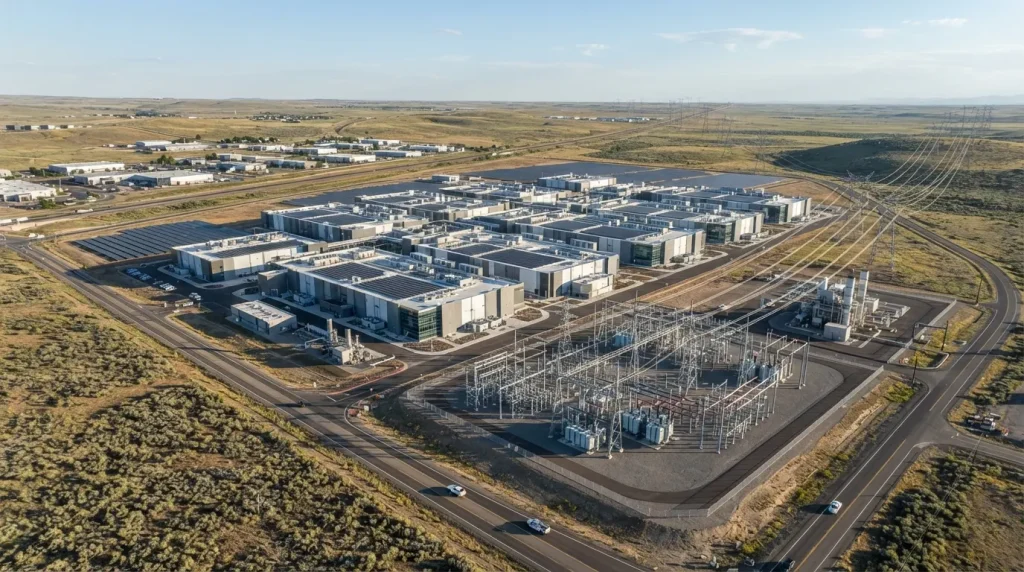
That creates a direct connection between Wall Street financing and the physical technology economy. Building an AI data center is not simply a software investment—it can require new substations, transmission capacity, generation resources, cooling infrastructure and specialized construction.
Energy Companies Stand to Benefit Too
The technology boom is simultaneously creating opportunities across the energy sector. Utilities and independent power producers are evaluating how to meet rising electricity demand from data centers while maintaining reliability and managing costs.
Investment can flow toward natural gas generation, nuclear power, renewable energy, battery storage and transmission upgrades. The mix will vary depending on local resources, regulation and project economics.
The International Energy Agency’s research on energy and AI identifies data centers as an increasingly important source of electricity demand and examines how AI development could affect global energy systems.
The Grid Could Become the Biggest Bottleneck
One of the biggest challenges is not necessarily finding investors—it is building infrastructure quickly enough. New power plants and transmission projects can face lengthy permitting processes, equipment shortages and interconnection delays.
For technology companies, a data center can be designed and financed long before sufficient electricity is available at the desired location. That makes grid capacity an increasingly important factor in where new computing facilities are built.
According to the Federal Energy Regulatory Commission, transmission infrastructure is critical to moving electricity between generation resources and consumers and supporting reliability across the power system.
What It Means for the U.S. Economy
Large-scale infrastructure financing could produce benefits well beyond individual banks and technology companies. Construction projects can create jobs, increase demand for industrial equipment and strengthen domestic supply chains.
However, massive capital spending also creates risks. Projects can become more expensive than expected, electricity demand forecasts can change and some technologies may become less competitive before facilities reach full operation.
Investors and policymakers therefore face a difficult question: how much infrastructure should be built today to meet tomorrow’s demand without creating expensive excess capacity?
A Broader Shift in Corporate Investment
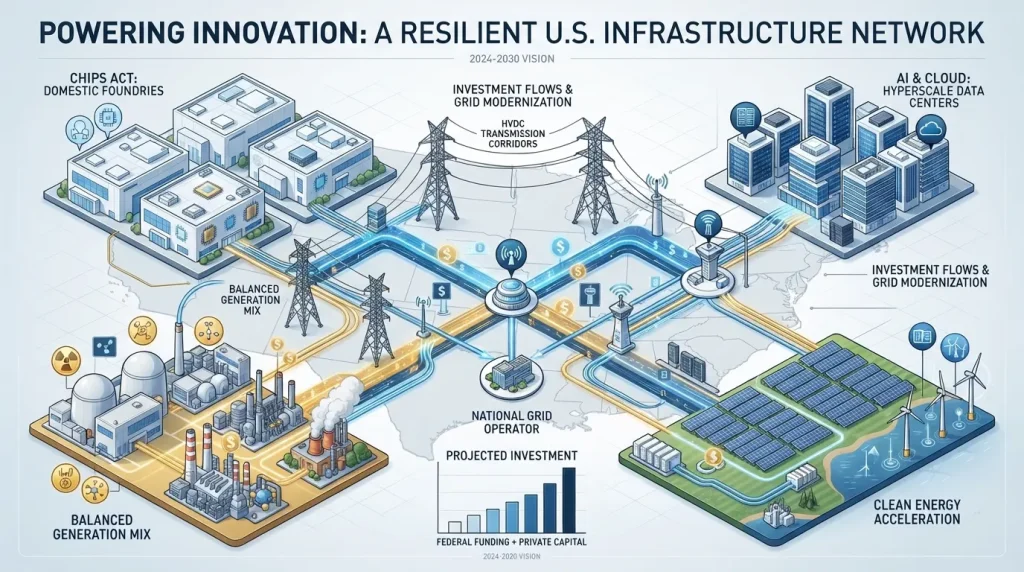
Bank of America’s infrastructure strategy reflects a larger transformation in the U.S. economy. Technology and energy are increasingly interconnected, with AI driving electricity demand and energy availability influencing the expansion of digital infrastructure.
A $250 billion-scale infrastructure financing push would matter, but not just because of the headline number. It would matter because of where the capital could flow. Data centers, power generation, transmission, semiconductors and other critical infrastructure are becoming part of one connected investment cycle. If the U.S. can build that infrastructure efficiently, it could strengthen the country’s technology leadership. If permitting, grid constraints or costs remain unresolved, infrastructure could become the limiting factor for the next wave of growth.
#BankOfAmerica #Infrastructure #TechInvestment #EnergyInvestment #USInfrastructure #CleanEnergy #Technology