

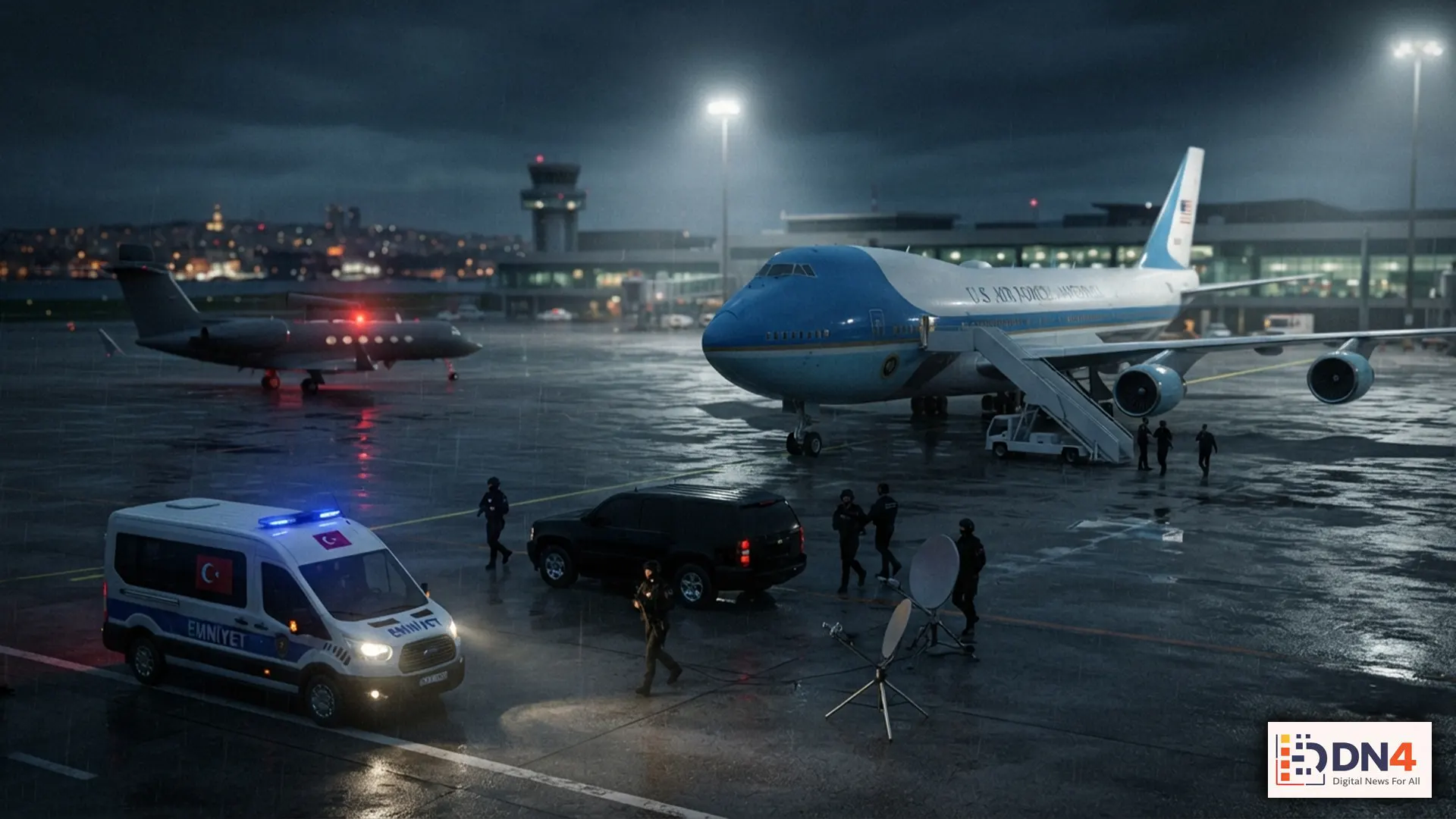
What looked like an ordinary presidential departure from Turkey reportedly concealed an extraordinary security operation. After the NATO summit in Ankara last month, journalists and onlookers publicly saw President Donald Trump boarding an older Air Force One aircraft. But according to reporting by The Associated Press, the aircraft was used as part of a deception designed to protect the president from a reported Iranian assassination threat.
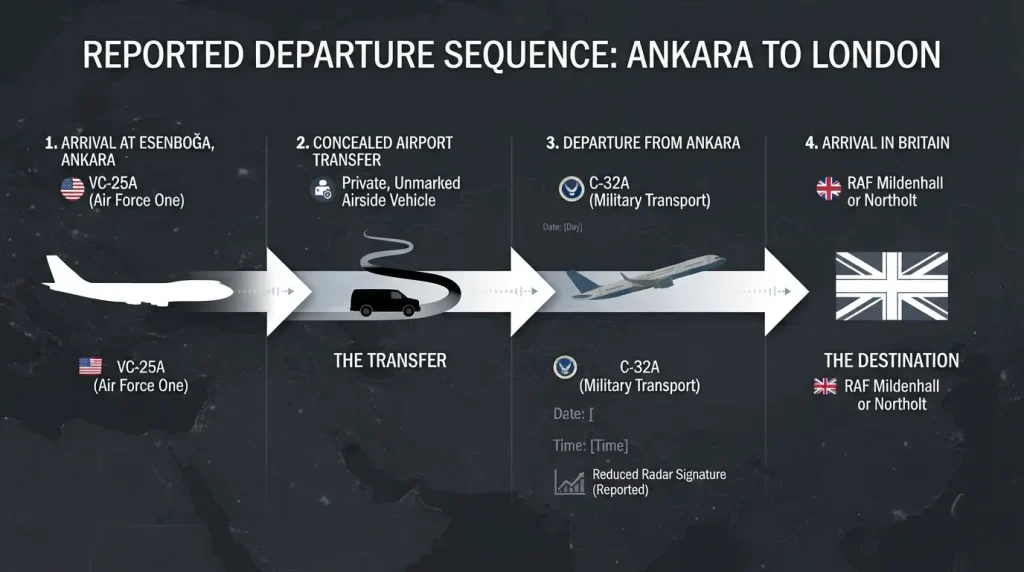
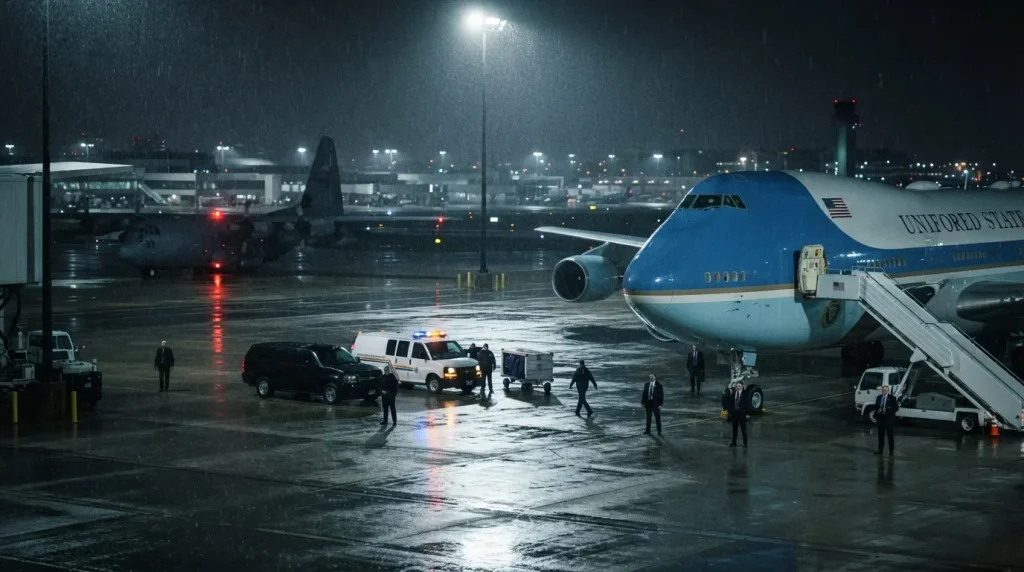
The operation reportedly involved moving Trump from the aircraft through an airport catering truck and transferring him to a smaller U.S. Air Force C-32A. Officials designed the deception to obscure his actual location while journalists and some White House personnel believed he was aboard the larger aircraft.
Why Was a Decoy Needed?
The reported operation came amid heightened tensions between Washington and Tehran. According to The Guardian’s account of the operation, U.S. intelligence officials had identified a potential Iranian threat targeting Trump or his aircraft.
The unusual precautions also followed U.S. military action against Iran, making presidential travel a particularly sensitive security issue. The White House has previously acknowledged that Trump faces persistent threats, although officials have not publicly released specific intelligence assessments surrounding the Turkey operation.
The Air Force One Deception
Trump had publicly indicated that he would leave Turkey aboard an older presidential aircraft rather than the newer Boeing 747-8 donated by Qatar. Reports said officials presented the older aircraft as Trump’s preferred ride for the trip home, helping establish a believable public departure plan.
According to The Washington Post’s reported account, Trump instead transferred to a C-32A using the airport catering vehicle. The larger aircraft then departed with journalists and other personnel who believed the president was aboard.
A High-Level Security Gamble
The reported deception highlights an important principle of presidential protection: protecting a president’s location can sometimes be as important as protecting the aircraft itself. A predictable travel pattern can potentially provide adversaries with useful information, while a decoy can complicate surveillance and targeting.
The U.S. Air Force’s C-32A information describes the aircraft as an executive transport used for senior government officials. The platform is smaller than the VC-25 aircraft normally associated with the presidential call sign Air Force One.
What Happened After the Secret Flight?
Reports indicate that the C-32A traveled to Britain while the decoy aircraft followed a separate route. Trump subsequently appeared publicly in Britain, maintaining the impression that he had traveled aboard the aircraft journalists had watched him board.
CNN’s reporting and other accounts have since brought new attention to the operation, raising questions about how much of the security maneuver was known to the traveling press corps and White House staff.
The reported Turkey operation was not simply an unusual presidential travel decision. It was an elaborate deception that officials reportedly designed to conceal Trump’s movements amid a serious security threat. The episode also demonstrates how geopolitical tensions can dramatically reshape even the most visible aspects of presidential travel.
#Trump #Turkey #Iran #AirForceOne #NationalSecurity #SecretService #Geopolitics #WhiteHouse