


U.S. parents are facing a significant change in federal childhood vaccine recommendations. On August 10, 2026, President Donald Trump signed an executive order establishing a new framework for childhood immunization recommendations and calling for greater flexibility in how vaccines are administered.
The White House says the new approach is based on an HHS scientific assessment comparing U.S. recommendations with those of other developed countries. The administration’s earlier executive order on childhood vaccine recommendations directed federal health officials to review that evidence and consider changes to the national schedule.
What Has Changed?
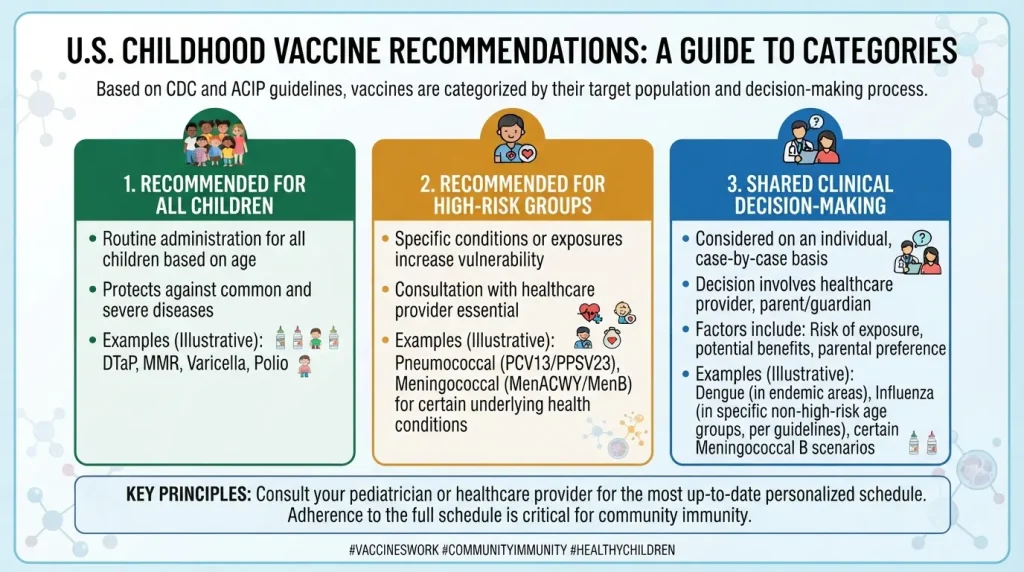
The updated federal framework places childhood immunizations into three broad categories: vaccines recommended for all children, vaccines recommended for certain high-risk groups and vaccines based on shared clinical decision-making.
The core group includes immunizations against measles, mumps, rubella, diphtheria, tetanus, pertussis, polio, Hib, pneumococcal disease, HPV and chickenpox. HHS’s official vaccine recommendation fact sheet describes the updated framework and explains how other vaccines are categorized.
Does This Mean Parents Should Stop Existing Vaccines?
Not necessarily. The federal framework does not mean that vaccines outside the core category are unavailable. HHS says vaccines currently recommended by the federal framework remain covered without cost sharing, while the framework now designates some immunizations for higher-risk groups or shared clinical decision-making.
The HHS childhood immunization schedule provides the current categories and age-specific recommendations. Because recommendations can depend on age, medical history, travel and risk factors, parents should not use a general news article to determine which vaccines an individual child should receive.
Why Are Parents Hearing Different Information?
Legal and administrative developments complicate the transition. The CDC’s vaccine-schedule page notes that court proceedings affected implementation of earlier schedule changes and identifies the schedule currently displayed on its consumer pages.
That means parents may encounter different information from federal agencies, pediatric practices, schools and state health departments during this rollout. State vaccination requirements can also differ from federal recommendations.

What Should Parents Do Now?
Parents should keep their child’s vaccination records updated and ask their pediatrician which recommendations apply to their child’s age and circumstances. The HHS guidance for infants and children emphasizes consulting a healthcare provider about individual vaccination needs.
Parents should also check school or daycare requirements with their state or local health authority rather than assuming federal recommendations automatically determine enrollment rules.
The new federal framework changes how officials categorize and recommend childhood vaccines, but it does not eliminate access to vaccines. For families, the most important step is to distinguish federal recommendations from individual medical advice and state requirements.
#ChildhoodVaccines #Vaccines #Parents #CDC #PublicHealth #VaccineSchedule #ChildHealth #HealthNews