

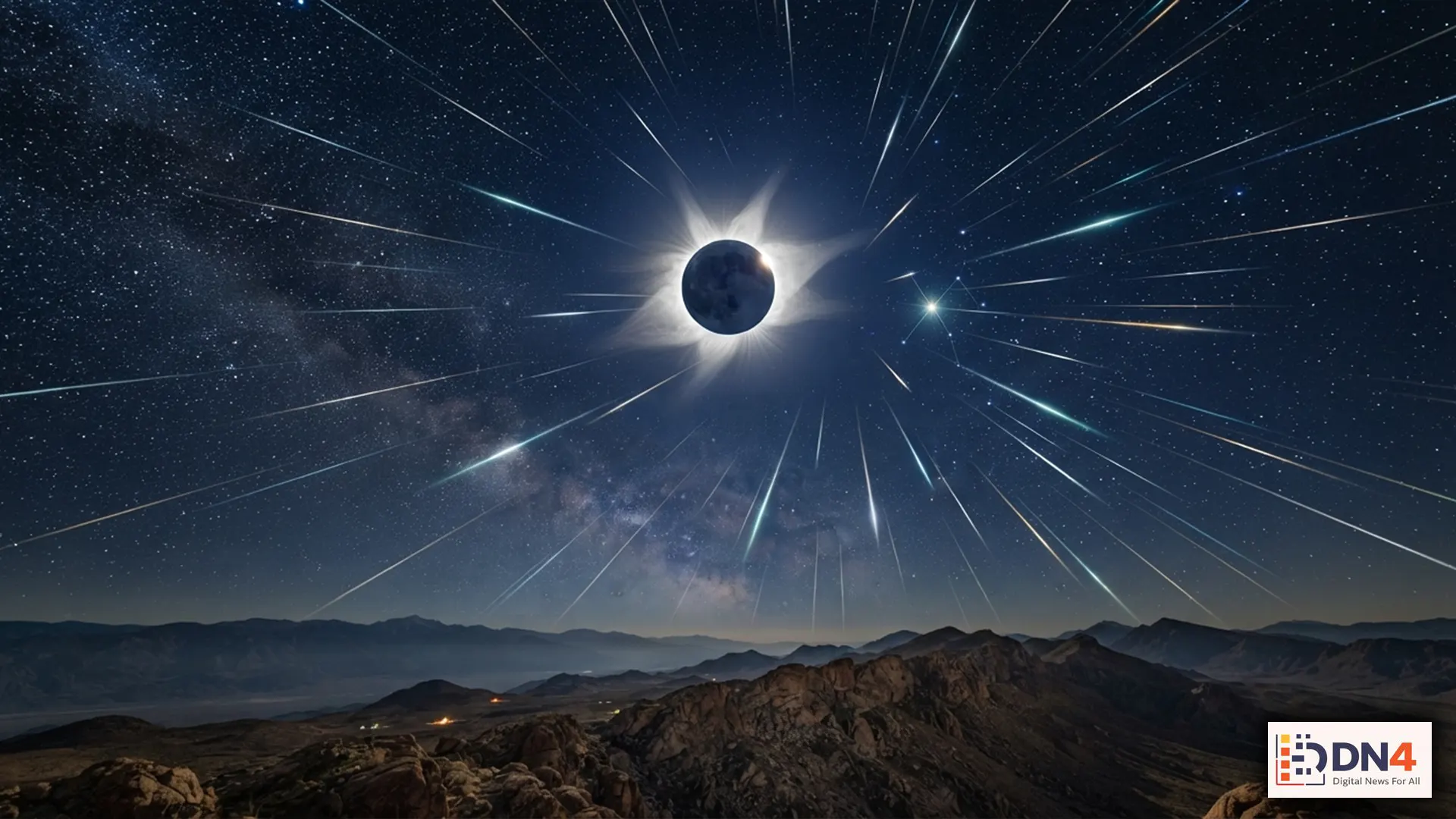
August 2026 is shaping up to be an exceptional month for skywatchers. A total solar eclipse and the annual Perseid meteor shower are giving astronomy enthusiasts two very different reasons to look toward the sky.
The events are not literally occurring at the same time, but their close appearance on the August calendar creates an unusual month-long opportunity for observing the heavens. The NASA eclipse calendar provides official information about the year’s solar and lunar eclipses, including visibility and timing.
A Total Solar Eclipse Takes Center Stage
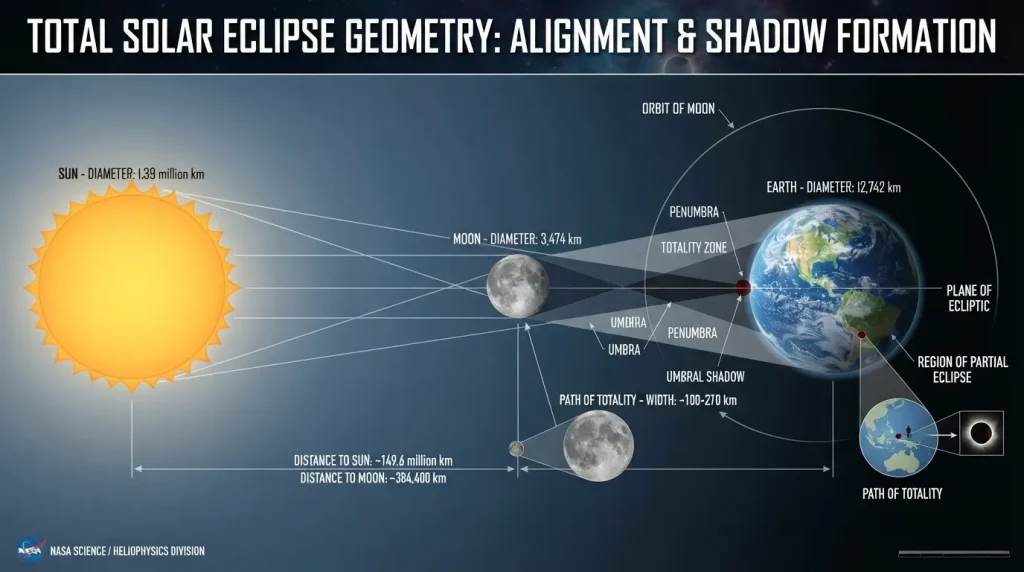
The major astronomical event of August is the total solar eclipse on August 12, 2026. During a total solar eclipse, the Moon passes directly between Earth and the Sun and temporarily blocks the Sun’s visible disk for observers inside the path of totality.
The path of totality for the August eclipse crosses parts of Greenland, Iceland and Spain, with additional visibility across portions of Europe and other regions as a partial eclipse. NASA’s official eclipse resources provide maps and detailed viewing information.
The Perseids Bring a Second Spectacle
Later in the month, the Perseid meteor shower provides a completely different kind of sky show. The Perseids occur each year when Earth passes through debris associated with Comet 109P/Swift-Tuttle. Tiny particles enter Earth’s atmosphere at high speed and burn up, producing bright streaks across the night sky.
The NASA Perseid meteor shower guide explains that the shower is one of the year’s best-known annual meteor displays. Under favorable conditions, observers can see numerous meteors during the shower’s peak.
When and Where Should You Watch?
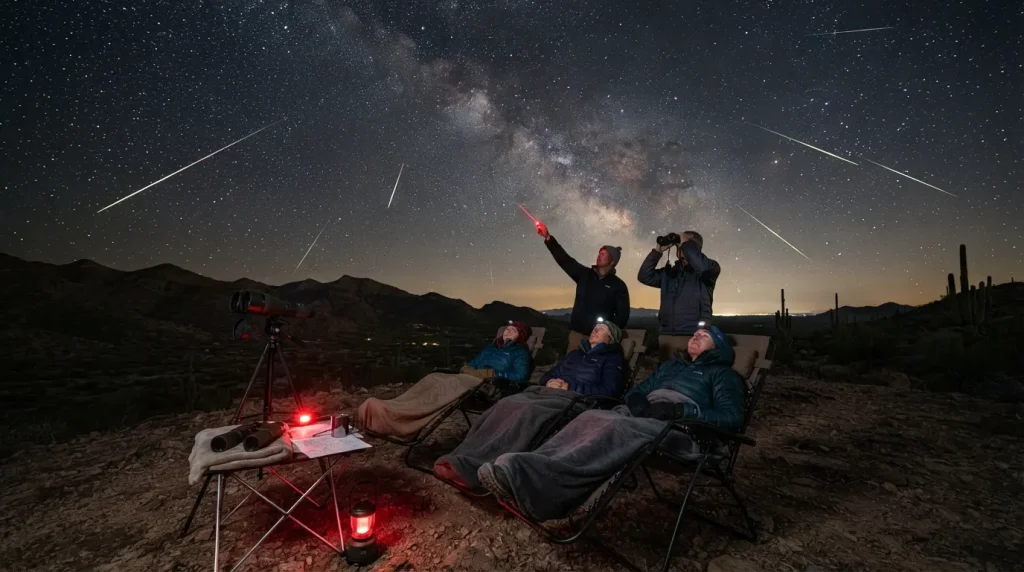
The Perseids are active for several weeks, but viewing conditions around the peak depend heavily on moonlight, local weather and light pollution. For the best chance of seeing meteors, find a location away from bright city lights and allow your eyes time to adjust to the darkness.
The American Meteor Society’s meteor-shower calendar provides observing information and expected activity periods. The organization also recommends giving yourself a wide view of the sky rather than focusing on a single point.
Two Events, Two Different Viewing Rules
Solar eclipses require special precautions. Looking directly at the uneclipsed or partially eclipsed Sun without appropriate eye protection can cause serious and permanent eye injury.
The NASA eclipse safety guidance recommends using appropriate solar-viewing equipment and following established eclipse-safety practices. Ordinary sunglasses are not a substitute for certified solar viewers.
Meteor watching is much simpler: no special eye protection is required. A comfortable reclining chair, warm clothing if needed and patience are usually more useful than specialized equipment.
A Month Worth Looking Up
The combination of a total solar eclipse and a major annual meteor shower makes August 2026 an especially memorable period for astronomy fans. The events also demonstrate two fundamental celestial phenomena: the precise alignment that creates an eclipse and the interaction between Earth and cometary debris that produces meteors.
Whether you travel to experience the eclipse from the path of totality or simply step outside for a night of meteor watching, August offers plenty of reasons to put down the phone and look up.
#SolarEclipse #PerseidMeteorShower #Astronomy #NightSky #Stargazing #Space #Skywatching #CosmicEvents