

Hypochlorous acid spray has become one of social media’s most talked-about skincare products. The ingredient sounds intimidating, but hypochlorous acid (HOCl) is naturally produced by the body’s immune system and has antimicrobial and anti-inflammatory properties. Dermatology research has investigated topical HOCl for several skin conditions, including acne, atopic dermatitis, seborrheic dermatitis and wound care.
What Is Hypochlorous Acid?
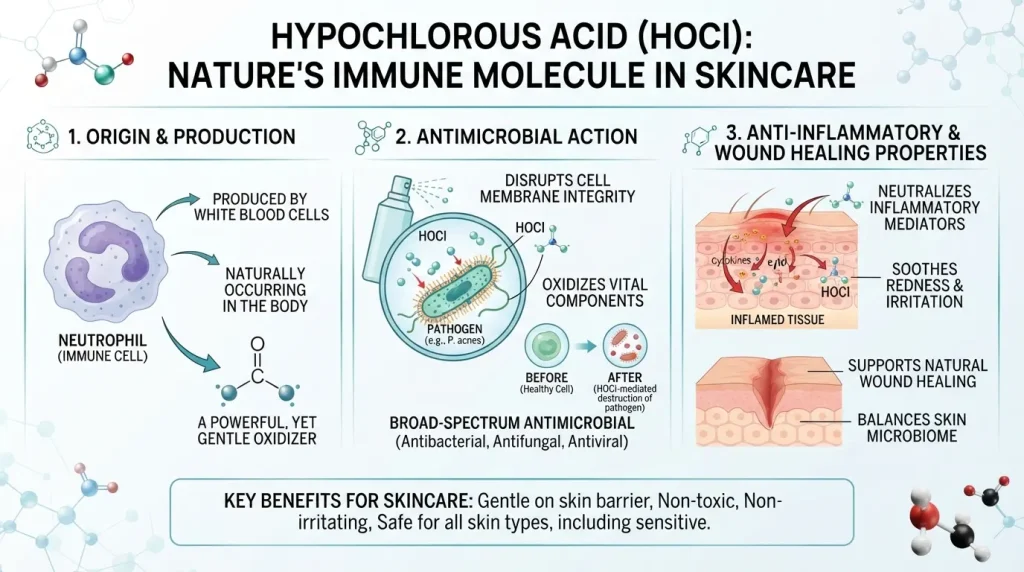
HOCl is a molecule produced by immune cells as part of the body’s defense against microbes. Stabilized topical formulations can be manufactured as solutions, sprays and gels designed for skin use. Research indicates that the formulation’s pH, concentration and stability matter, meaning not every product labeled with hypochlorous acid should automatically be considered equivalent.
Cleveland Clinic’s dermatology guidance describes HOCl as potentially useful for fighting bacteria associated with clogged pores and acne while being generally gentle on skin. The medical center also advises consumers to make sure a product is specifically intended for skincare rather than assuming that every hypochlorous-acid product is appropriate for the face.
Can It Help Acne and Irritated Skin?
There is scientific interest in HOCl because of its antimicrobial and anti-inflammatory activity. A clinical literature review found potential benefits across conditions including acne vulgaris, atopic dermatitis-associated itching and seborrheic dermatitis. However, the strength of evidence varies by condition and formulation.
That distinction matters. Calling hypochlorous acid a useful skincare ingredient is not the same as saying it is a proven replacement for established acne or eczema treatments. A recent clinical review noted that evidence for acne specifically remains limited, despite promising findings.
Why Is It Popular With Sensitive-Skin Users?
One reason HOCl has attracted attention is its generally favorable tolerability profile. Research on stabilized topical formulations has reported good skin tolerance and no major adverse events in the studies reviewed.
Still, “gentle” does not mean every product is suitable for everyone. Product formulation, preservatives and concentration can influence irritation. Consumers should follow the product label and avoid ingesting the spray or getting products into the eyes unless the product is specifically designed and labeled for that use.

What Should Shoppers Look For?
Look for a product clearly labeled for topical skincare use and follow its storage and expiration instructions. HOCl can lose effectiveness as formulations degrade, so proper storage matters. Consumers should also be cautious about homemade mixtures, because concentration, pH and stability are difficult to control reliably.
Hypochlorous acid spray is more than a social-media trend: there is legitimate dermatological research supporting its antimicrobial and anti-inflammatory properties. But the evidence is formulation-specific and does not make HOCl a cure-all. For persistent acne, eczema or other skin conditions, a dermatologist can help determine whether it belongs in an appropriate treatment routine.
#HypochlorousAcid #SkinCare #Dermatology #AcneCare #SensitiveSkin #SkinHealth #BeautyTrends