

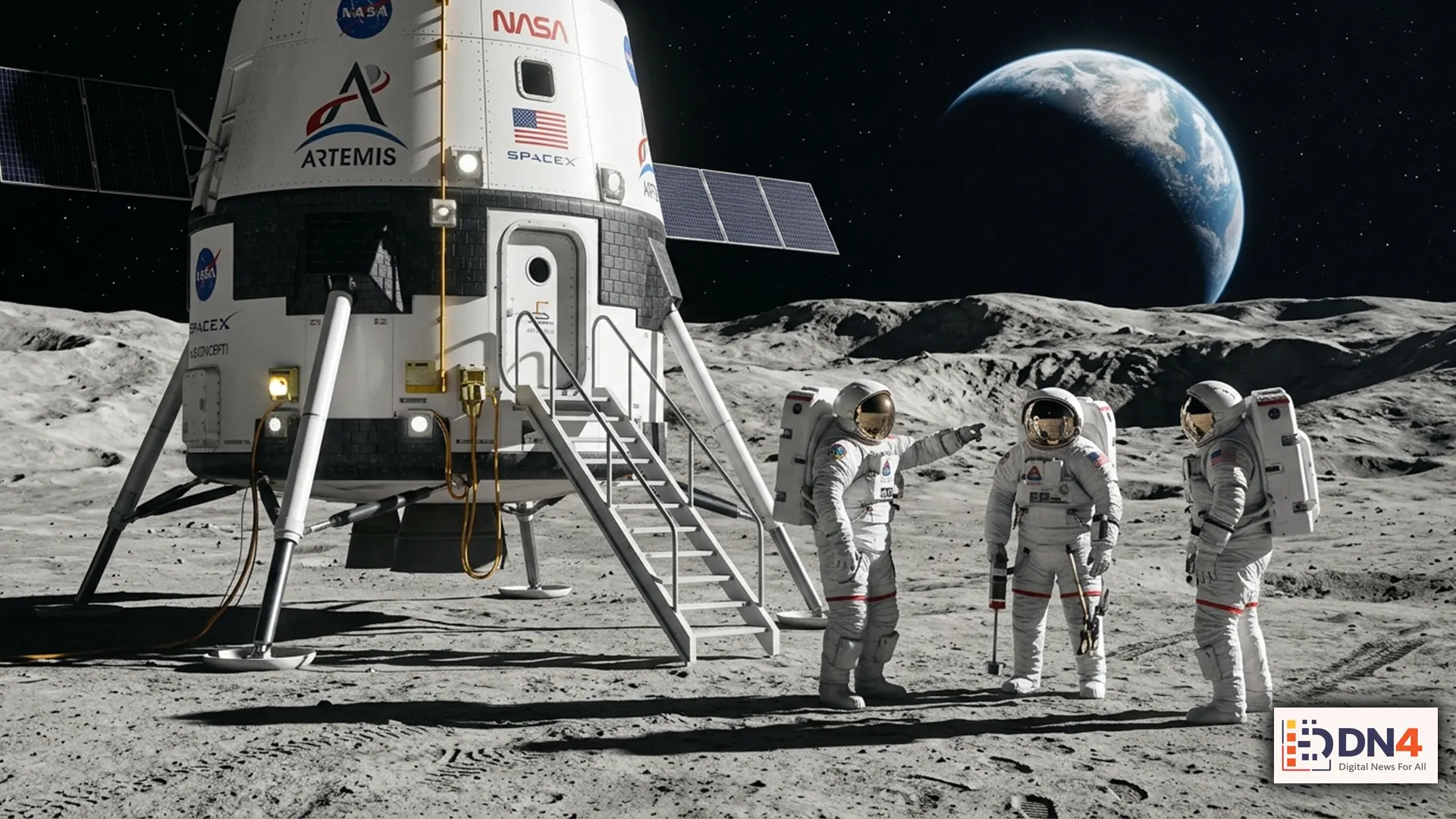
The journey back to the Moon remains one of humanity’s most ambitious scientific endeavors, but the road to lunar exploration is rarely smooth. As NASA continues preparing for Artemis III, recent developments involving astronaut assignments and challenges facing commercial partners have sparked renewed discussion about the mission’s timeline and objectives.
Artemis III is expected to become the first crewed lunar landing mission of the Artemis era, marking humanity’s return to the Moon for the first time since the Apollo program. The mission represents a major step toward NASA’s long-term goal of establishing a sustainable human presence on the lunar surface.
Why Artemis III Matters
The Artemis program is designed to expand humanity’s capabilities beyond low-Earth orbit and lay the groundwork for future missions to Mars. Unlike Apollo, Artemis aims to create long-term infrastructure that supports repeated lunar exploration.
NASA’s strategy combines government expertise with commercial partnerships, bringing together multiple aerospace companies to develop spacecraft, lunar landers, launch systems, and supporting technologies.
The Astronaut Team Remains Central
NASA’s astronaut corps continues training for future Artemis missions, with selections emphasizing operational expertise, scientific knowledge, and experience in complex spaceflight environments.
The astronauts chosen for lunar missions represent years of preparation and are expected to conduct scientific research, technology demonstrations, and surface operations that could shape future exploration efforts.
Organizations such as NASA’s Astronaut Office continue refining mission readiness programs as planning advances.
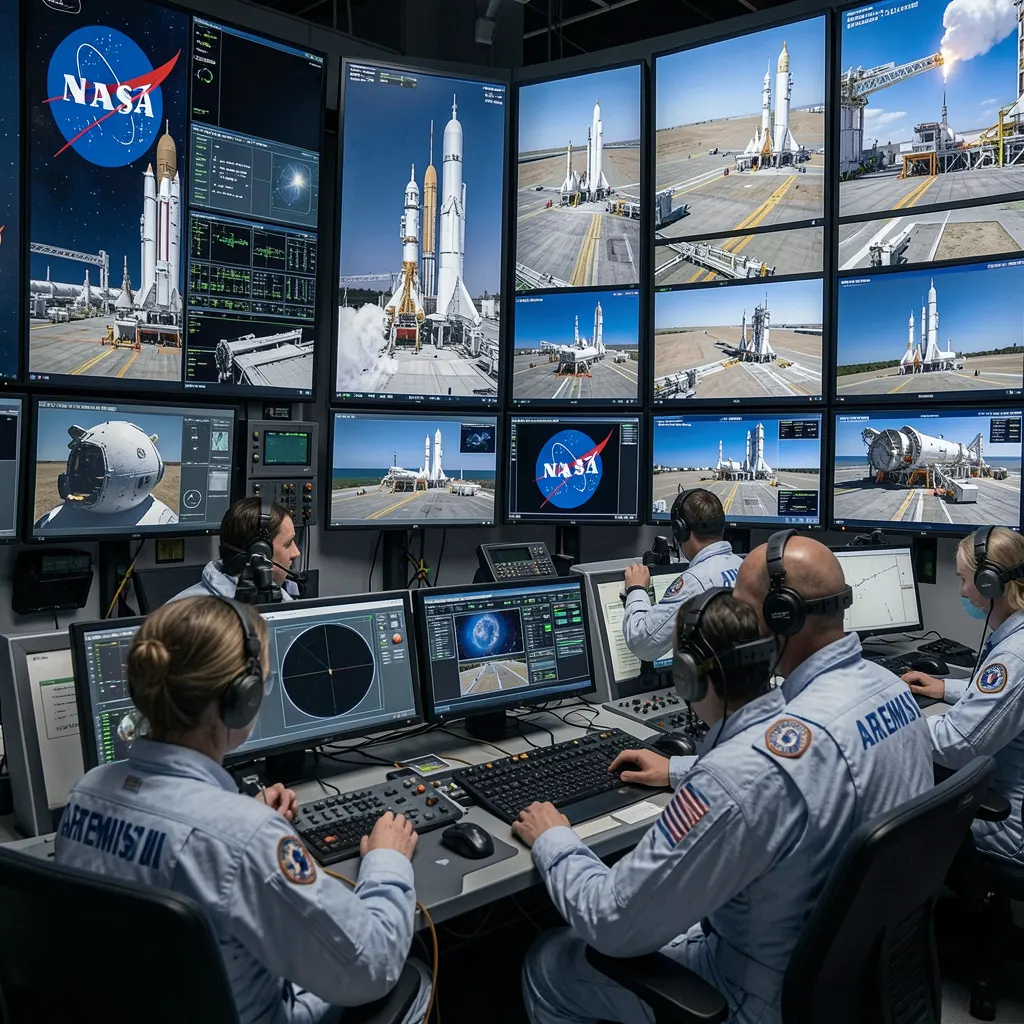
The Role of Commercial Partners
One of the defining features of Artemis is its reliance on private-sector innovation. NASA has partnered with several aerospace companies to develop systems needed for lunar exploration.
Among those companies is Blue Origin, which has been working on technologies connected to future lunar operations and infrastructure.
NASA intends commercial participation to reduce costs, accelerate innovation, and establish a more sustainable exploration framework.
Understanding the Recent Setback
Any technical challenge involving major aerospace programs naturally attracts significant attention. Rocket testing, spacecraft development, and mission integration efforts involve complex engineering processes where delays and adjustments are common.
Industry experts often note that setbacks during development phases can ultimately strengthen mission reliability by identifying issues before crewed operations begin.
Rigorous testing and corrective action have repeatedly improved mission safety and performance throughout space exploration history.
Balancing Ambition and Safety
NASA’s approach to Artemis prioritizes safety above schedule pressure. Engineers must extensively test every mission component—from launch systems to lunar landing technology—before placing astronauts at risk.
This philosophy reflects lessons learned from decades of human spaceflight experience and remains a core principle of modern exploration programs.
- Extensive vehicle testing
- Crew safety certification
- Mission simulation exercises
- Hardware redundancy evaluations
- Launch readiness reviews
These processes can contribute to delays, but they also increase the likelihood of mission success.

What Artemis III Could Achieve
If successful, Artemis III will accomplish far more than a symbolic return to the Moon. Engineers and scientists expect the mission to support scientific investigations, technology validation, and exploration strategies that could influence future lunar and Martian missions.
Researchers hope to gather new information about lunar resources, geology, and environmental conditions that may support long-term human activity beyond Earth.
The Bigger Picture
The Artemis program represents a new era of exploration in which international cooperation, commercial innovation, and scientific discovery work together toward common goals.
While technical setbacks may temporarily slow progress, they are also a normal part of developing advanced aerospace systems.
For NASA and its partners, the ultimate objective remains unchanged: returning humans to the Moon, expanding scientific knowledge, and preparing for the next generation of deep-space exploration.
As preparations continue, Artemis III remains one of the most closely watched missions in modern spaceflight. It could define the future of human exploration for decades to come.
Frequently Asked Questions
What is Artemis III?
Artemis III is NASA’s planned mission to return astronauts to the Moon. It forms part of the broader Artemis lunar exploration program.
Why are commercial companies involved?
NASA uses commercial partnerships to develop technologies, spacecraft, and infrastructure that support lunar exploration.
Do development setbacks threaten the mission?
Teams address technical challenges in aerospace programs through testing, redesigns, and safety reviews before missions proceed.
#ArtemisIII #NASA #MoonMission #SpaceExploration #BlueOrigin #Astronauts #LunarLanding #SpaceNews #STEM #FutureOfSpace