

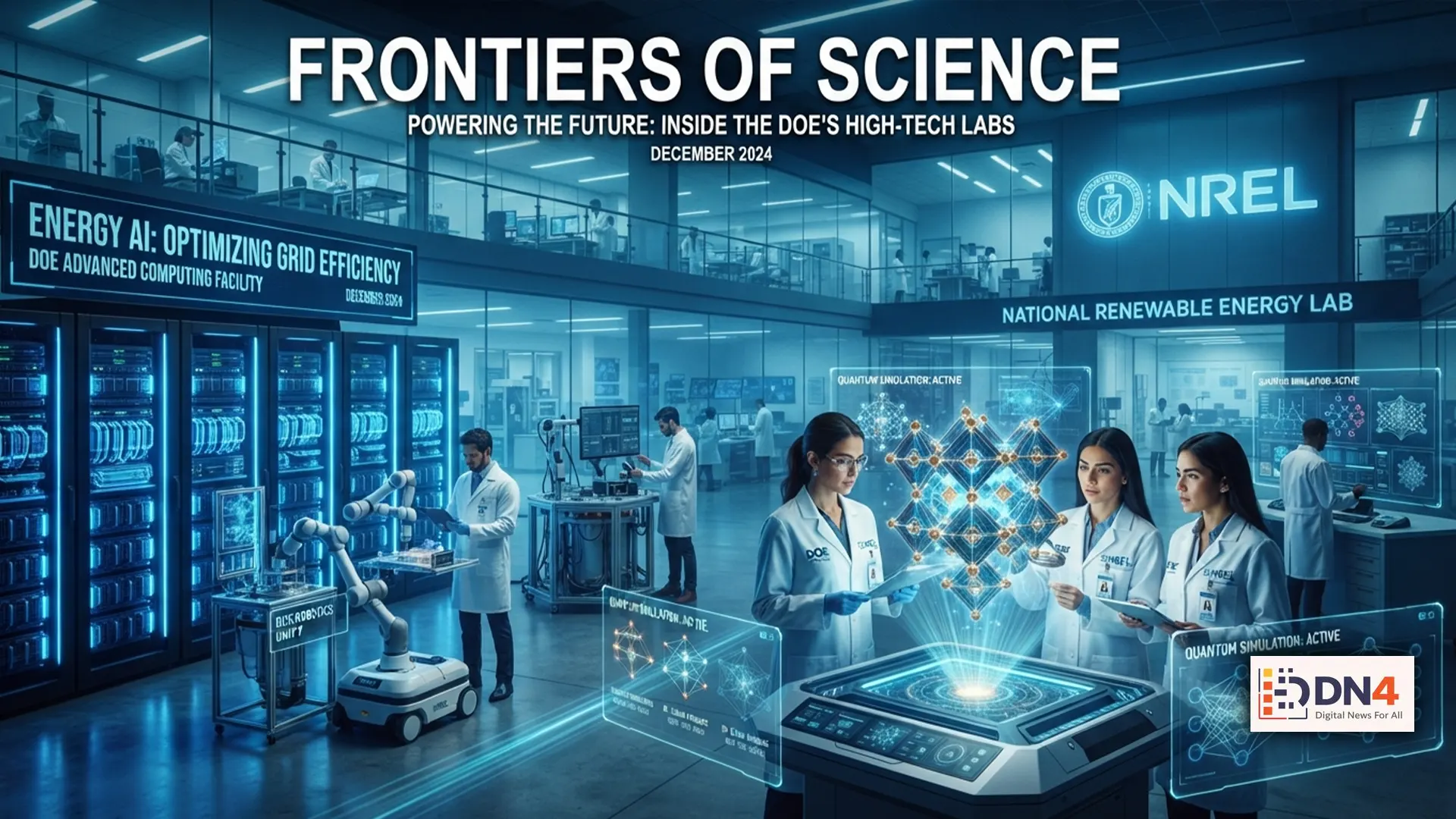
Artificial intelligence is transforming scientific research, and the U.S. Department of Energy (DOE) is expanding its efforts to harness that potential through the Genesis Mission. The initiative seeks to combine advanced AI models, high-performance computing, and world-class scientific expertise to accelerate discoveries across energy, climate science, materials research, biology, and national security.
Rather than replacing scientists, the Genesis Mission is designed to help researchers analyze massive datasets, identify hidden patterns, and generate new hypotheses faster than traditional methods. Consequently, scientists can spend more time validating discoveries and developing practical solutions to complex global challenges.
What Is the Genesis Mission?
The Genesis Mission is part of the Department of Energy’s broader strategy to integrate artificial intelligence into scientific research. The initiative leverages the DOE’s national laboratories, advanced computing facilities, and AI infrastructure to speed up experimentation and improve research efficiency. Official information about DOE research programs is available through the U.S. Department of Energy.
Moreover, the project brings together experts in computer science, engineering, physics, chemistry, and biology. This collaborative approach allows AI systems to assist researchers across multiple scientific disciplines while maintaining rigorous scientific standards.

How AI Could Accelerate Scientific Breakthroughs
Traditional scientific research often requires years of data collection and analysis. However, AI can process enormous volumes of information in a fraction of the time. Machine learning models help researchers identify promising materials, predict chemical reactions, simulate climate systems, and optimize complex engineering designs.
The DOE also relies on some of the world’s most powerful supercomputers. Facilities supported by the Oak Ridge Leadership Computing Facility and other national laboratories provide the computing power needed to train advanced AI models and perform large-scale scientific simulations.
Applications Across Multiple Fields
The Genesis Mission has the potential to benefit a wide range of scientific disciplines. Researchers expect AI-assisted tools to improve clean energy technologies, strengthen power grid resilience, accelerate drug discovery, enhance nuclear science, and deepen our understanding of Earth’s climate.
In addition, AI could help scientists design next-generation batteries, discover advanced materials, and improve fusion energy research. Organizations such as Argonne National Laboratory and Lawrence Livermore National Laboratory continue advancing AI-driven research across these areas.

Balancing Innovation and Responsible AI
While AI offers enormous opportunities, researchers also emphasize responsible development. The Genesis Mission promotes transparency, scientific validation, cybersecurity, and ethical AI practices. Therefore, every AI-generated finding must undergo careful review before it contributes to scientific conclusions.
Guidance on trustworthy artificial intelligence continues to evolve through organizations including the National Institute of Standards and Technology (NIST), which publishes frameworks for managing AI risks.
The Future of AI-Powered Science
As artificial intelligence becomes more capable, initiatives like the Genesis Mission could fundamentally change how scientific discoveries are made. Instead of simply speeding up existing research, AI may help uncover entirely new relationships that humans might otherwise overlook.
Ultimately, the Department of Energy’s Genesis Mission represents a significant step toward combining human expertise with advanced AI and supercomputing. If successful, the initiative could accelerate innovation, strengthen American scientific leadership, and open new frontiers in research that benefit society for decades to come.
#ArtificialIntelligence #DepartmentOfEnergy #GenesisMission #Supercomputing #Science #Innovation #Research #Technology #AI