

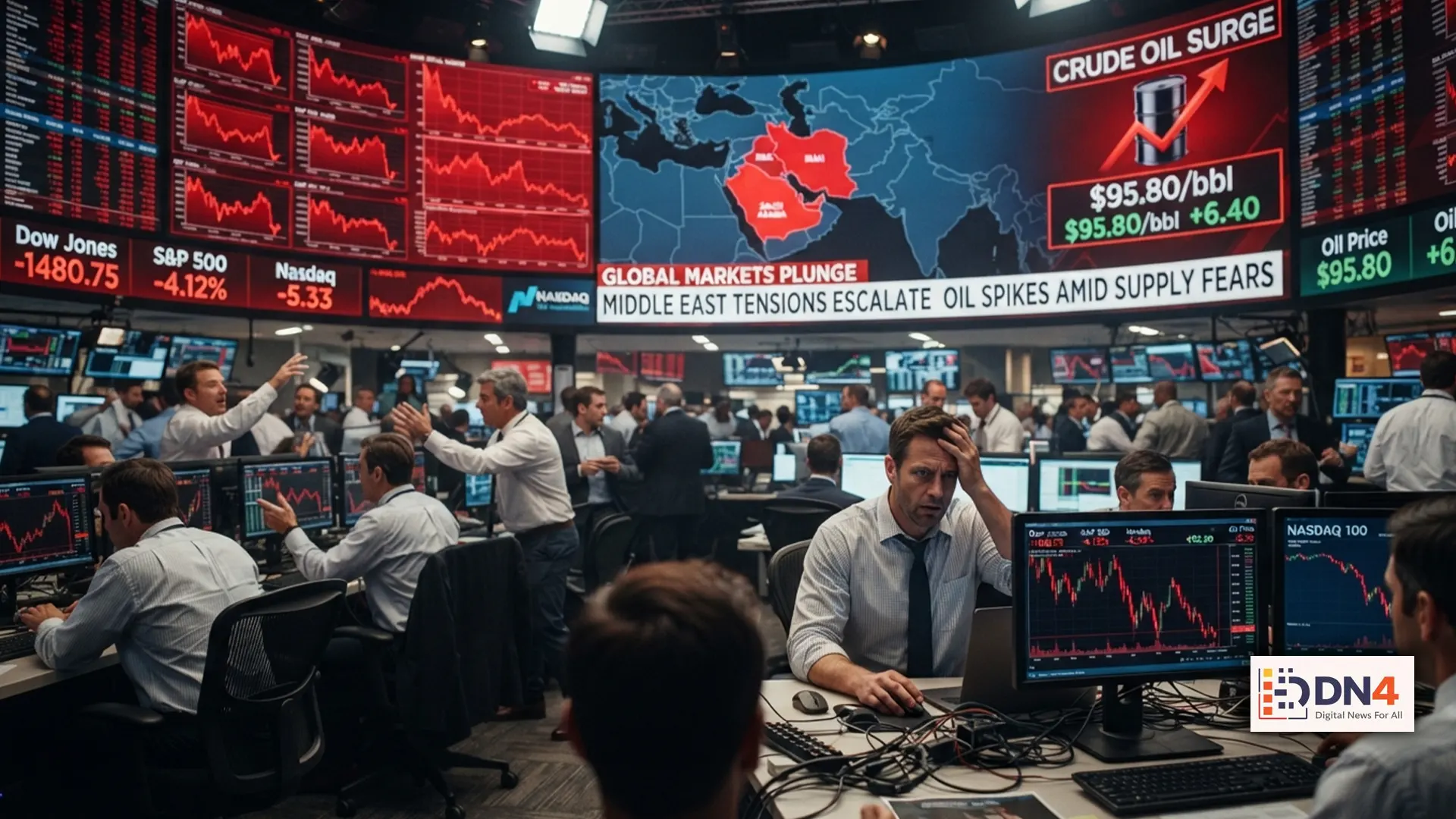
Global financial markets came under pressure as escalating tensions in the Middle East fueled investor uncertainty, sending major U.S. stock indexes lower while safe-haven assets gained momentum. With geopolitical risks becoming a recurring feature of global investing, analysts say Wall Street is increasingly adapting to what many describe as the “new normal.”
While markets have weathered geopolitical shocks before, investors remain cautious whenever conflicts threaten global energy supplies, international trade, or economic stability. The latest market decline reflects growing concerns that prolonged instability could impact inflation, interest rates, and corporate earnings.
Why Stocks Are Falling
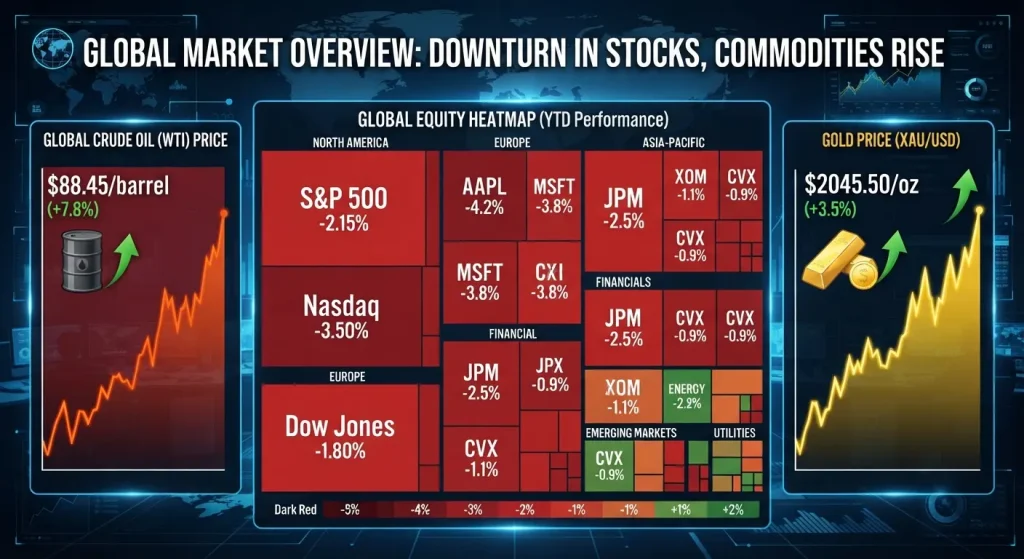
Geopolitical uncertainty typically causes investors to reduce exposure to riskier assets such as equities. As tensions intensified, traders shifted capital toward traditionally safer investments including U.S. Treasury bonds, gold, and the U.S. dollar.
Energy markets also reacted sharply, with oil prices moving higher amid fears of potential supply disruptions from one of the world’s most critical oil-producing regions.
Wall Street’s New Risk Model
Unlike previous geopolitical events that triggered short-lived market panic, today’s investors are increasingly pricing geopolitical risk into long-term investment strategies.
- Greater portfolio diversification
- Higher demand for defensive sectors
- Increased allocation to energy stocks
- Growing interest in gold and Treasury securities
- Closer monitoring of central bank policies
Portfolio managers note that markets now respond not only to actual events but also to expectations regarding sanctions, shipping disruptions, cyber risks, and energy inflation.
Energy Prices Remain the Biggest Concern
Oil remains one of the most sensitive indicators during geopolitical conflicts. Any disruption involving major shipping routes or oil-producing nations can rapidly influence global fuel prices, transportation costs, and inflation.
Higher energy prices often complicate central bank decisions by making inflation more persistent, potentially delaying future interest-rate cuts.
Which Sectors Could Benefit?
Although broad markets weakened, some industries historically perform better during periods of geopolitical uncertainty.
- Energy companies
- Defense manufacturers
- Cybersecurity firms
- Gold mining companies
- Utilities and consumer staples
Technology and growth stocks, meanwhile, tend to experience greater volatility when investors shift toward defensive assets.
What Investors Are Watching Next
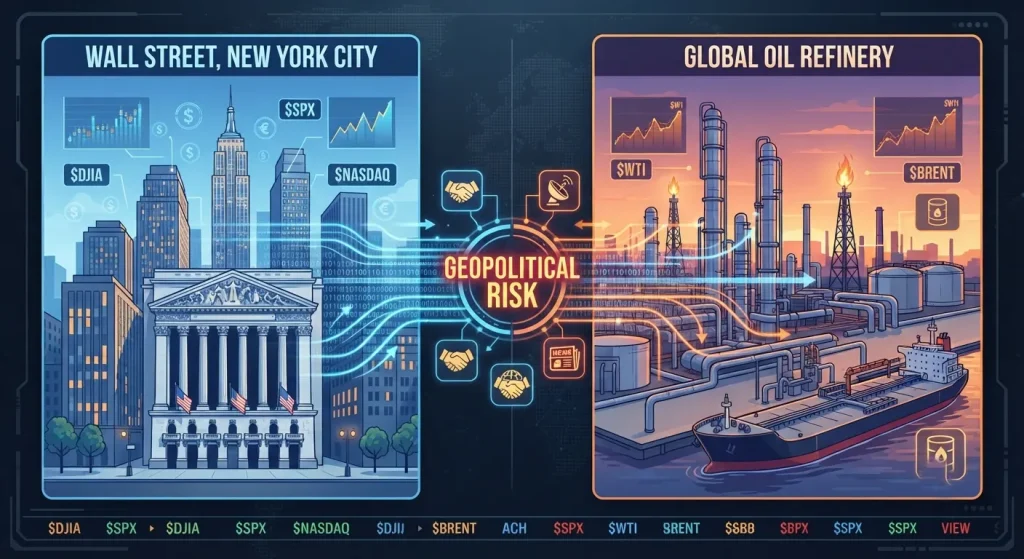
Market participants are closely monitoring diplomatic developments, central bank communications, inflation data, and crude oil prices. Any signs of de-escalation could improve investor sentiment, while additional disruptions may increase market volatility.
Despite short-term uncertainty, many long-term investors continue focusing on diversified portfolios rather than reacting to daily headlines.
Geopolitical tensions have become a recurring factor influencing global financial markets. While short-term volatility may persist, Wall Street increasingly views these events as risks to manage rather than reasons to abandon long-term investment strategies. Investors who remain diversified and informed are generally better positioned to navigate periods of uncertainty.
- U.S. Federal Reserve
- International Monetary Fund (IMF)
- World Bank
- Reuters Markets
- CNBC Markets
- S&P Global
- U.S. Department of Energy
Frequently Asked Questions
Why do geopolitical tensions affect stock markets?
They increase uncertainty around economic growth, energy prices, inflation, and corporate earnings, prompting investors to reduce exposure to riskier assets.
Which investments usually perform well during market uncertainty?
Gold, U.S. Treasury bonds, defensive stocks, utilities, and energy companies often attract investors during periods of heightened geopolitical risk.
Should long-term investors panic?
Financial professionals generally recommend maintaining diversified portfolios and avoiding emotional investment decisions during periods of market volatility.
#StockMarket #WallStreet #Investing #Markets #OilPrices #Geopolitics #GlobalEconomy #MarketNews #Finance