

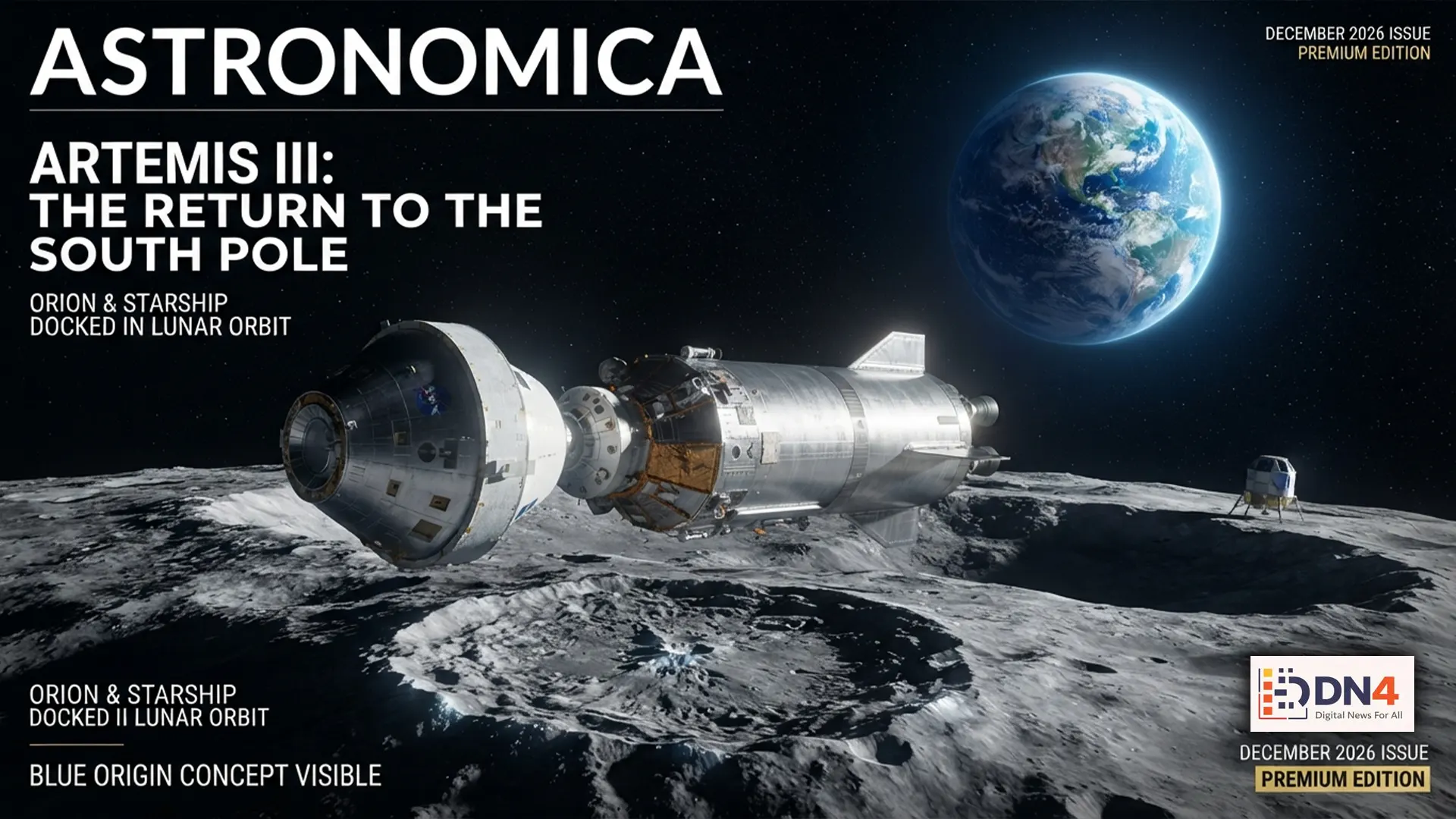
NASA’s Artemis program is bringing humanity closer to its long-awaited return to the Moon. Artemis III is expected to land astronauts on the lunar surface for the first time since Apollo 17 in 1972. Before that historic mission, NASA and its commercial partners are conducting extensive testing, simulations, and orbital rehearsals. These activities help validate every stage of the mission. They also evaluate SpaceX’s Starship Human Landing System (HLS) while supporting the continued development of Blue Origin’s Blue Moon lander for future Artemis missions.
Moreover, the rehearsal phase helps reduce mission risk. Engineers verify spacecraft operations, communications, docking procedures, and astronaut readiness before a crewed lunar landing. According to the NASA Artemis Program, every milestone improves mission safety and supports long-term lunar exploration.
SpaceX’s Starship HLS Takes Center Stage
NASA selected SpaceX to develop the Human Landing System for Artemis III. The spacecraft will carry astronauts from lunar orbit to the Moon’s surface and back again. However, Starship must first complete several integrated flight tests. These include orbital demonstrations, propellant transfer objectives, and docking exercises that confirm its readiness for human spaceflight.
Meanwhile, engineers continue refining Starship’s systems to meet NASA’s strict safety standards. As a result, every successful test brings the mission one step closer to a crewed lunar landing.

Blue Origin Prepares for Future Lunar Missions
While SpaceX leads the Artemis III landing effort, Blue Origin is developing the Blue Moon lander for future Artemis missions. The spacecraft is part of NASA’s Sustainable Human Landing System program. It aims to support long-term lunar exploration by providing additional transportation options and greater mission flexibility.
Furthermore, competition between multiple commercial providers encourages innovation. It also helps NASA reduce long-term operational risks while expanding its lunar capabilities.
Why Orbital Rehearsals Matter
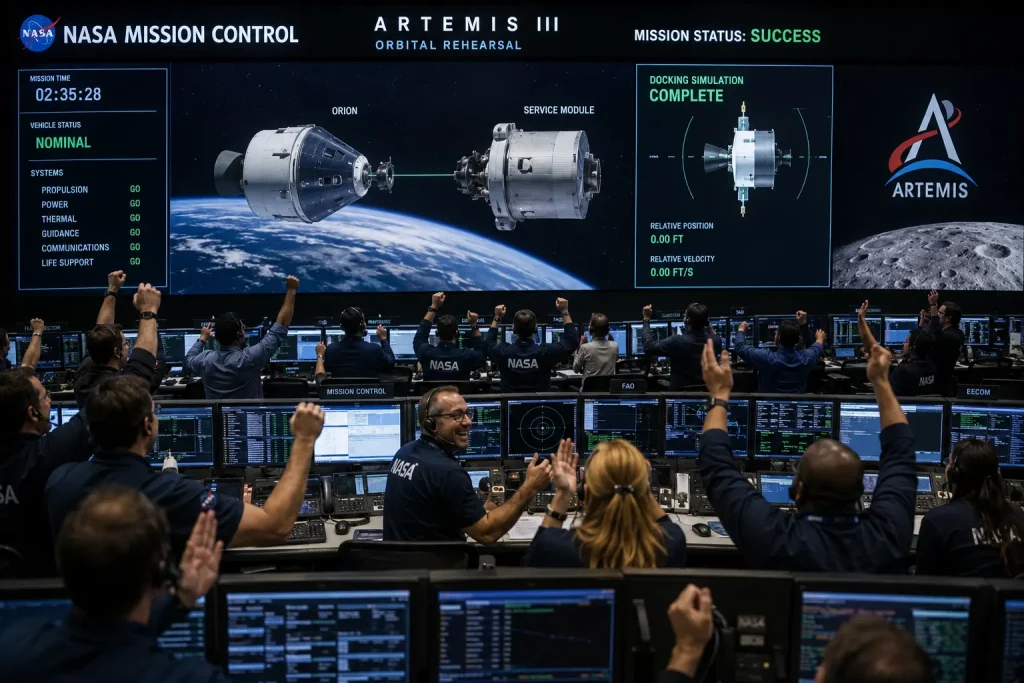
Unlike the Apollo missions, Artemis depends on several spacecraft working together in lunar orbit. Orion, the Human Landing System, and the planned Gateway lunar outpost must complete complex docking procedures, crew transfers, and coordinated operations. Therefore, NASA conducts detailed rehearsals before astronauts attempt a lunar landing.
The Orion spacecraft and the future Lunar Gateway remain central to this mission architecture. Together, they will support sustainable exploration beyond a single lunar mission.
Building a Sustainable Lunar Presence
Artemis is about much more than repeating the achievements of Apollo. Instead, NASA plans to establish a lasting human presence near the Moon’s south pole. Scientists believe permanently shadowed craters may contain water ice that could support future exploration. In addition, research, resource utilization, and technology demonstrations will prepare astronauts for future missions to Mars.
International cooperation also plays a vital role. Agencies participating in the Artemis Accords contribute technology, scientific expertise, and operational support. Consequently, the program promotes peaceful space exploration through global partnerships.
The Next Giant Leap
Every orbital rehearsal, engineering review, and spacecraft test moves Artemis III closer to launch. Together, NASA, SpaceX, Blue Origin, and international partners are building a new era of space exploration. If the mission succeeds, Artemis III will return astronauts to the Moon and establish the foundation for future journeys to Mars. Ultimately, the program represents one of the most ambitious space exploration efforts of the 21st century.
#ArtemisIII #NASA #SpaceX #BlueOrigin #MoonMission #LunarLanding #SpaceExploration #STEM #ScienceNews