

 By Vinod Ram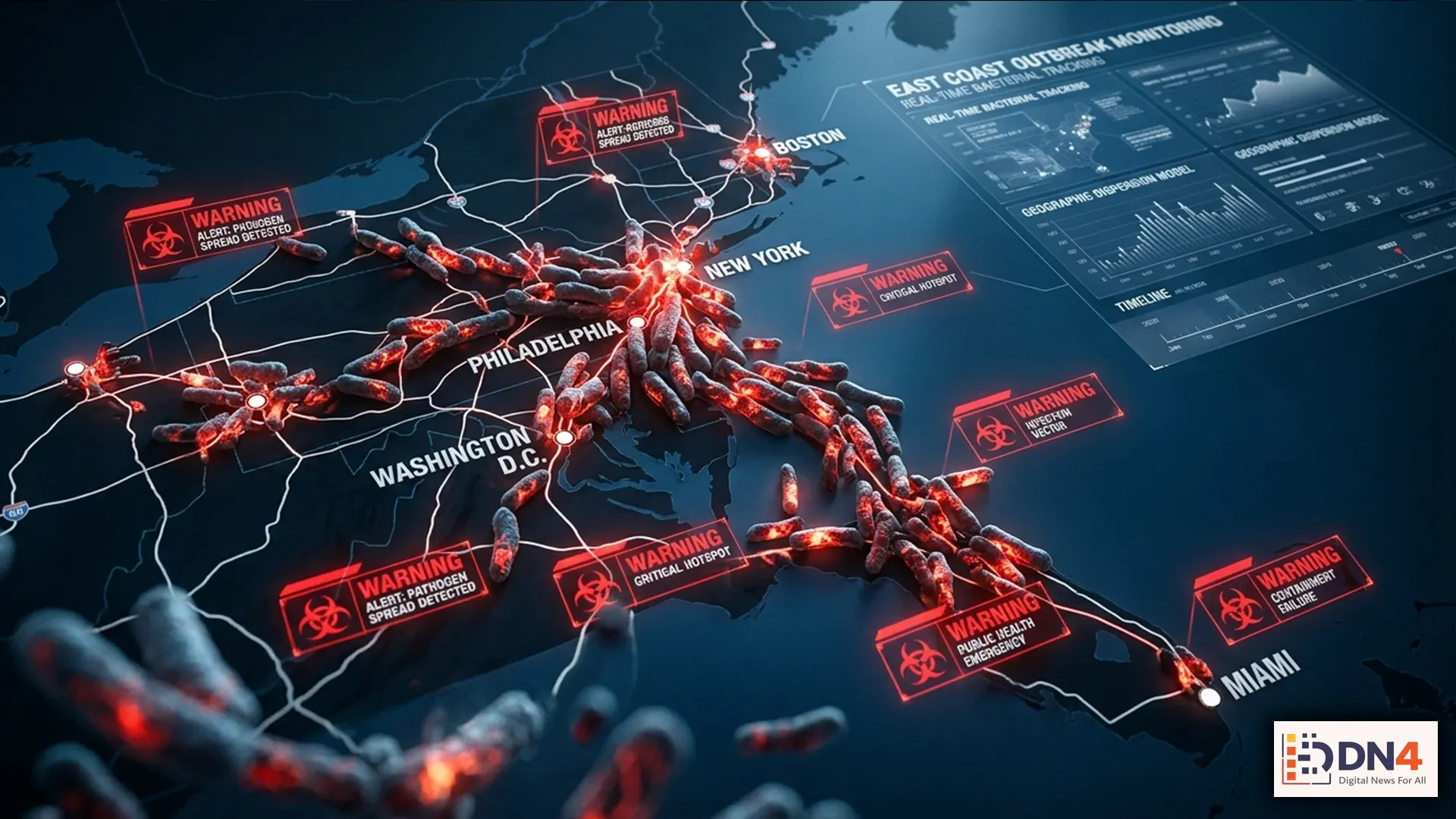
A mysterious bacterial threat being described online as the “Creeping Bacterium” is generating growing concern across parts of the U.S. East Coast, triggering questions about public safety, environmental risks, and potential regional spread.
While health authorities have not officially classified the situation as a nationwide emergency, reports of unusual bacterial infections and localized outbreaks have fueled anxiety on social media and in public health circles.
Experts warn that misinformation can spread faster than disease itself, but they also acknowledge that climate conditions, urban density, and environmental changes are increasing the risk of emerging bacterial threats worldwide.
What Is the “Creeping Bacterium”?
The phrase “Creeping Bacterium” is not currently an official scientific classification. Instead, it appears to have emerged from online discussions and media descriptions surrounding clusters of bacterial infections reported in parts of the East Coast.
Public health researchers say the concern may involve antibiotic-resistant bacteria, waterborne pathogens, or environmentally adaptive microorganisms capable of spreading in warmer and more humid environments.
Organizations like the Centers for Disease Control and Prevention (CDC) and the World Health Organization (WHO) continue monitoring emerging infectious disease trends globally.

Why Experts Are Paying Attention
Health officials have increasingly warned that climate change, global travel, and antibiotic overuse are creating favorable conditions for the emergence of new bacterial threats.
Warmer temperatures and rising coastal flooding can allow certain bacteria to survive longer and spread into new regions previously considered low-risk.
According to the U.S. Environmental Protection Agency (EPA), changing environmental conditions may significantly influence water quality and microbial ecosystems in coastal areas.
Medical researchers are especially concerned about bacteria that show resistance to multiple antibiotics, making infections harder to treat.
Could It Spread Beyond the East Coast?
At this stage, there is no confirmed evidence suggesting a large-scale nationwide bacterial outbreak linked specifically to the so-called “Creeping Bacterium.”
However, epidemiologists say regional health threats can spread more rapidly today due to population movement, international travel, and interconnected infrastructure systems.
The National Institutes of Health (NIH) has repeatedly emphasized the growing importance of monitoring emerging pathogens before they evolve into larger public health emergencies.
Experts say early detection, transparent communication, and rapid response systems remain critical for containing localized outbreaks.
How Public Health Agencies Respond
Modern disease monitoring systems rely heavily on:
- Hospital reporting networks
- Wastewater surveillance
- Genomic sequencing
- Environmental testing
- AI-assisted outbreak prediction
Institutions like the Johns Hopkins Medicine public health division and infectious disease researchers worldwide are increasingly using advanced technology to identify potential outbreaks earlier than ever before.
Should You Be Worried?
Medical experts advise the public not to panic but to remain informed using verified health sources rather than viral social media speculation.
Basic preventative measures still remain highly effective:
- Proper hygiene
- Safe food handling
- Avoiding contaminated water
- Following local health advisories
- Seeking medical attention for unusual symptoms
As public awareness around infectious diseases grows after the COVID-19 era, even localized bacterial events now attract enormous national attention.
Whether the “Creeping Bacterium” becomes a temporary scare or a larger public health concern, one thing is clear: the world is entering an age where emerging biological threats are becoming increasingly difficult to ignore.