

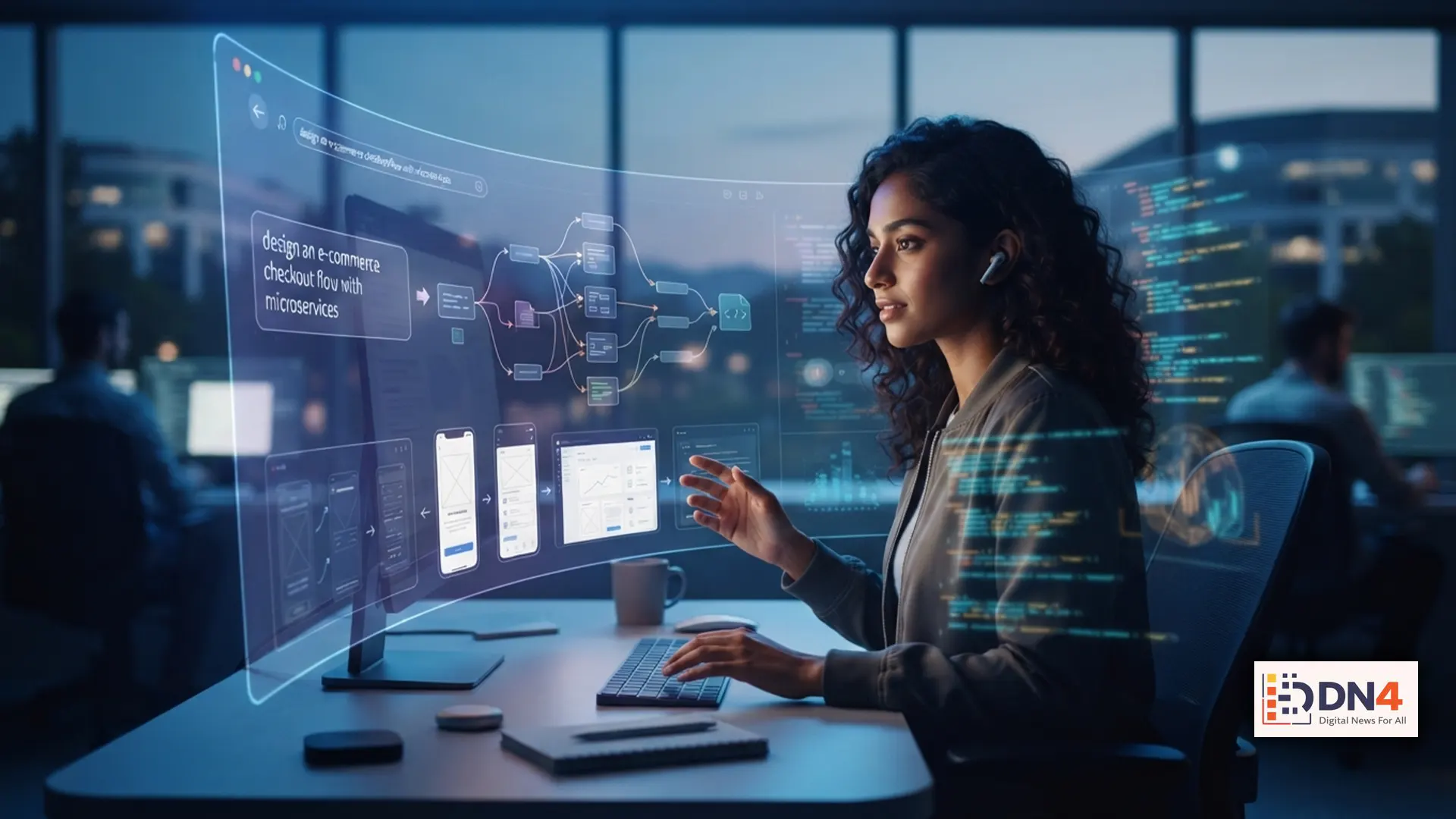
Software development is entering a new phase where writing every line of code manually is no longer the only way to build an application. Vibe coding uses generative AI to turn natural-language instructions into software, allowing developers—and increasingly non-developers—to describe what they want and let AI handle much of the implementation.
The term was coined by AI researcher and programmer Andrej Karpathy in February 2025. The approach has since moved from an experimental idea into a growing development workflow, supported by tools such as AI coding assistants, agentic IDEs and natural-language application builders.
What Exactly Is Vibe Coding?
Traditional programming requires developers to translate requirements into programming languages, architecture, tests and debugging procedures. With vibe coding, the developer can begin with an instruction such as building a customer dashboard, booking system or mobile interface.
The AI generates code, the user tests the result, and additional prompts are used to change features or fix problems. Google Cloud describes the practice as shifting more of the developer’s role toward guiding, refining and validating AI-generated software.
Why It Is Growing So Quickly
The biggest attraction is speed. A prototype that previously required hours or days can potentially be produced much faster when AI handles repetitive implementation work.
It also lowers the entry barrier. Entrepreneurs, designers, students and business professionals can experiment with applications without first mastering an entire programming stack. Recent industry activity illustrates the commercial momentum: AI development platform Lovable reportedly reached a valuation of more than $13 billion after a major 2026 funding round.
Meanwhile, platforms such as GitHub, OpenAI Codex and other AI-assisted development environments are pushing software creation toward conversational workflows.
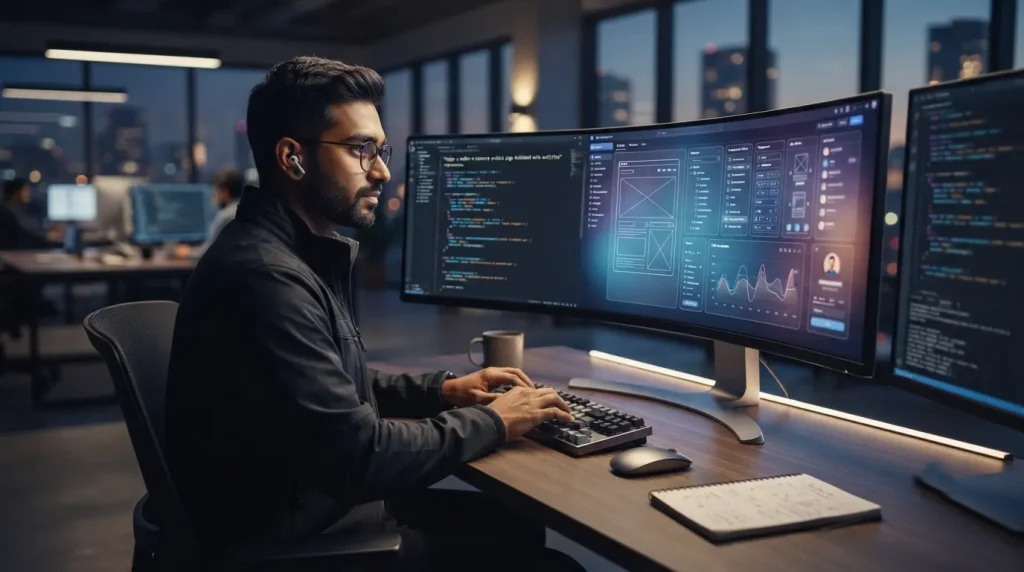
Vibe Coding Does Not Mean Developers Are Disappearing
The most important distinction is between AI-assisted development and completely hands-off programming.
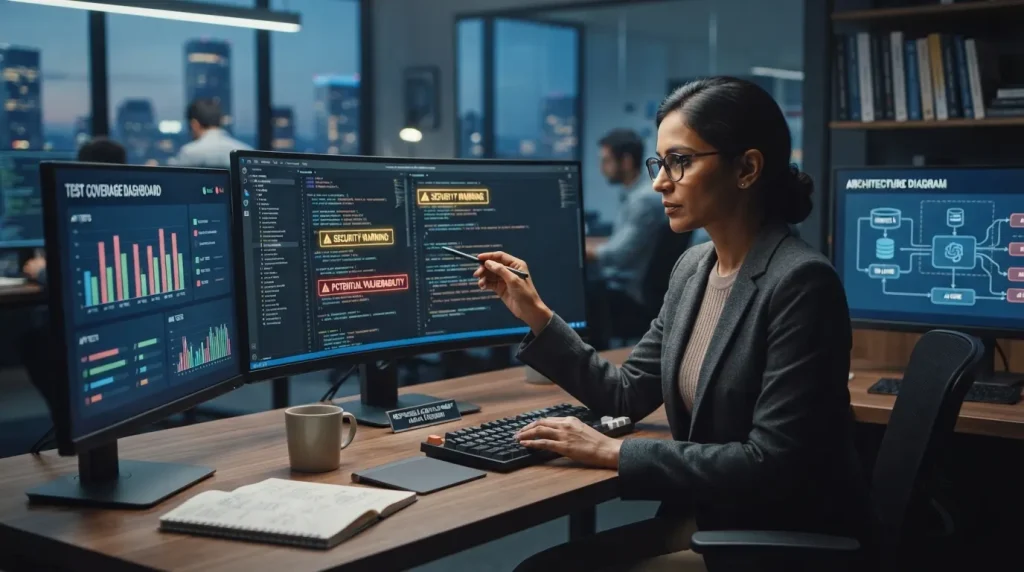
AI can generate impressive software, but generated code can contain security vulnerabilities, architectural weaknesses, unnecessary complexity and maintenance problems. Martin Fowler’s analysis warns that pure vibe coding—where users do not inspect the generated code—can create significant problems with correctness, security and maintainability.
That makes human review especially important for production systems handling payments, personal information, healthcare data or other sensitive workloads.
The Productivity Debate
Research is already producing a more complicated picture than the simple claim that AI makes programmers dramatically faster. A recent review of the emerging evidence found contradictory productivity results, including studies showing substantial gains in some circumstances and slowdowns in others. It also highlighted concerns around code-review workloads, security and long-term code quality.
In other words, generating more code is not necessarily the same as delivering better software.
The Future Is Probably Hybrid
The most likely future is not humans versus AI. It is humans directing increasingly capable AI development systems.
Developers may spend less time writing repetitive functions and more time defining requirements, designing architecture, evaluating AI output, testing systems and managing security. Non-developers may gain the ability to build prototypes and internal tools, while professional engineers remain responsible for complex production systems.
That hybrid model is already emerging. SAP notes that AI-assisted workflows can accelerate experimentation and development but still require business context, controls and human oversight for reliable enterprise software.
So, Is Vibe Coding the Future?
Vibe coding is likely to be part of the future, but it is unlikely to replace software engineering itself.
The biggest transformation may be a change in what it means to be a programmer. Knowing how to write syntax will remain useful, but understanding systems, security, testing, architecture and product requirements could become even more valuable.
The winners of the AI coding era may therefore not be those who simply generate software the fastest. They will be the people who can tell AI what to build, recognize when it is wrong and turn generated code into software that is secure, maintainable and genuinely useful.
Vibe coding is changing the interface between humans and computers. The keyboard is still here—but increasingly, the conversation is becoming part of the programming language.
IBM, Google Cloud, Martin Fowler, SAP, GitHub, and NIST AI Risk Management Framework.
#VibeCoding #GenerativeAI #SoftwareDevelopment #AICoding #ArtificialIntelligence #TechTrends #Developers #FutureOfTech #AI