

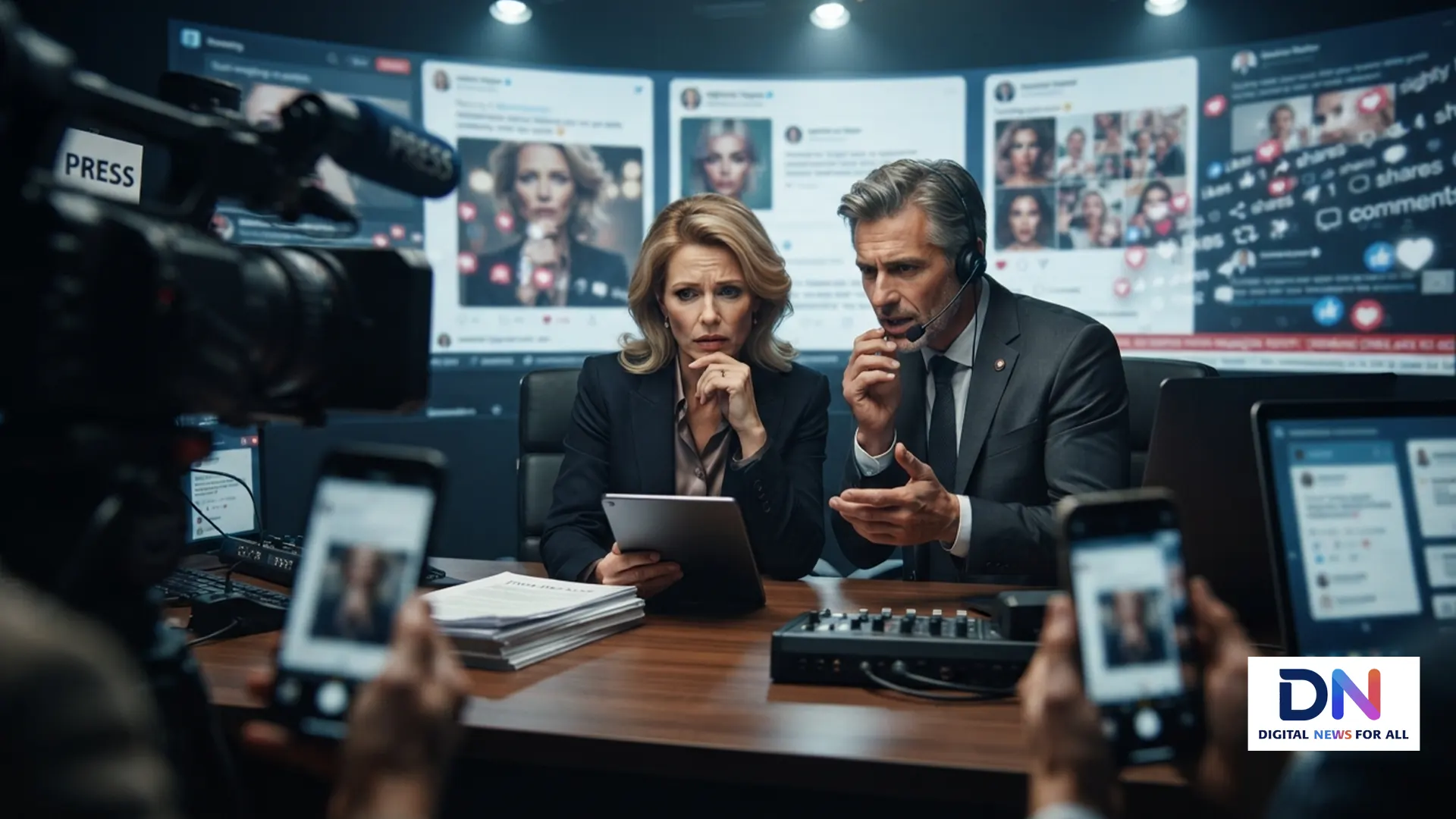
Social media misinformation has become a major challenge for celebrities, political leaders, and public relations professionals. A misleading clip, fabricated quote, or AI-generated image can spread worldwide before an official response appears. As audiences increasingly discover news through social platforms, protecting a public image now requires speed, evidence, and a clear communication strategy.
How viral misinformation changes public perception
Social media gives celebrities and politicians direct access to millions of people. However, the same platforms can amplify rumors, edited videos, and misleading claims. Content that triggers anger or surprise can attract attention before users verify its accuracy.
The Reuters Institute’s 2026 Digital News Report highlights the growing role of social and video networks in news consumption. It also documents increasing concern about fake news and trust in online information.
Influencers are part of this changing landscape. A Pew Research Center study of news influencers found that many Americans encounter news through personalities on social platforms. This creates opportunities for direct communication, but it also makes source credibility increasingly important.

Celebrity PR faces a new reputation challenge
For actors, musicians, and athletes, an online controversy can quickly become a global public relations crisis. A short video may lack context, while a fake screenshot can appear authentic when shared repeatedly. Even after corrections emerge, the original claim may continue circulating.
Publicists must therefore monitor online conversations, verify suspicious material, and respond with documented facts. Sometimes a concise statement is enough. In other cases, teams may need to publish the full video, provide a timeline, or request the removal of impersonation content.
AI-generated media raises the stakes further. Reuters’ reporting on political deepfakes describes how fabricated videos can make public figures appear to say things they never said. The same technology can threaten celebrity reputations through fake endorsements, impersonation, and invented scandals.
Political communication faces higher stakes
Political campaigns use social platforms to reach voters directly, shape narratives, and respond to criticism. However, misleading information can also distort public debate. A manipulated clip may circulate without the surrounding context, while a false claim can be repeated by accounts that appear independent.
Pew Research Center’s analysis of breaking-news habits shows how Americans divide their attention among news organizations, search engines, and social media. That fragmented information environment makes consistent, verifiable communication essential.
For additional context, the UNESCO resources on disinformation explain why information verification and media literacy matter. The Cybersecurity and Infrastructure Security Agency’s rumor-control guidance also offers a useful model for checking claims against credible evidence.

What effective digital PR looks like now
Modern reputation management requires preparation before a crisis begins. Teams should establish verified communication channels, monitor emerging claims, and correct false information without unnecessarily amplifying it. They should also label synthetic content clearly and preserve evidence when impersonation or fraud occurs.
Speed matters, but accuracy matters more. A rushed denial that later proves incorrect can damage credibility further. Organizations should distinguish confirmed facts from allegations and update statements when new evidence becomes available.
The future of trust online
Social media has made public communication faster and more accessible, but it has also made reputation more vulnerable. Celebrities and political leaders cannot control every online narrative. They can, however, build trust through transparency, consistent evidence, and timely corrections. In a digital environment where convincing fakes are increasingly easy to create, credibility remains one of the most valuable public relations assets.
#SocialMedia #Misinformation #CelebrityNews #PoliticalPR #Deepfakes #DigitalMedia #ReputationManagement