

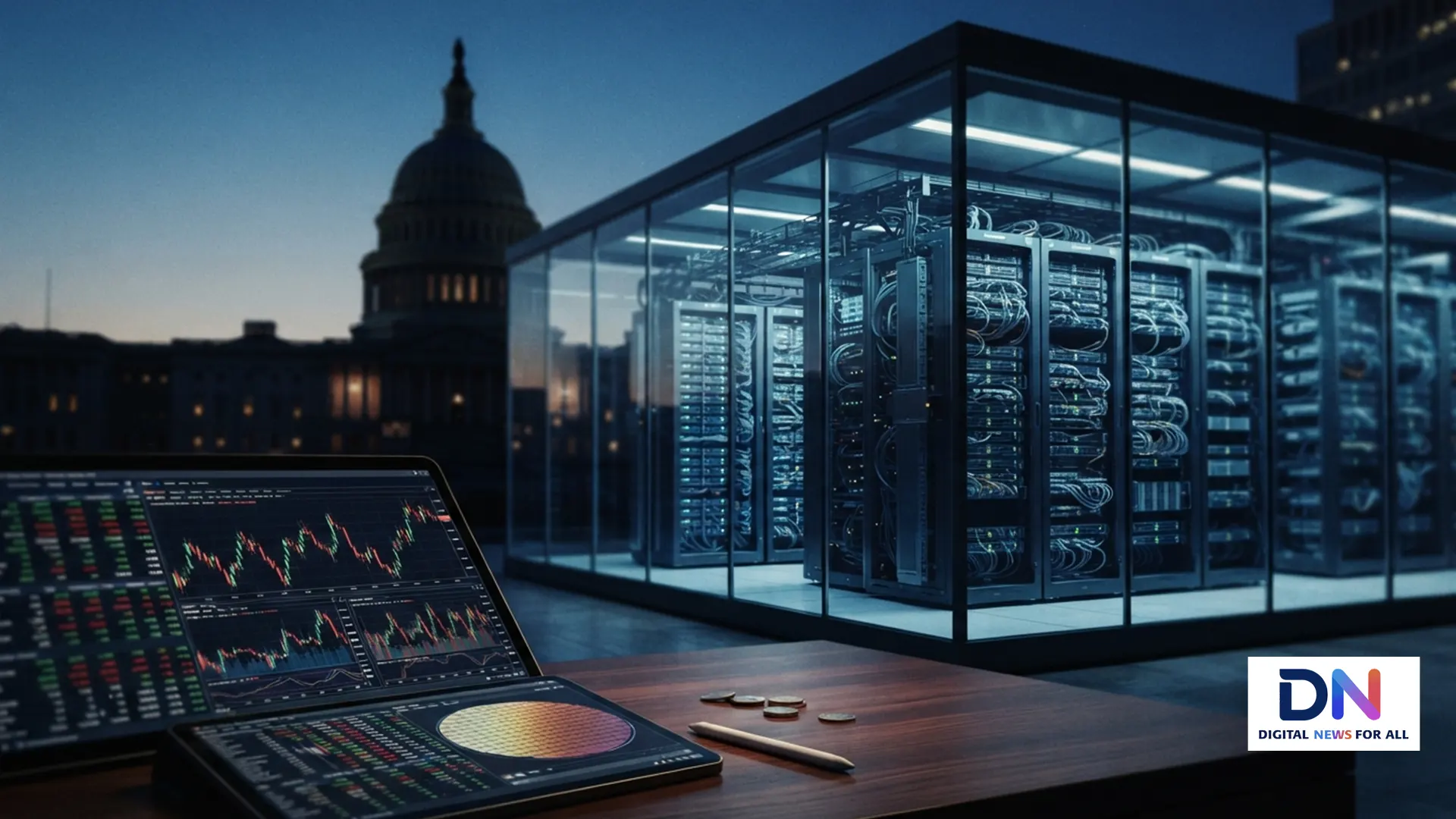
Big Tech AI spending could benefit from political gridlock in Washington. As the United States approaches its November 3, 2026, midterm elections, investors are weighing whether a divided Congress could limit sweeping regulatory changes and allow technology companies to continue building artificial intelligence infrastructure.
A recent Yahoo Finance report on Jefferies’ analysis outlined why divided government could support large technology companies. The argument is that a more difficult path for major legislation may reduce some near-term policy uncertainty for AI developers.
Why Political Gridlock Could Help Big Tech
Major AI companies are investing billions of dollars in data centers, advanced chips, cloud computing and electricity infrastructure. These projects require long planning horizons and confidence that regulations will not change dramatically during construction.
If Congress struggles to pass sweeping new restrictions, companies may retain greater flexibility to develop AI models and expand computing capacity. However, gridlock can also delay useful infrastructure legislation, so its effects are not automatically positive.
S&P Global’s analysis of the 2026 midterms identifies AI policy, data centers and infrastructure as areas where bipartisan cooperation remains possible even amid political division.

AI Infrastructure Is the Bigger Investment Story
For technology investors, the central issue is whether enormous AI investments eventually generate sufficient revenue. Cloud providers, chipmakers and software companies are racing to meet demand for computing power and AI services.
Yet infrastructure faces a growing challenge: electricity. On October 8, Axios reported on proposed bipartisan federal legislation that would accelerate energy permitting while imposing greater accountability on data centers for their power costs.
The proposal illustrates the complicated political balance. Washington may support AI expansion while demanding that technology companies shoulder more of the infrastructure burden. Read the Axios report on data center policy for details.
Regulation Remains a Significant Risk
Political division does not mean AI companies will escape oversight. Lawmakers from both parties have raised concerns about consumer protection, transparency, electricity prices and AI safety.
In September, a bipartisan group of senators introduced the AI Systems Transparency Act, proposing new transparency requirements for AI companies.
Meanwhile, the House passed the Ratepayer Protection Act by a 417–3 vote in September, demonstrating that some restrictions on data center costs can attract broad bipartisan support. The Washington Post’s coverage explains the proposed protections for electricity customers.
What This Means for Technology Stocks
A divided Washington could limit abrupt policy shifts, but that alone cannot guarantee rising stock prices. Investors must still assess valuations, AI revenue growth, capital expenditure, competition and the risk that infrastructure spending outpaces demand.
Charles Schwab’s market analysis also cautions that elections can create volatility and that political outcomes should not replace long-term investment analysis.
The bottom line: political gridlock may provide some breathing room for Big Tech, but it is no guarantee of an AI stock rally. Ultimately, sustainable returns will depend on whether companies can turn enormous AI investments into durable profits.
#BigTech #ArtificialIntelligence #AIInvesting #TechStocks #USPolitics #DataCenters #StockMarket