

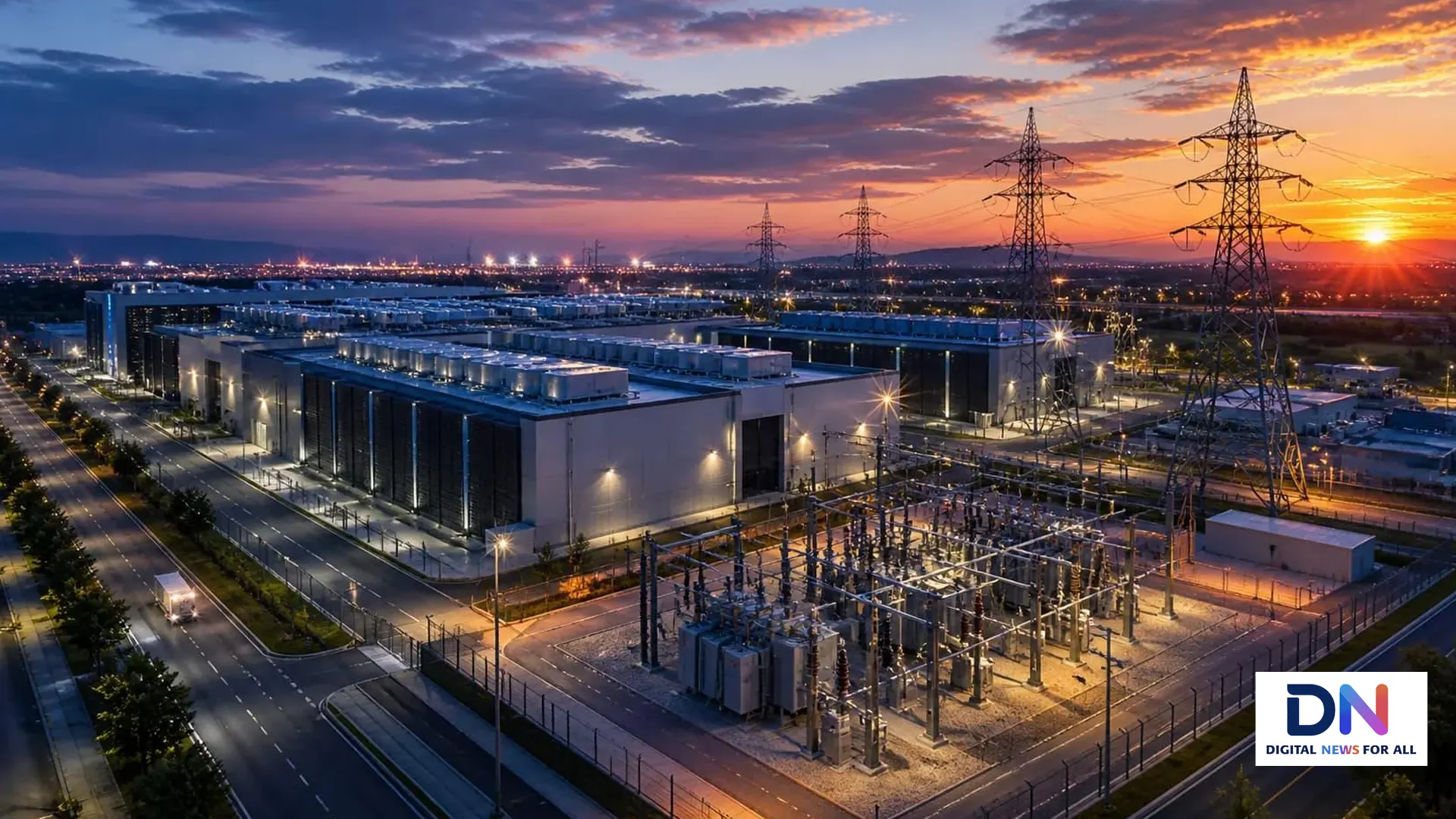
America’s electricity grid is facing a new challenge as artificial intelligence, cloud computing, and technology hubs expand. Data centers need enormous amounts of electricity, often around the clock. Local utilities must now find ways to serve these facilities without undermining reliability or pushing costs onto households.
The pressure is exposing a gap between the speed of technology investment and the slower process of building power infrastructure. The result could reshape electricity prices, renewable energy development, and utility planning across the United States.
AI Growth Is Increasing Electricity Demand
Data centers require continuous electricity for servers, cooling systems, and networking equipment. Their demand can be substantial even when other commercial buildings use less power overnight.
The U.S. Energy Information Administration projects that electricity consumed by data center servers will rise significantly over the coming decades. Its 2026 outlook estimates consumption could reach between 446 billion and 818 billion kilowatt-hours by 2050, depending on future growth.
The agency also forecasts stronger national electricity-demand growth through 2027, driven largely by large computing facilities. Its January 2026 forecast highlights how data centers are changing the country’s power outlook.
Utilities Face a Race Against Infrastructure Delays
Building a data center can take considerably less time than expanding the transmission network needed to serve it. New substations, high-voltage lines, transformers, and generation projects require planning, permits, financing, and construction.
The International Energy Agency identifies grid capacity as a major bottleneck. It estimates that more than 2,500 gigawatts of renewable, storage, and large-load projects are waiting in connection queues worldwide.
In the United States, the challenge is especially visible in the PJM electricity market. Reuters reported on November 4 that PJM faces growing reliability concerns as data center demand rises and new generation projects struggle with delays.
Can Renewable Energy Keep Up?
Solar, wind, and battery storage are important parts of the solution. They can add electricity capacity and help reduce dependence on fossil fuels. However, renewable generation does not always occur when data centers need electricity.
S&P Global’s grid analysis explains how renewable resources can be located far from major data center clusters. Transmission constraints can prevent available electricity from reaching the places that need it.
Battery storage, improved transmission, and better demand management can help address this mismatch. Utilities may also combine renewable power with dispatchable generation to maintain reliable supply.
Who Should Pay for the Grid Expansion?
Rising infrastructure costs create a difficult question for regulators: Should households share the cost of upgrades required by large technology companies?
The Federal Energy Regulatory Commission ordered all six regional grid operators under its jurisdiction to justify or reform their rules for connecting large electricity users. The June 2026 FERC announcement emphasized faster connections alongside consumer protections.
Meanwhile, utilities are exploring dedicated power arrangements, on-site generation, phased connections, and long-term contracts with major customers. These measures could reduce the risk that speculative projects create unnecessary costs.
America’s technology expansion will depend on more than advanced chips and data center construction. It will also depend on reliable, affordable electricity. The utilities that balance new demand, clean energy, and consumer protection will help determine how sustainable the AI boom becomes.
#DataCenters #ArtificialIntelligence #PowerGrid #EnergyCrisis #RenewableEnergy #ElectricityDemand #GridReliability #CleanEnergy #TechIndustry