


The relationship between publishers and AI search is entering a new phase. As artificial intelligence systems increasingly summarize information directly in search results and conversational answers, publishers face a difficult trade-off: allow AI crawlers to access their journalism and potentially gain visibility, or restrict them to protect traffic, advertising revenue and intellectual property.
Recent reporting indicates that major publishers are considering stronger restrictions on AI-related crawling as referral traffic becomes a growing concern. The Wall Street Journal reports that organizations including USA Today, Reuters, Politico, The Economist and People Inc. have been examining ways to respond to the changing search environment.
Why Publishers Are Worried About AI Search
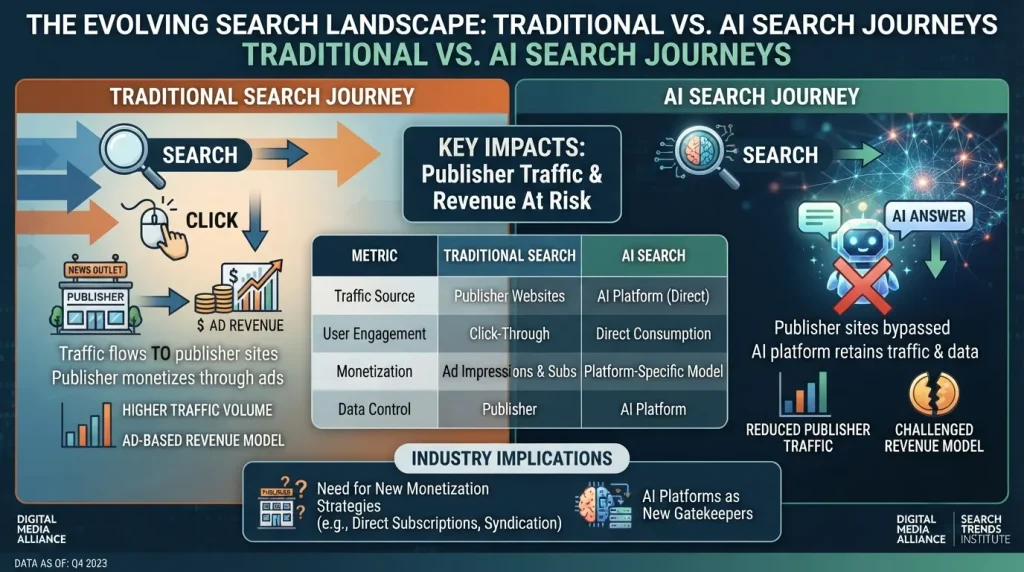
Traditional search generally worked as a referral system: a user searched for information, clicked a result and visited the publisher’s website. AI search can change that journey by providing a synthesized answer before the user needs to open the original article.
A recent study examining Google AI Overviews found that cited-source clicks occurred in only about 1% of observed AI Overview visits in its U.S. browsing panel. The research suggests that AI-generated answers correlate with fewer clicks and more browsing sessions ending on the search page. The study’s findings illustrate why publishers are paying closer attention to referral economics.
Blocking Is Becoming More Sophisticated
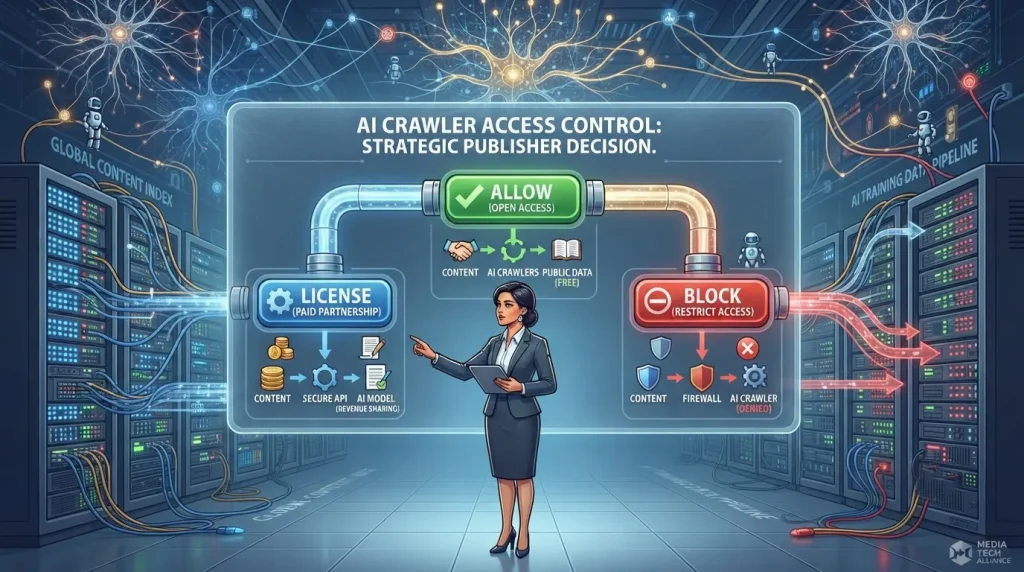
Publishers do not necessarily have to choose between completely allowing or completely blocking AI activity. Cloudflare now gives website operators separate controls for AI crawlers associated with Search, Training and Agent activities. Its AI bot controls allow publishers to distinguish between different types of automated access.
Cloudflare is also developing tools that let content owners allow, charge or block AI crawlers. That points toward a future in which access to premium content could become a commercial relationship rather than a simple technical permission.
Not Every Publisher Wants to Block AI
Blocking AI crawlers can protect content, but it can also reduce a publisher’s visibility inside AI-generated answers. That creates a major strategic question: is being cited by an AI platform valuable enough to justify giving that platform access to the underlying content?
Perplexity, for example, says its PerplexityBot respects robots.txt directives. The company says blocked pages will not have their full or partial text indexed, although the domain, headline and a brief factual summary may still be indexed.
The Emerging Content Licensing Model
The publishing industry may ultimately move toward a hybrid model: freely accessible search discovery combined with paid licensing for AI use. Cloudflare says publishers and AI platforms have signed more than 50 major content licensing agreements over the past year, reflecting growing interest in compensating content owners for AI access.
For publishers, the calculation is becoming increasingly commercial. If AI systems use original reporting to answer questions without generating enough referral traffic or licensing revenue, blocking may become more attractive. If AI platforms deliver valuable audiences or pay for access, allowing selected crawlers may make more sense.
What Comes Next?
The AI-search era is forcing publishers to rethink what “distribution” means. Publishers may soon need to measure website traffic, search rankings, AI citations, licensing revenue and direct subscriptions together rather than separately.
The central question is no longer simply whether AI crawlers can read publisher content. It is whether publishers can build a sustainable business model around the new way people discover information.
#AISearch #AICrawlers #Publishers #GenerativeAI #SEO #DigitalPublishing #ContentCreators #GoogleAI