

A familiar voice on the phone is no longer proof that the person calling is really who they claim to be. Artificial intelligence can now create convincing voice clones from relatively short audio samples, giving scammers another powerful tool for impersonating relatives, executives and other trusted contacts.
The Federal Trade Commission warns consumers about AI-powered family emergency scams, in which criminals may clone a loved one’s voice and create an urgent story designed to pressure someone into sending money. The danger is particularly serious because emotional urgency can override normal skepticism.
How AI Voice Scams Work
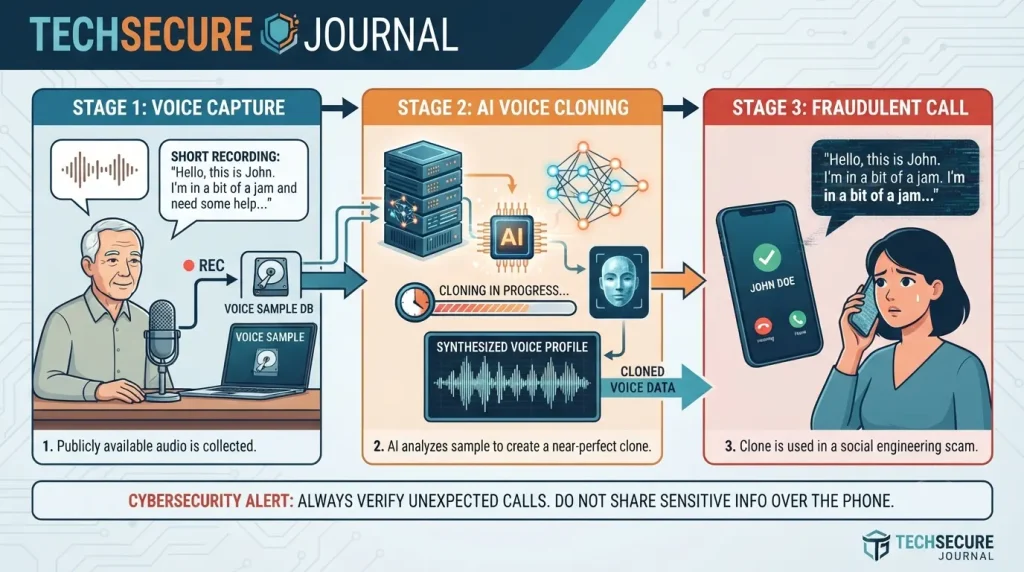
A scammer may obtain a voice sample from social media, videos, podcasts or other publicly available recordings. AI voice-cloning technology can then generate speech that sounds remarkably similar to the target.
The FTC’s guidance on AI-enhanced family emergency scams recommends not relying on the caller’s voice alone. Instead, contact the supposed family member through a phone number you already know and verify the emergency independently.
Why Voice Detectors Matter
Technology companies and researchers are developing tools designed to identify synthetic voices and audio deepfakes. The FTC’s research on voice-cloning defenses describes several approaches, including real-time detection, authentication, watermarking and post-use analysis.
The FTC’s Voice Cloning Challenge produced concepts ranging from algorithms that distinguish human and synthetic speech to systems designed to detect voice clones during calls. These approaches could eventually give consumers and businesses an additional warning signal before they trust a suspicious conversation.
Businesses Face a Different Risk
For companies, the threat can extend beyond family scams. A cloned executive voice could be used to pressure an employee into transferring funds, changing payment instructions or revealing sensitive information.
The FTC has specifically addressed AI-enabled voice cloning in robocalls and expanded protections against deceptive telemarketing practices. Businesses should therefore treat voice authentication as one part of a broader fraud-prevention strategy.

Don’t Trust the Voice Alone
The FBI’s Internet Crime Complaint Center advises people to be cautious when AI-generated content is difficult to authenticate. The safest response is to slow down and verify the identity of the person through a separate trusted channel.
Families can establish a private verification phrase or agreed emergency procedure. Businesses can require independent confirmation for payment changes, wire transfers and sensitive account requests.
The Federal Communications Commission’s consumer guidance also provides resources for dealing with unwanted calls and robocalls.
AI voice detection can become an important layer of protection, but no detector should be treated as a perfect guarantee. The strongest defense combines technology with human verification, clear payment controls and a willingness to pause when a caller demands immediate action.
If a voice sounds exactly right but the request feels unusual, verify the person—not just the voice.
#AIVoiceScams #VoiceCloning #CyberSecurity #ScamAlert #AI #FraudPrevention #OnlineSafety #BusinessSecurity