


Alzheimer’s blood tests are becoming easier to access, and social media is helping push them into the public conversation. But a legitimate medical breakthrough can become confusing when people start treating a laboratory result as a diagnosis they can make themselves.
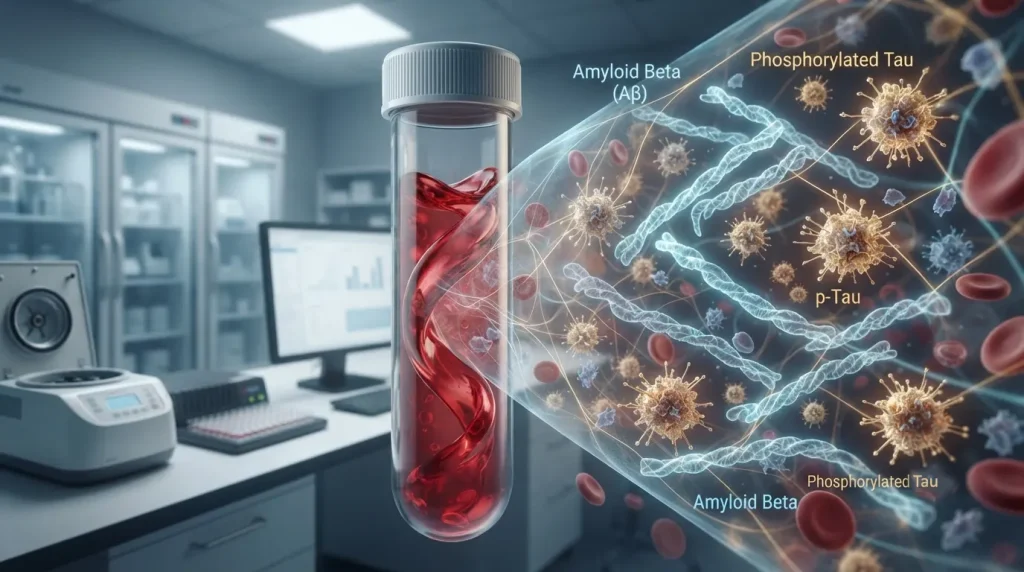
Blood-based biomarkers can detect proteins associated with Alzheimer’s disease, including forms of amyloid beta and phosphorylated tau. The technology is promising. However, the test result is only one part of a much larger clinical evaluation.
Why These Tests Are Suddenly Trending
The science has advanced rapidly. In May 2025, the U.S. Food and Drug Administration cleared the first blood test intended to aid Alzheimer’s diagnosis in adults aged 55 and older who have signs and symptoms of the disease.
Research has also produced encouraging results. The National Institutes of Health reported that one blood test identified Alzheimer’s disease with approximately 88% to 92% accuracy in a large study.
Those numbers can sound definitive on social media. They are not.

A Positive Result Does Not Equal a Diagnosis
The Alzheimer’s Association recommends that blood-based biomarker testing be incorporated into a broader diagnostic workup. Its 2025 guideline specifically states that testing should not occur before a comprehensive clinical evaluation.
That distinction matters. Memory problems can have many possible causes. Medication effects, sleep problems, depression, nutritional deficiencies and other medical conditions can contribute to cognitive symptoms.
The National Institute on Aging describes Alzheimer’s diagnosis as a process involving medical history, cognitive assessment, physical examination and, when appropriate, laboratory or imaging tests.
The Home-Test Problem
At-home testing can make medical information feel more convenient. Yet convenience can encourage people to skip the professional interpretation that gives a biomarker result meaning.
Sample handling also matters. The Alzheimer’s Association’s biomarker standardization work highlights variables such as collection tubes, processing, storage delays and freeze-thaw cycles that can affect measurements.
That makes a viral TikTok demonstration particularly misleading if it suggests that a person can simply order a test, read a number and determine whether they have Alzheimer’s disease.
Why Misinterpretation Can Be Harmful
A frightening result could cause unnecessary anxiety. A reassuring result could create false confidence and delay an appropriate medical evaluation. Neither outcome is ideal.
There is another important distinction: current blood biomarkers are primarily being developed and used to help evaluate people with cognitive symptoms. The Alzheimer’s Association notes that these tests are not currently general screening tools for people without symptoms.
The Promise Is Real — But So Are the Limits
Alzheimer’s blood testing could eventually make diagnosis faster, less invasive and more accessible. That is a major medical development.
But social-media shortcuts can turn useful science into misleading health advice. The safest takeaway is simple: a blood biomarker can provide valuable evidence, but it should be interpreted alongside a person’s symptoms, medical history and professional evaluation.
If someone is experiencing new or worsening memory or thinking problems, a healthcare professional can determine which tests are appropriate rather than relying on a viral health trend.
#Alzheimers #BloodTests #TikTokHealth #Dementia #BrainHealth #HealthMisinformation #MedicalNews #HealthAwareness