

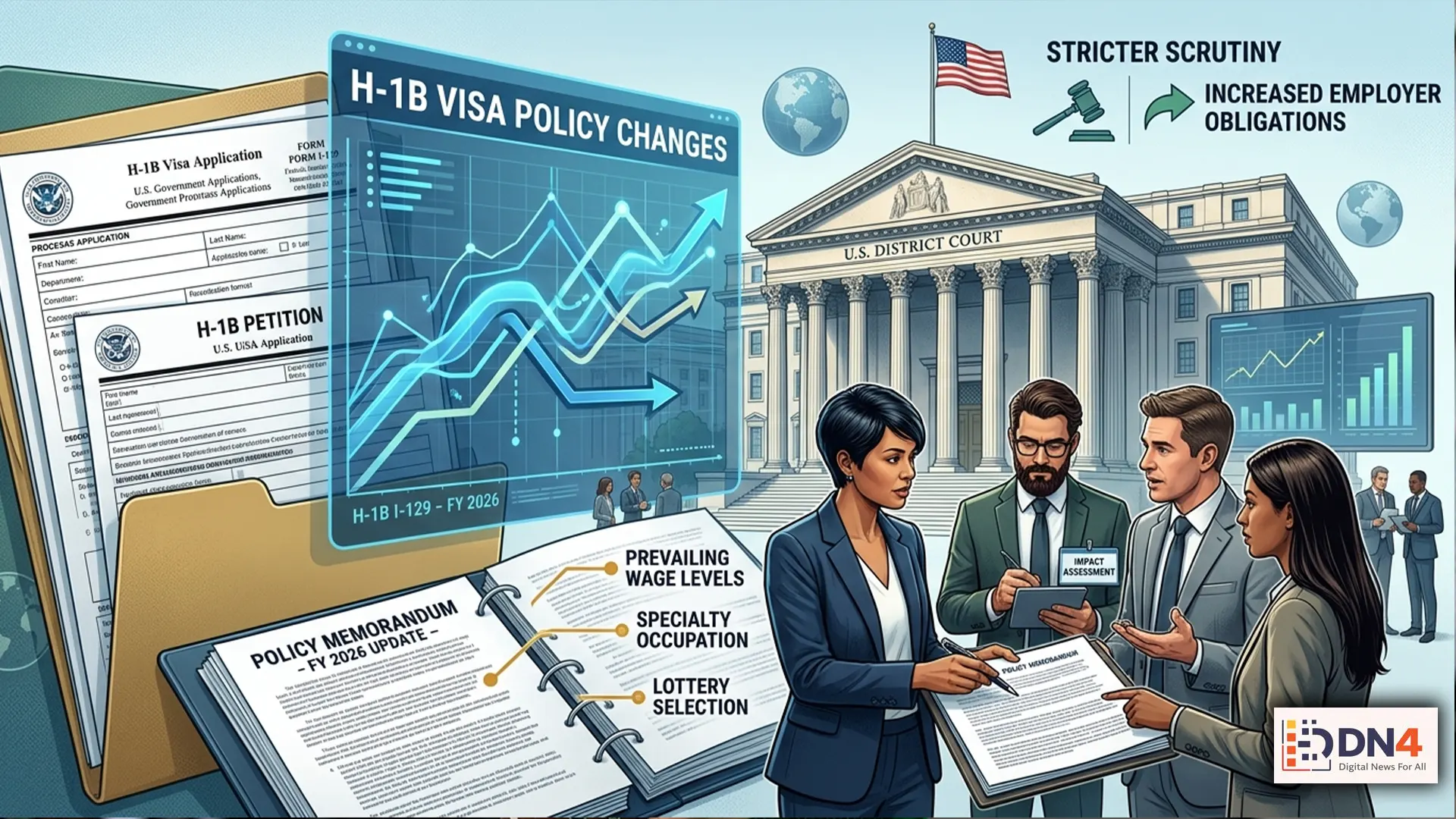
A major federal court decision has dramatically changed the conversation surrounding H-1B visa costs in 2026. A U.S. District Court judge recently struck down the controversial $100,000 fee imposed on certain new H-1B visa petitions, ruling that the executive branch lacked the authority to create what the court determined was effectively a tax without congressional approval.
The decision has significant implications for employers, foreign professionals, universities, healthcare organizations, and technology companies that depend on the H-1B visa program to recruit highly skilled workers. The ruling provides immediate relief for many organizations that feared dramatically higher hiring costs.
What Was the $100,000 H-1B Fee?
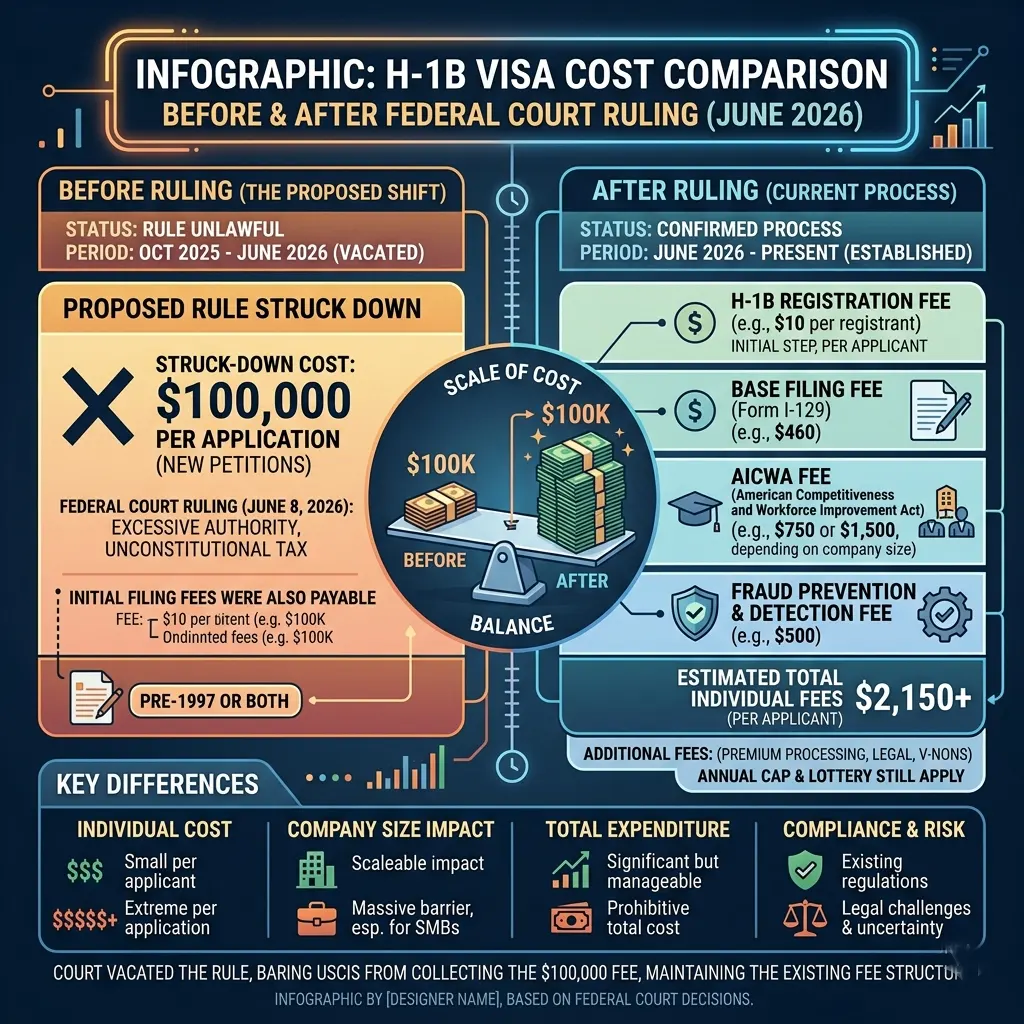
In September 2025, a presidential proclamation introduced a $100,000 supplemental fee for certain new H-1B visa petitions. The policy represented a massive increase compared to traditional H-1B filing expenses, which generally amount to several thousand dollars depending on employer size, filing requirements, and optional premium processing services.
Supporters argued that the fee would encourage employers to prioritize domestic hiring. Critics countered that it would make it significantly harder for businesses, hospitals, universities, and research institutions to attract global talent.
What Did the Court Decide?
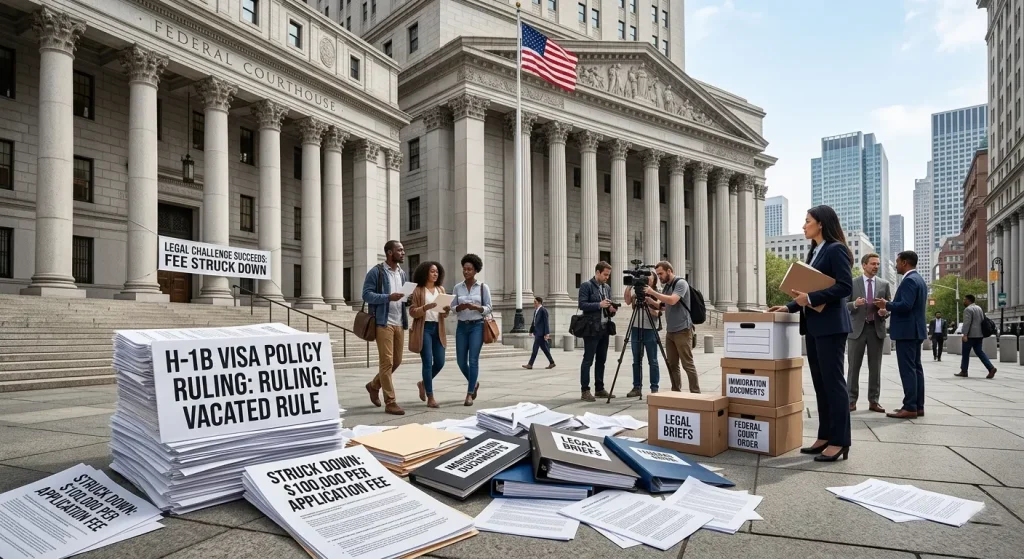
On June 8, 2026, U.S. District Judge Leo Sorokin ruled that the $100,000 fee was unlawful because it functioned as a tax that Congress had never authorized. The court vacated the policy nationwide, preventing federal agencies from enforcing the fee. The administration has indicated it may appeal the decision, meaning legal uncertainty remains.
Legal experts note that the ruling restores the previous fee structure for now, though future court decisions could alter the situation if appeals proceed.
What Does This Mean for Employers?
For employers, the ruling removes a potentially enormous financial burden. Companies in sectors such as technology, healthcare, engineering, and higher education had warned that the fee could severely limit their ability to recruit specialized talent.
Major employers that frequently use the H-1B program—including firms across the technology sector—closely monitored the case because the added cost would have fundamentally changed workforce planning and recruitment strategies.
Organizations seeking official guidance should continue monitoring updates from the U.S. Citizenship and Immigration Services (USCIS), the U.S. Department of Labor, and the U.S. Department of State.
What Applicants Should Watch
For prospective H-1B workers, especially professionals from countries such as India, the court ruling reduces uncertainty regarding sponsorship costs. However, applicants should remember that standard H-1B filing fees, lottery procedures, wage requirements, and eligibility rules remain in effect.
Resources such as the American Immigration Lawyers Association, USCIS, and NFAP continue to provide guidance on policy developments and compliance requirements.
Looking Ahead
The federal court ruling represents a significant victory for employers and skilled foreign workers, but the story is far from over. With appeals possible and immigration policy remaining a politically sensitive issue, businesses and applicants should continue monitoring developments closely.
For now, however, the decision restores predictability to the H-1B process and removes one of the largest proposed cost increases in the program’s history, offering a measure of stability for employers and applicants planning for 2026 and beyond.
#H1B #H1BVisa #USImmigration #VisaNews #ImmigrationNews #SkilledWorkers #USCIS #WorkVisa #TechJobs