

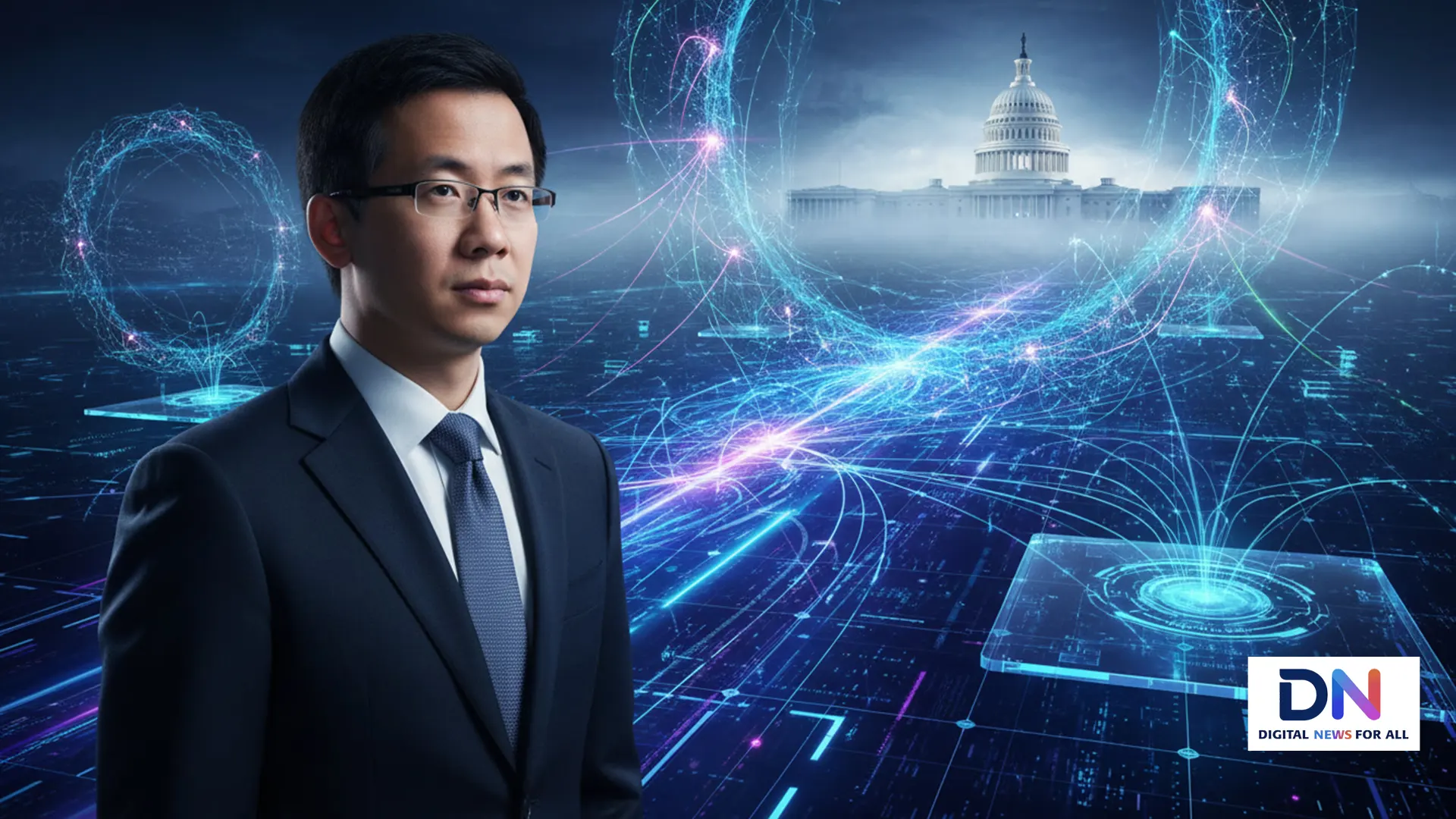
Zhang Yiming has become Asia’s richest person, with his fortune surpassing $105 billion as of September 2026. The ByteDance founder’s rise is more than a billionaire wealth story. It highlights how algorithms, artificial intelligence and privately held technology companies are challenging the traditional framework of U.S. tech regulation.
ByteDance owns TikTok and Douyin and has expanded aggressively into artificial intelligence. Reuters reports that the company is investing heavily in AI infrastructure while developing products including the Doubao chatbot and Seedance video-generation model.
From TikTok to an AI Powerhouse
Zhang Yiming built ByteDance around recommendation technology. Instead of relying primarily on users following accounts or publishers, its platforms became known for algorithmically selecting content for individual users.
That model helped TikTok become one of the world’s most influential social-media platforms. It also demonstrated why algorithmic systems have become central to Washington’s technology debate.
ByteDance is now much broader than TikTok. Its AI portfolio includes Doubao, Seedance and enterprise technology through Volcano Engine. Reuters says the company’s capital spending could reach $70 billion in 2026 as it invests in chips, data centers and other infrastructure.
TikTok Changed the Regulatory Question
For years, U.S. technology regulation focused heavily on privacy, competition and consumer protection. TikTok added another dimension: whether an algorithm controlled by a foreign-owned company could create national-security concerns.
The U.S. Supreme Court’s TikTok docket shows that the Court considered whether the Protecting Americans from Foreign Adversary Controlled Applications Act violated the First Amendment. The Court affirmed the lower-court judgment in January 2025.
The debate has since moved into a more complicated phase. The Justice Department’s Office of Legal Counsel said in July 2026 that the TikTok U.S. Data Security joint venture is majority-owned by American investors and operates independently of ByteDance for purposes of the federal government-device prohibition.

The Algorithm Is Becoming the Asset
The bigger regulatory challenge is that modern technology companies increasingly compete through algorithms rather than traditional physical products.
Recommendation engines determine what millions of people see. Generative-AI systems increasingly create text, images and video. Advertising algorithms decide which consumers receive particular messages.
That creates difficult policy questions. Should regulators focus on the ownership of an algorithm, the data behind it, the effects it produces, or the infrastructure that supports it?
AI Makes the Debate More Complicated
ByteDance’s transformation illustrates how quickly the boundaries between social media and AI are disappearing. A company that became famous for short videos is now competing in generative AI, video creation and enterprise technology.
That evolution could influence how Washington approaches future technology rules. A regulation designed specifically for social-media platforms may have limited relevance if the same company becomes an AI developer, cloud customer, advertising platform and content-distribution network.
The Federal Trade Commission’s AI guidance shows the broader regulatory approach: existing consumer-protection and competition principles can apply to emerging AI systems even as lawmakers debate new rules.
What Washington Could Focus On Next
The policy debate is increasingly likely to involve several overlapping areas: data security, algorithmic transparency, competition, children’s online safety, AI-generated content and foreign ownership.
The National Institute of Standards and Technology’s AI Risk Management Framework provides one example of a risk-based approach rather than regulation aimed at a single company.
Meanwhile, the Federal Trade Commission’s competition resources illustrate how U.S. regulators already evaluate technology markets through competition and consumer-impact principles.

A New Era of Platform Regulation
Zhang’s rise therefore represents more than a change in Asia’s billionaire rankings. It illustrates how algorithmic technology can generate enormous economic value while creating regulatory questions that cross national borders.
ByteDance’s experience with TikTok also demonstrates that ownership, algorithms, data and national security can no longer be treated as completely separate policy questions.
As social platforms become AI companies and AI companies become distribution platforms, U.S. regulators face a moving target. The next phase of technology policy may depend less on regulating individual apps and more on establishing rules for the algorithms, data and infrastructure that increasingly determine how digital markets operate.
#ZhangYiming | #ByteDance | #TikTok | #TechRegulation | #AI | #SocialMedia | #USTech