

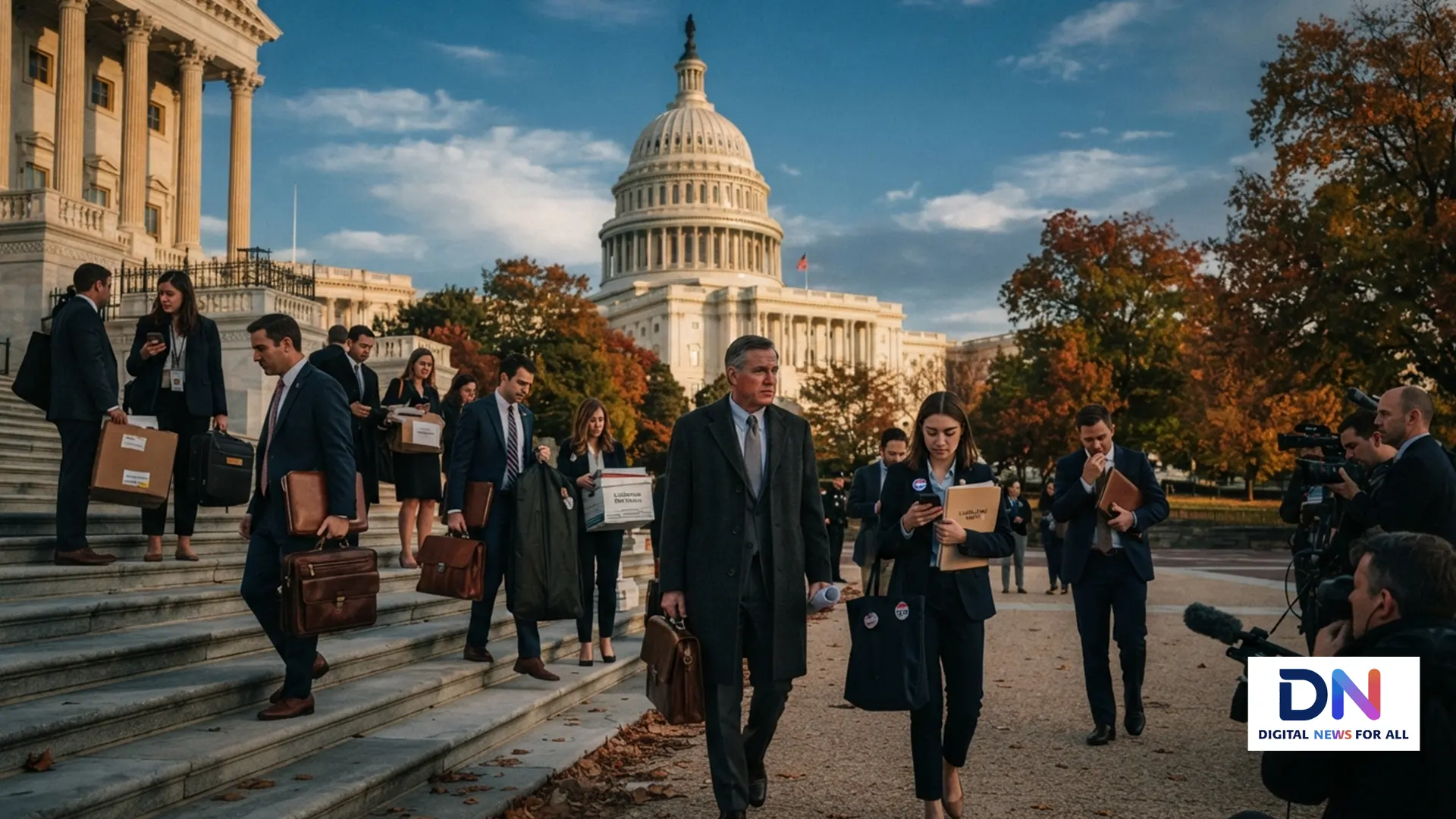
Congress midterm recess arrived earlier than expected in Washington this September. House Speaker Mike Johnson ended the chamber’s scheduled voting week on September 16, sending House members back to their districts for the campaign ahead of the November 3 midterm elections.
The House had been scheduled to vote on September 17. Instead, lawmakers left Washington a day early and are not currently scheduled to return before the election. The official House schedule reflects the chamber’s sharply reduced September calendar.
Why Are House Members Leaving Now?
The immediate explanation is electoral. Members of Congress are returning to their districts to campaign, meet constituents and prepare for November’s contests.
Johnson said the House had completed its work and that members should return home to make their case to voters. The decision followed an earlier reduction in the September schedule.
That timing has attracted attention because the election is still weeks away. The Federal Election Commission lists November 3 as the 2026 federal general-election date.
What Is Being Left Behind?
The early departure means several issues will remain unresolved or face delays.
One is an impeachment resolution targeting Defense Secretary Pete Hegseth, introduced by Republican Rep. Thomas Massie. The House departure prevented the measure from receiving the vote that Massie had sought.
Other unfinished matters include artificial-intelligence legislation, aspects of the farm bill, government funding and proposals concerning congressional ethics.
The Congress.gov legislative database shows the breadth of legislation still moving through the 119th Congress.
AI Has Become a Major Flashpoint
The timing is particularly notable because artificial intelligence became a major congressional issue just as lawmakers prepared to leave.
More than 100 House Democrats had urged leadership to remain in Washington and consider legislation addressing AI safeguards. Republicans and Democrats have disagreed over the appropriate role of federal regulation, with concerns ranging from safety to competition with China.
The National Institute of Standards and Technology’s AI Risk Management Framework provides a federal framework for managing risks associated with artificial-intelligence systems, but broader congressional legislation remains a separate question.
The Senate Has a Different Schedule
The early House departure does not mean the entire Congress has left Washington.
The Senate is scheduled to remain in session for additional weeks before its own pre-election recess. That creates a potential mismatch between the two chambers if senators advance legislation that requires House action.
Roll Call reported that the Senate still faced questions over cryptocurrency legislation, appropriations and other unfinished priorities as the House prepared to depart.
Why the Recess Matters
Congressional recesses are normal during election years. Members need time to campaign and maintain contact with constituents.
The unusual feature this year is the combination of an early House departure and the amount of unfinished business. The Washington Post reported that the House canceled its final scheduled voting day and has no regular workdays planned in Washington before the election.
That means major legislative disputes may shift from the Capitol to campaign events, television interviews and district meetings.
Campaigning and Governing Collide
For lawmakers, the election calendar creates a practical tension. Staying in Washington allows members to vote on contentious legislation. Returning home gives incumbents more time to campaign and explain their records to voters.
The two priorities can conflict when controversial votes carry political consequences.
House Democrats have criticized the early recess, arguing that Congress should remain in session to address issues such as affordability and AI. Republicans have defended the chamber’s record and said members should now return to their districts.
The U.S. House of Representatives notes that members serve both legislative and representative functions, including work in Washington and in their districts.
What Happens After Election Day?
The House is expected to return after the November election, when the results will determine the composition of the next Congress.
Until then, several unresolved policy questions will remain part of the campaign debate rather than the legislative process.
The current Congress midterm recess therefore represents more than an empty Capitol. It marks the point where campaigning has overtaken the House’s regular legislative calendar, leaving voters to judge congressional records while lawmakers wait for the post-election session.
#Congress | #Midterms2026 | #WashingtonDC | #HouseOfRepresentatives | #Election2026 | #CapitolHill | #USPolitics