

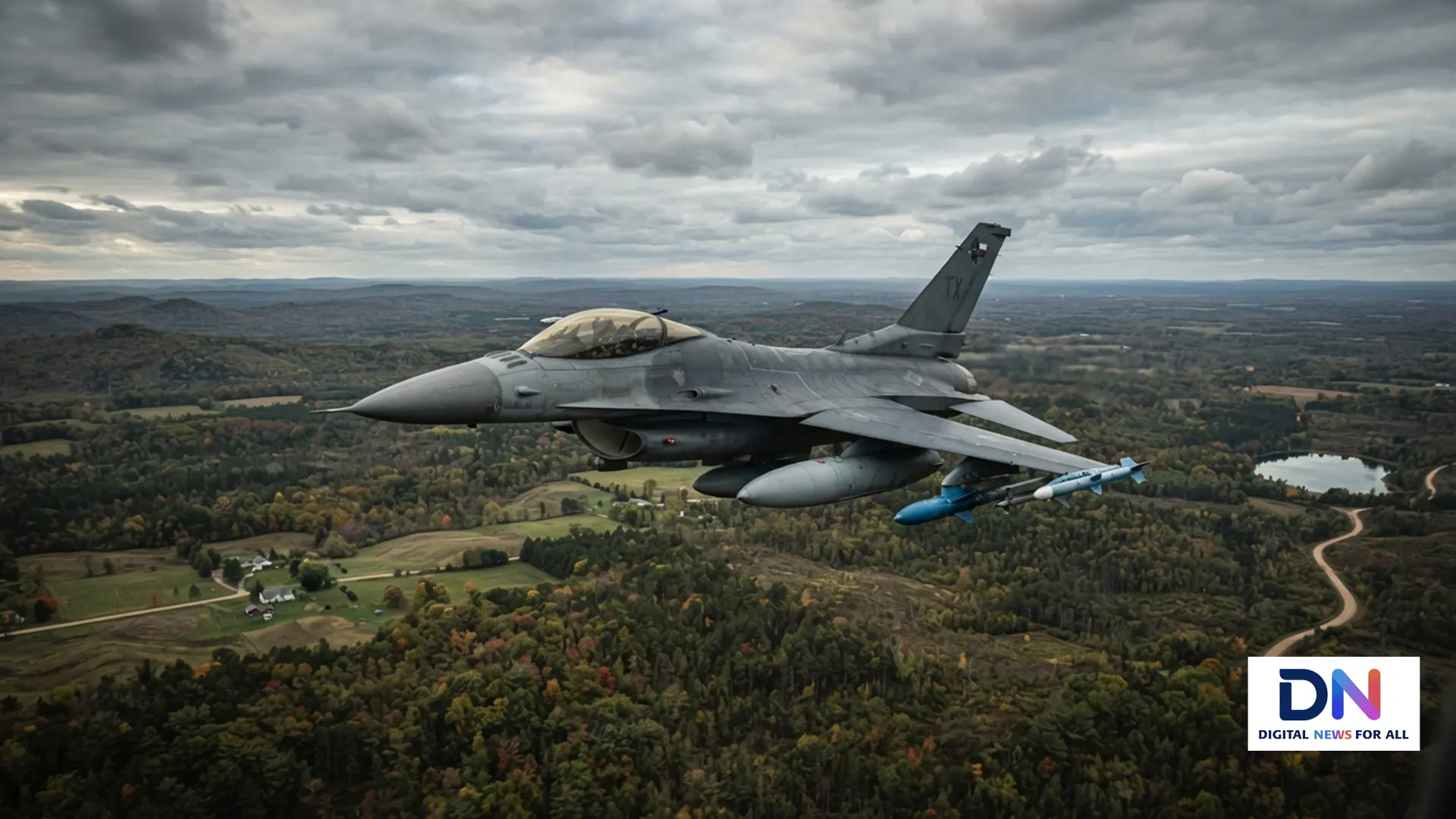
The Michigan F-16 crash on September 17 became a dramatic reminder of the risks involved in military aviation. A Texas Air National Guard F-16 went down during a training mission in rural Grand Traverse County. The pilot successfully ejected and survived.
The aircraft belonged to the 149th Fighter Wing at Joint Base San Antonio-Lackland, Texas. The wing was conducting training from Michigan’s Alpena Combat Readiness Training Center. Officials said the incident remains under investigation.
What Happened in Michigan?
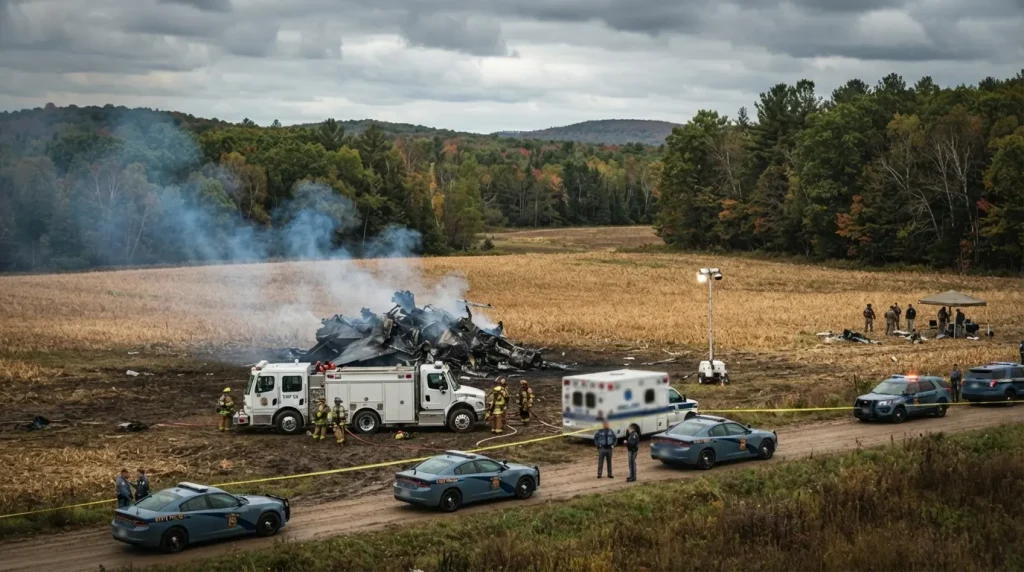
The fighter crashed shortly before 2 p.m. near County Road 633 and Blair Townhall Road in Green Lake Township. Witnesses reported a loud crash followed by a large plume of dark smoke.
The Michigan State Police reported that the pilot was taken to a local hospital in stable condition. No other injuries were reported.
Authorities temporarily evacuated people within roughly one mile of the crash site because of a hazardous chemical spill associated with the wreckage. The evacuation order was later lifted.
The Pilot’s Ejection Was Critical
The most important fact in the incident is simple: the pilot escaped the aircraft before it hit the ground.
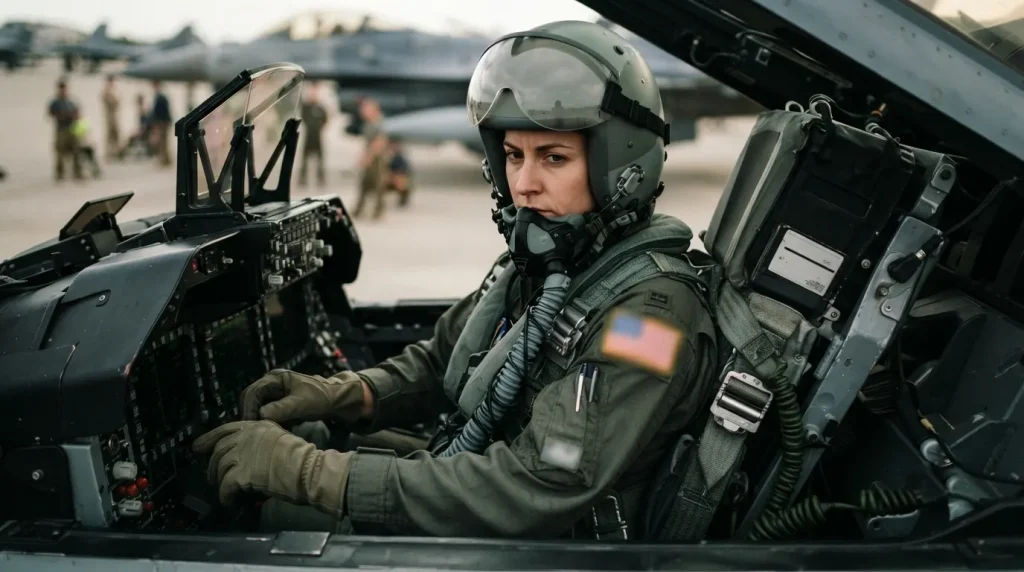
Military fighter pilots train repeatedly for emergencies where seconds can determine the outcome. Ejection procedures are among the most demanding emergency actions in aviation. The successful escape allowed emergency responders to locate and transport the pilot for medical care.
The U.S. Air Force’s F-16 fact sheet describes the aircraft as a single-engine, multirole fighter designed for demanding air-combat and strike missions.
Why Was a Texas Fighter Flying Over Michigan?
The location can seem surprising because the aircraft was assigned to a Texas unit. But National Guard training frequently crosses state boundaries.
The 149th Fighter Wing is an F-16 training organization. Its 182nd Fighter Squadron trains pilots to operate and employ the F-16.
Michigan’s Alpena Combat Readiness Training Center provides specialized training opportunities and large areas of relatively open airspace. The Texas unit was participating in Operation Northern Cactus when the crash occurred.
A Training Mission With Real-World Risks
Training flights are designed to prepare military personnel for situations that may occur during actual operations. That preparation requires realistic flying, complex procedures and emergency-response capabilities.
However, officials have not established why this particular aircraft crashed. Some early reports have discussed a possible bird strike and engine problem based on radio communications. Those reports should not be treated as an official finding.
An investigation will examine the aircraft, flight information, maintenance records and other evidence before determining what happened.
National Guard Resilience in Focus
The incident also highlights the broader role of the Air National Guard. The Air National Guard operates as both a federal military force and a state-based emergency resource.
The 149th Fighter Wing says its mission includes global engagements, domestic operations, homeland defense and support for communities. Its official history shows that the unit has operated F-16 aircraft for decades.
That institutional experience matters during emergencies. A fighter crash requires coordination among military personnel, local police, firefighters, emergency managers and medical teams.
The Human Story Behind the Headlines
A destroyed fighter jet naturally draws attention to the aircraft. But the human outcome is more significant.
One pilot faced a potentially catastrophic emergency and successfully escaped. Local responders then secured the crash area, managed the hazardous-material risk and helped protect nearby residents.
The Federal Aviation Administration maintains extensive aviation-safety resources because emergency preparedness depends on coordinated procedures and rapid response.
The investigation will ultimately provide a technical explanation for the crash. Until then, the clearest lesson from the Michigan F-16 crash is the importance of preparation, emergency training and the ability of military and civilian responders to work together when a routine mission suddenly becomes an emergency.
#MichiganF16Crash | #F16 | #NationalGuard | #AirNationalGuard | #TexasNationalGuard | #MilitaryAviation | #Michigan