
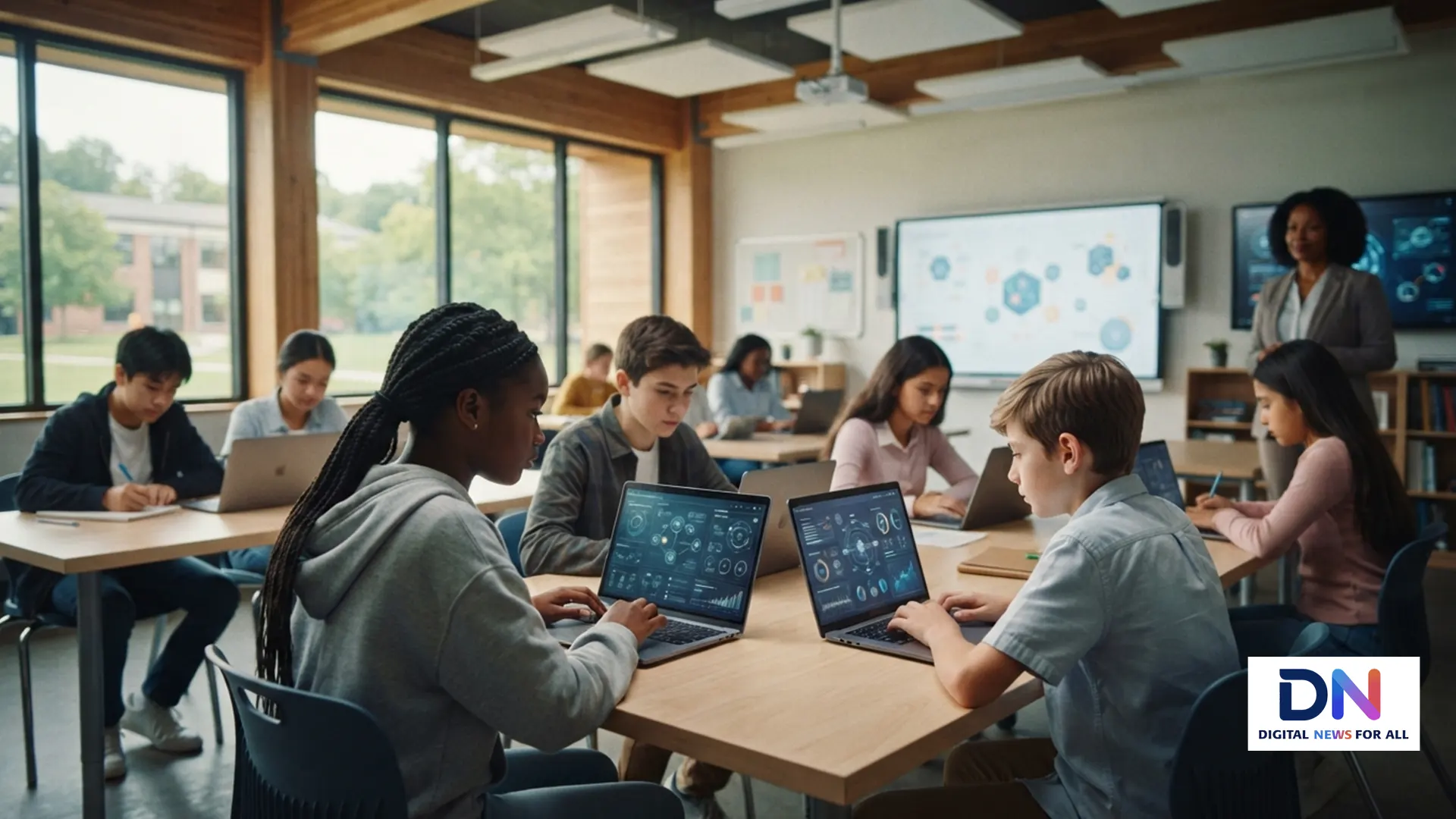
Microsoft’s AI guardrails are putting student privacy at the center of the classroom AI debate. In September 2026, Microsoft announced a new National AI Safety & Privacy Standard with the American Federation of Teachers and United Federation of Teachers. The agreement creates contractually enforceable principles for participating school districts.
The timing is significant. Schools are rapidly experimenting with generative AI while parents and educators continue questioning how student information is collected, stored and used. Microsoft says its framework is designed to give schools, families and teachers greater control over classroom AI.
What Microsoft’s New Guardrails Require
The framework includes several major protections. Microsoft has committed not to use student or educator data to train its AI models. It also calls for data minimization, greater transparency for families and human oversight when AI is involved in high-risk decisions. AI companions are also prohibited under the agreement.
These measures go beyond simply adding a privacy setting. They place contractual obligations around how participating schools can deploy AI systems.
Microsoft already provides privacy and security protections for Microsoft 365 Copilot, including enterprise data protection for prompts and responses. However, the new education framework specifically addresses the additional concerns surrounding children and students.
Why Student Privacy Has Become a Bigger Issue
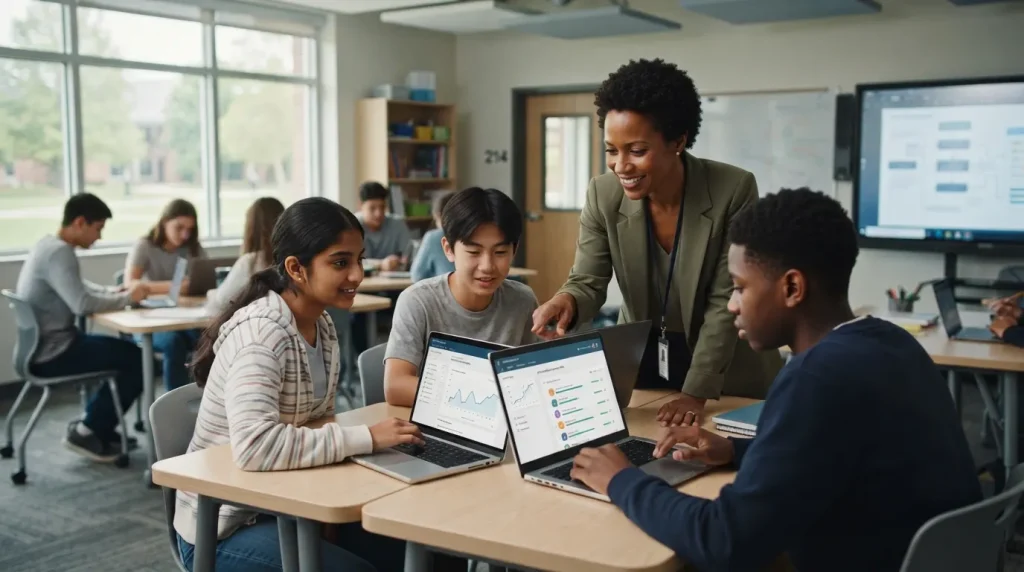
AI tools can process highly detailed interactions. In education, those interactions could involve assignments, questions, learning difficulties and other information connected to individual students.
Microsoft’s own 2026 education research found that academic integrity is a major concern for both students and educators, while many respondents also want clearer guidance and AI training.
That makes governance increasingly important. Schools need to know not only what an AI system can do, but also what information it receives and how that information is handled.
Could Guardrails Slow Innovation?
There is a legitimate trade-off to consider. Strict rules can reduce certain risks, but excessive restrictions could also make it harder for teachers and students to experiment with useful AI applications.
Microsoft has continued developing education-focused AI tools, including its Study and Learn Agent, which is designed around guided learning rather than simply producing answers.
At the same time, some major school systems are taking a more restrictive approach. New York City and Los Angeles have introduced temporary restrictions on student-facing AI while evaluating how the technology should be used in schools.

The Bigger Classroom AI Question
The debate is therefore no longer simply about whether schools should use AI. It is increasingly about how schools can use AI without sacrificing privacy, human judgment and educational independence.
Microsoft’s framework provides one model. Its effectiveness will depend on implementation, enforcement and whether other technology providers adopt comparable protections.
For schools, educators and families, the next phase of classroom AI may depend less on how quickly new tools arrive and more on whether students can benefit from them while retaining meaningful privacy and human oversight. More information is available through Microsoft’s Copilot education guidance, the American Federation of Teachers, and the U.S. Department of Education.
#MicrosoftAI #ClassroomAI #StudentPrivacy #AIinEducation #MicrosoftEducation #Copilot #EdTech #AISafety #EducationTechnology