

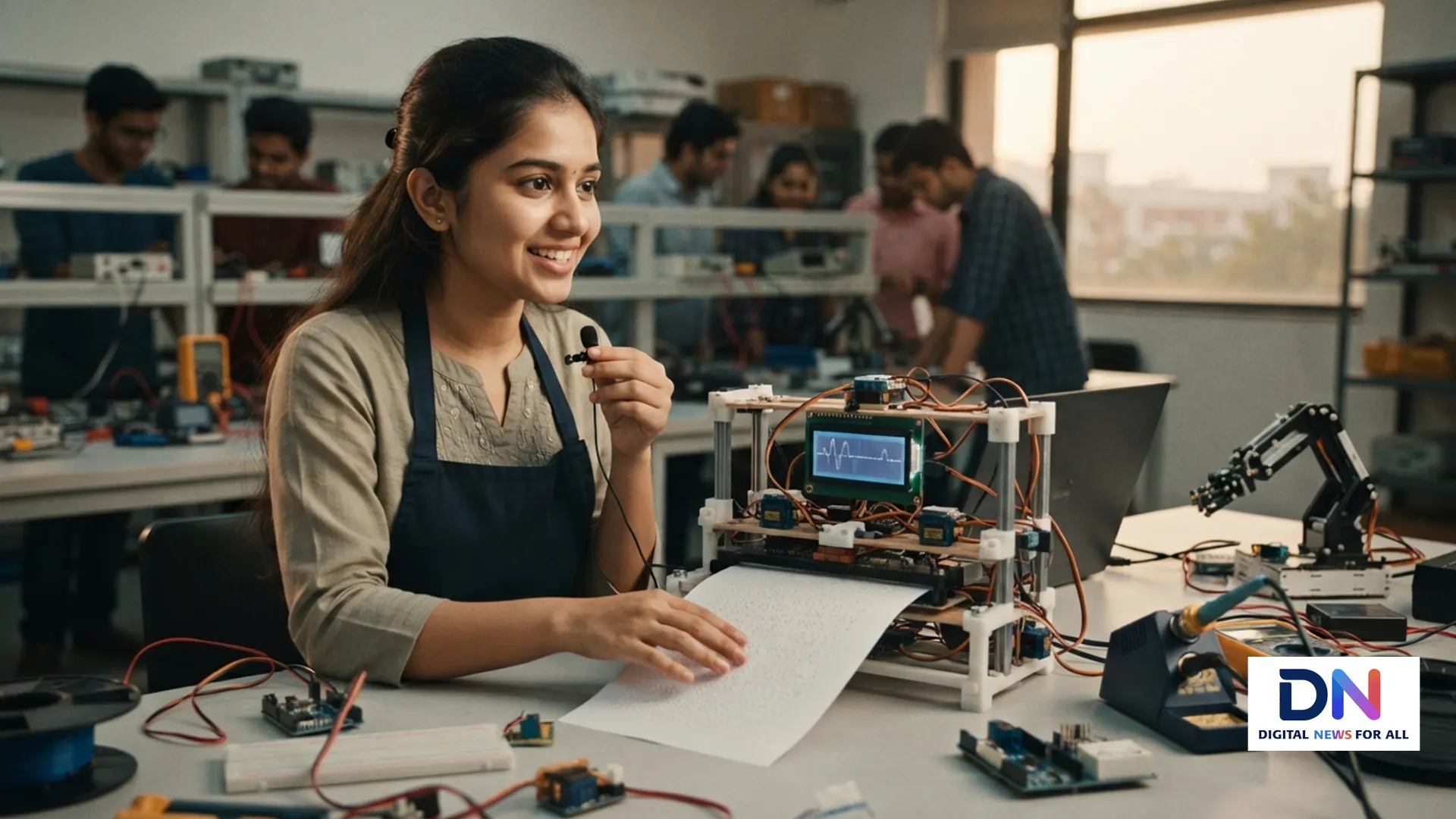
Voice-enabled Braille is moving from an assistive-technology concept toward a more practical tool for independent learning. In India, 20-year-old engineering student Lingampalli Himaja has developed RUDHRA, a voice-controlled Braille printer designed to help visually impaired users create Braille documents with less physical effort.
Himaja, a BTech student at Shri Vishnu Engineering College for Women in Andhra Pradesh, developed the project after visiting a school for visually impaired students. She saw students using traditional Braille slates and pins, which require users to punch dots manually and understand the reversed pattern needed to create readable Braille.
A Student’s Question Changed the Project
Himaja initially built a prototype using six push buttons for Braille input. But feedback from a visually impaired student changed the direction of her invention.
The student asked why users needed to press buttons at all when they could simply speak. That observation led Himaja to redesign the system around voice input. The James Dyson Award project page describes RUDHRA as a voice-enabled system that converts spoken words into Braille.
How RUDHRA Works
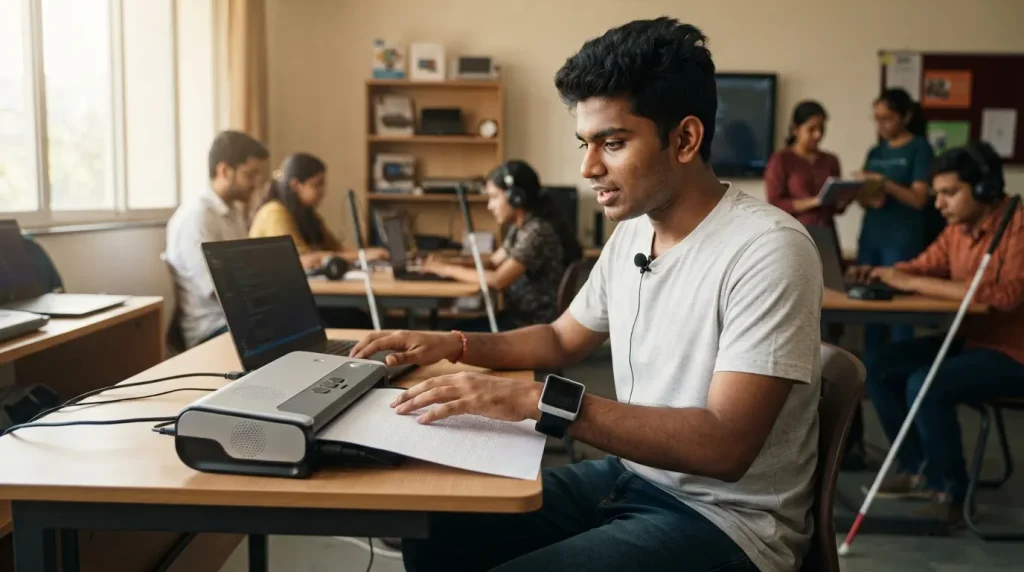
The system combines voice recognition, computing hardware and mechanical embossing. According to the official project description, Alexa converts spoken input into text, while a Raspberry Pi processes that text and translates it into reverse Braille patterns.
The machine then controls motors and a solenoid-based mechanism that punches the required dots onto paper. Because the dots are embossed from the back, the system automatically handles the reversed pattern that users would otherwise need to learn for manual writing.
Reducing the Physical and Learning Barriers
Traditional Braille writing can require repeated physical pressure and careful memorization. Himaja’s design attempts to simplify both parts of the process.
India Today reported that the project evolved through repeated prototype testing, including work to improve the spacing and accuracy of embossed dots.
That focus matters because Braille depends on precise tactile patterns. Small errors in spacing or dot placement can affect readability, making mechanical accuracy a central engineering challenge.
Recognition From the James Dyson Award
RUDHRA has now won the 2026 India national stage of the James Dyson Award. Himaja receives a prize of approximately ₹6 lakh and advances to the international stage of the student design competition.
The recognition puts student-led accessibility innovation in the spotlight. It also demonstrates how direct feedback from users can influence the development of assistive technology.
From Prototype to Everyday Accessibility
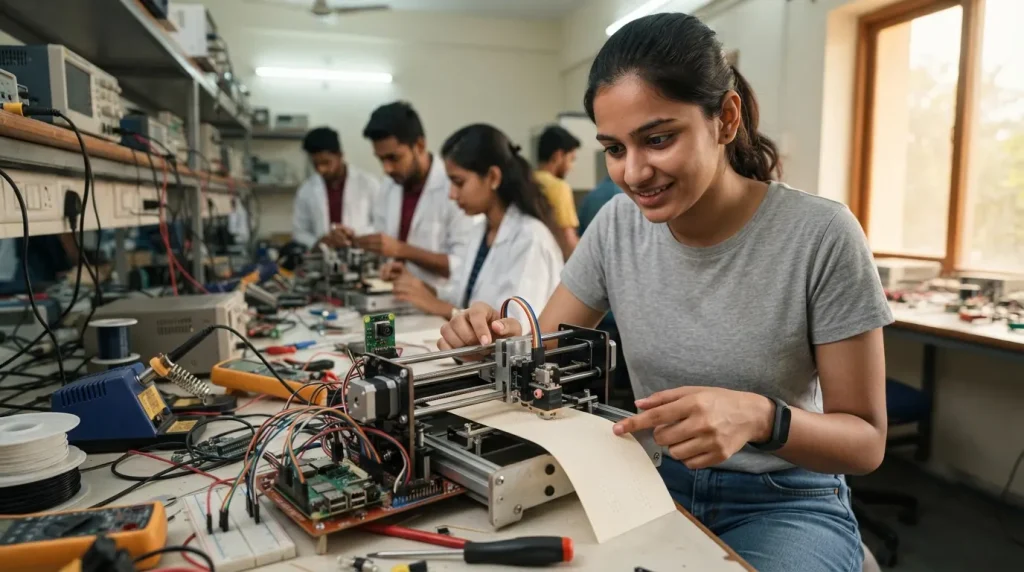
RUDHRA remains a developing prototype rather than a mass-market product. Its future could depend on reducing size and cost, improving paper handling and increasing reliability.
Himaja’s longer-term plans include making the device suitable for schools, examination environments and individual households. The NDTV report notes that the project’s goal is to help visually impaired people create Braille documents more independently.
Why Voice-Enabled Braille Matters
The broader significance of RUDHRA goes beyond one printer. Voice interfaces are becoming increasingly common, while tactile information remains essential for many blind and visually impaired users.
Combining the two could create new ways to produce physical information without requiring conventional keyboard or Braille input. Other 2026 student projects are exploring similar combinations of AI, voice and dynamic Braille technology, including TactiKey.
RUDHRA shows how accessibility can begin with a simple question from a real user. For Himaja, that question transformed an engineering prototype into a potential new approach to voice-enabled Braille and inclusive education.
#VoiceEnabledBraille #RUDHRA #AccessibleTech #AssistiveTechnology #Braille #StudentInnovation #JamesDysonAward #InclusiveTechnology #EdTech #IndiaTech