

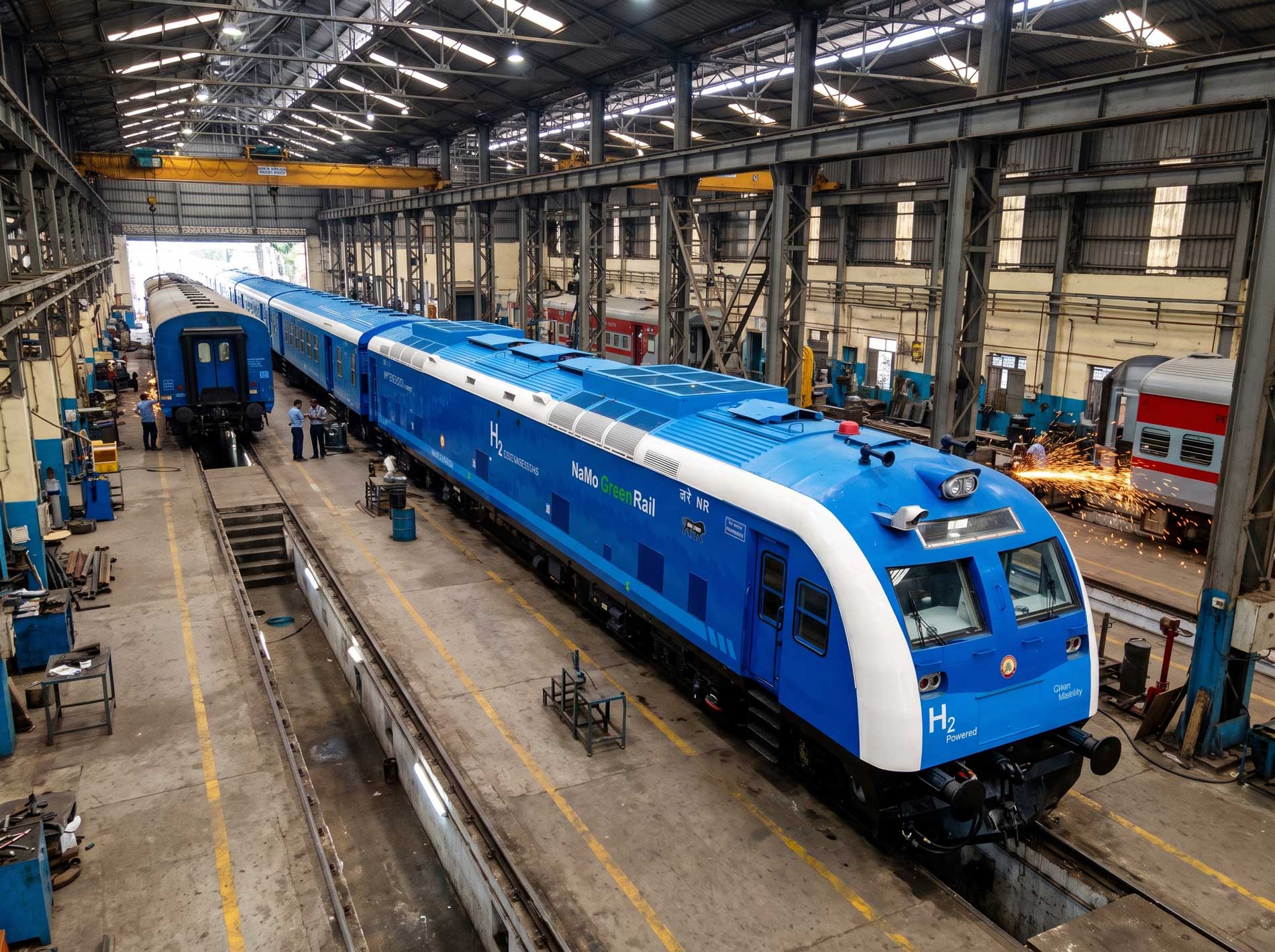
India officially enters the hydrogen rail era
India has launched its first indigenous hydrogen-powered passenger train, becoming one of a small group of countries operating hydrogen fuel cell trains. The inaugural service was flagged off by Prime Minister Narendra Modi from Jind railway station in Haryana on 17 July 2026, with the train beginning operations on the Jind–Sonipat section under Northern Railway. Source Rueters
The milestone represents more than the debut of a new train. It serves as a pilot project for hydrogen-powered rail transport and reflects Indian Railways’ broader effort to reduce diesel dependence, expand clean mobility, and support India’s long-term net-zero emissions target for 2070. Source Press Information Bureau
What makes India’s first hydrogen train different?
Unlike conventional diesel trains, the new hydrogen train generates electricity onboard using hydrogen fuel cells. Inside the fuel cell, hydrogen combines with oxygen to produce electricity that powers the train’s traction system. The primary by-product is water vapour, eliminating direct carbon emissions during operation.
According to the Ministry of Railways, the train consists of:
- Two hydrogen-powered driving cars
- Eight passenger coaches
- Passenger capacity of approximately 2,600 people
- Maximum operational speed of 75 km/h
- Dedicated hydrogen storage and refuelling infrastructure at Jind
- Multiple safety systems capable of detecting hydrogen leaks, flames, smoke, and abnormal heat
The project was developed domestically under India’s “Make in India” initiative and is intended to demonstrate the feasibility of hydrogen-powered rail operations in Indian conditions.
Why hydrogen trains matter
India has already electrified much of its railway network. However, fully electrifying every route can be technically challenging and expensive, particularly in remote, mountainous, or lightly used sections.
Hydrogen-powered trains offer an alternative for routes where installing overhead electric infrastructure may not be practical. Fuel-cell trains can provide zero tailpipe emissions while avoiding the need for continuous electrification infrastructure.
Potential benefits include:
- Lower direct emissions compared with diesel trains
- Reduced reliance on imported fossil fuels
- Cleaner operation on non-electrified routes
- Opportunity to develop India’s domestic green hydrogen ecosystem
- Support for future low-carbon transportation technologies
Challenges remain
While hydrogen technology offers environmental advantages, it is not without challenges.
Producing green hydrogen remains relatively expensive, and storing hydrogen safely requires high-pressure systems and specialised infrastructure. Building refuelling stations and maintaining hydrogen supply chains will also require significant investment. Hydrogen trains are generally considered most suitable for selected routes rather than replacing widespread railway electrification.
Transport analysts also note that conventional electric trains remain more energy-efficient where electrified infrastructure already exists, meaning hydrogen is likely to complement—not replace—existing rail technologies.
Global context
Hydrogen-powered passenger trains have already entered service in countries including Germany and China, while several other nations continue to test the technology.
With this launch, India joins the growing group of countries exploring hydrogen as part of future sustainable rail transport. The Indian project is notable for combining indigenous manufacturing with dedicated hydrogen infrastructure and one of the largest hydrogen-powered train configurations currently in operation.
What happens next?
Indian Railways describes the Jind–Sonipat operation as a pilot project that will provide valuable operational data on hydrogen fuel cell technology under real-world conditions. If successful, similar systems could be considered for additional non-electrified routes where hydrogen offers operational or economic advantages.
Future expansion will depend on operational performance, hydrogen production costs, infrastructure readiness, and broader clean-energy policy developments.
Key Takeaways
- India launched its first indigenous hydrogen-powered passenger train on 17 July 2026.
- The train operates on the Jind–Sonipat route in Haryana.
- Hydrogen fuel cells generate onboard electricity with water vapour as the primary emission.
- The project supports India’s clean transportation strategy and long-term net-zero ambitions.
- Hydrogen trains are expected to complement, rather than replace, existing electrified rail networks.
References
- Press Information Bureau (Government of India) – Prime Minister flags off India’s first hydrogen-powered train
https://pib.gov.in/ - Ministry of Railways, Government of India
https://indianrailways.gov.in/ - Reuters – India joins select group of nations operating hydrogen-powered trains
https://www.reuters.com/ - The Indian Express – Explained: India’s first hydrogen-powered train
https://indianexpress.com/ - National Green Hydrogen Mission – Ministry of New and Renewable Energy
https://mnre.gov.in/ - Indian Railways Official Press Releases
https://indianrailways.gov.in/railwayboard/