

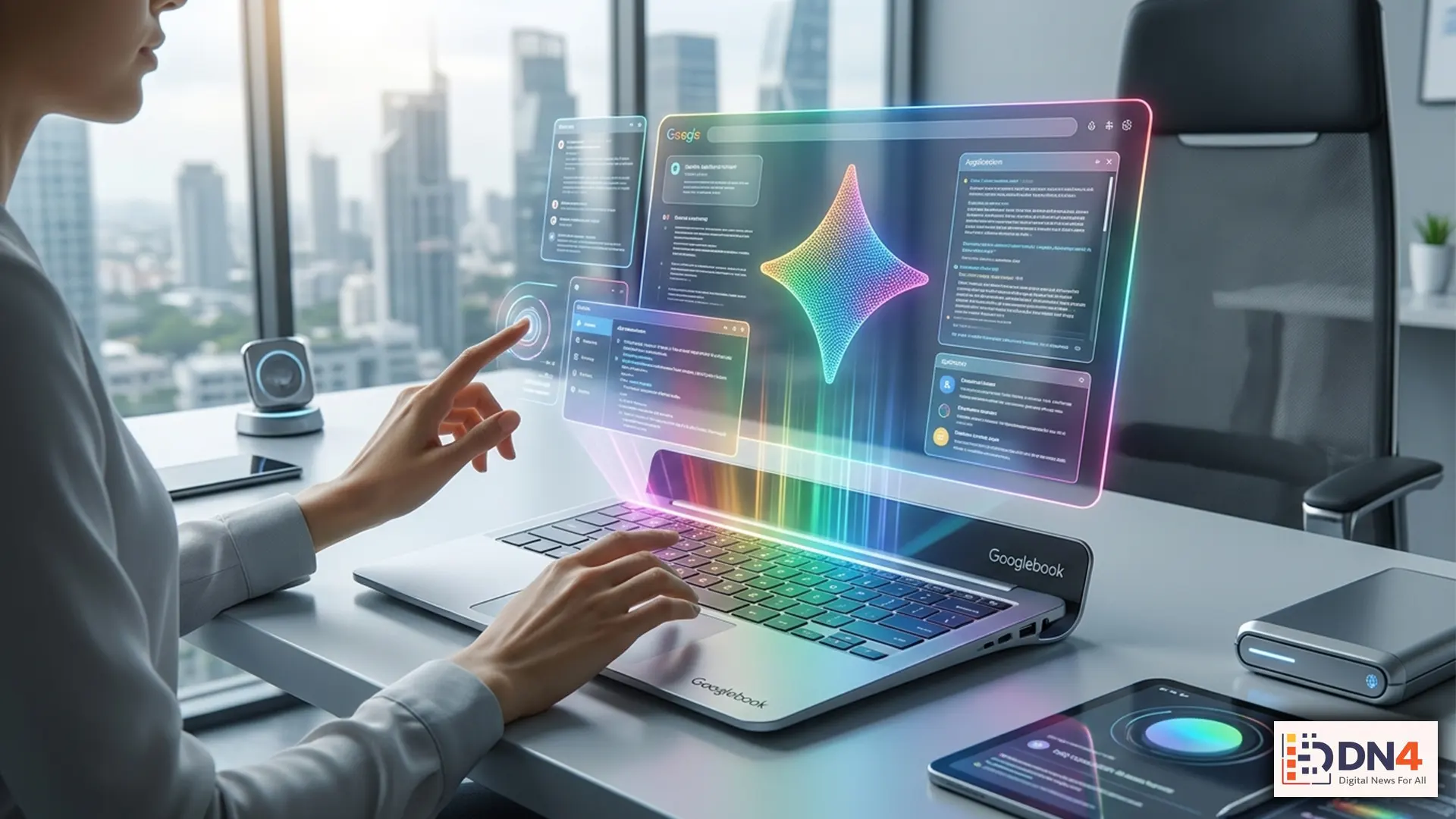
The laptop industry may be entering its biggest transformation since the rise of smartphones. With Google aggressively integrating Gemini AI into its ecosystem, speculation is growing around whether AI-powered “Googlebooks” could eventually replace traditional laptops altogether.
What once sounded futuristic is quickly becoming reality. Instead of simply opening applications and manually completing tasks, users are beginning to expect devices that think, organize, summarize, automate, and assist in real time.
The question is no longer whether AI belongs inside personal computers — it’s whether AI-first devices will fundamentally redefine what a computer even is.
What Makes Googlebook Different?
Google’s AI-driven vision focuses less on hardware power and more on intelligent workflow integration. Traditional laptops are built around applications. Googlebook-style AI devices are increasingly being designed around assistance.
With Gemini integration, users can:
- Generate documents instantly
- Summarize meetings and emails
- Automate research workflows
- Manage multitasking through conversational prompts
- Create images, presentations, and code with AI support
Google’s broader ecosystem through Google Workspace already positions Gemini as a productivity layer rather than just a chatbot.
This shift could dramatically reduce dependence on traditional desktop-style workflows.
The End of “Manual Computing”?
For decades, laptops operated through direct user control: opening programs, navigating folders, organizing files, and manually performing repetitive tasks.
AI-first systems change that model entirely.
Instead of telling computers how to do something, users increasingly describe what they want. The AI handles the process itself.
Technology analysts from The Verge and WIRED have described this transition as one of the most significant interface shifts since the graphical user interface revolution of the 1980s.
If successful, Googlebook devices may become less about operating systems and more about continuous AI collaboration.
Why Traditional Laptops Still Matter
Despite the excitement surrounding Gemini integration, traditional laptops still maintain major advantages.
Creative professionals, engineers, gamers, and enterprise users continue relying on powerful local hardware, specialized software ecosystems, and multitasking performance that cloud-based AI devices may struggle to replace fully.
Companies like Apple, Microsoft, and high-performance PC manufacturers still dominate markets requiring advanced computing workloads.
Privacy concerns also remain significant. AI-first computing depends heavily on cloud processing, raising questions around data security, surveillance, and user control.

The Real Revolution Is Behavioral
What makes Googlebook potentially disruptive is not just the technology itself — it’s how younger users interact with technology differently.
Generation Z and younger professionals increasingly prefer conversational interfaces over traditional software navigation. Many users already treat AI assistants as primary productivity tools rather than optional features.
This behavioral shift could reshape the future of computing more than hardware specifications ever could.
Can Gemini Actually Replace the Laptop?
Probably not completely — at least not yet.
But Gemini integration may gradually make traditional laptops feel increasingly outdated for everyday users whose needs revolve around communication, productivity, browsing, media, and lightweight creative work.
The future may not involve killing the laptop entirely. Instead, it may involve transforming laptops into AI companions that operate more like collaborative partners than passive machines.
If that happens, Googlebook could become less of a product category — and more of a preview of how all computing eventually evolves.
#Googlebook #GeminiAI #ArtificialIntelligence #TechNews #FutureOfComputing #LaptopTechnology #GoogleAI #AIProductivity #TechTrends2026