

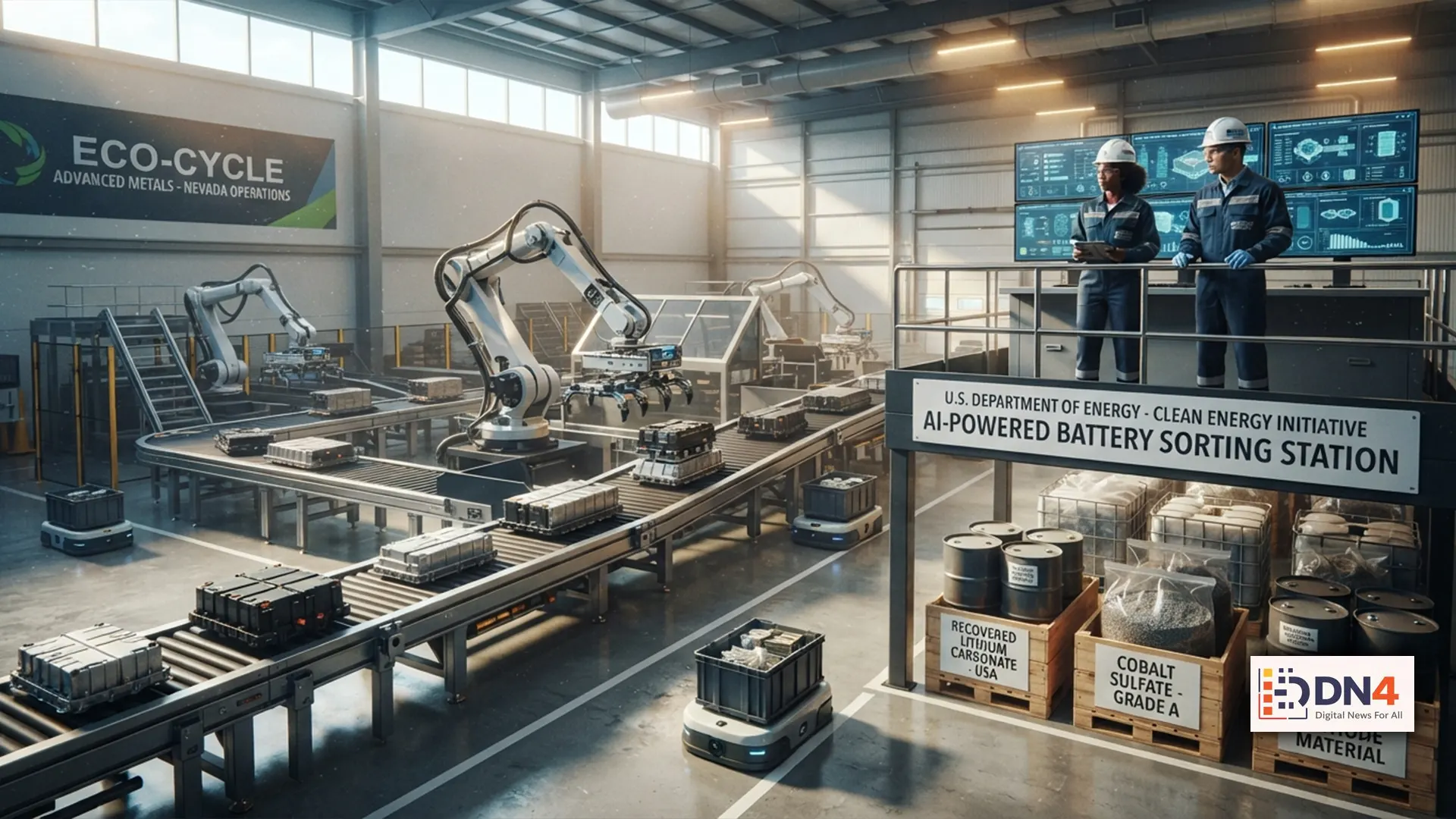
America’s clean energy transition is creating one of the fastest-growing industrial opportunities of the decade: battery recycling. As electric vehicle (EV) adoption accelerates and millions of lithium-ion batteries approach the end of their useful lives, companies are investing billions of dollars to recover valuable materials that can be reused in new batteries.
Rather than relying solely on imported critical minerals, the United States is building a domestic recycling ecosystem capable of supplying lithium, nickel, cobalt and graphite for future battery production. This emerging industry is expected to strengthen supply chains, reduce environmental impacts and create thousands of skilled jobs.
The Growing Value of Battery Recycling
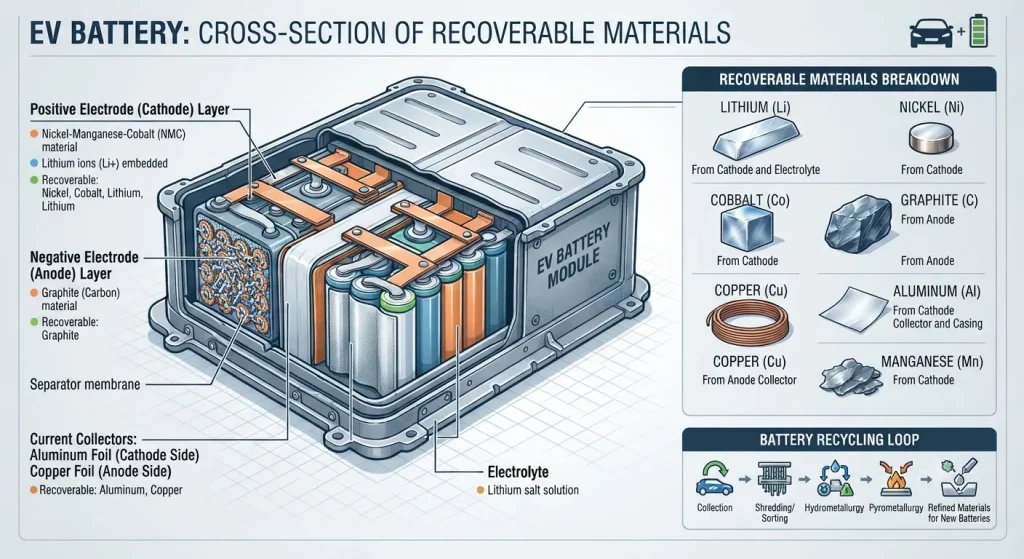
Modern EV batteries contain expensive critical minerals that retain significant value after the battery reaches the end of its vehicle life. Recycling allows manufacturers to recover these materials instead of extracting new resources through mining.
According to the U.S. Department of Energy, expanding domestic battery recycling can improve energy security while reducing dependence on overseas supply chains. Industry research from the International Energy Agency (IEA) also highlights recycling as a key pillar of sustainable battery production.
America’s Investment Boom
Federal incentives and private investment are driving construction of advanced recycling facilities across multiple states. Companies are developing technologies capable of recovering over 90% of valuable battery materials, making recycling increasingly economical.
The U.S. Environmental Protection Agency (EPA) supports responsible battery management as demand for electric vehicles continues to rise, while the National Renewable Energy Laboratory (NREL) continues researching next-generation recycling methods.
Supporting the Circular Economy
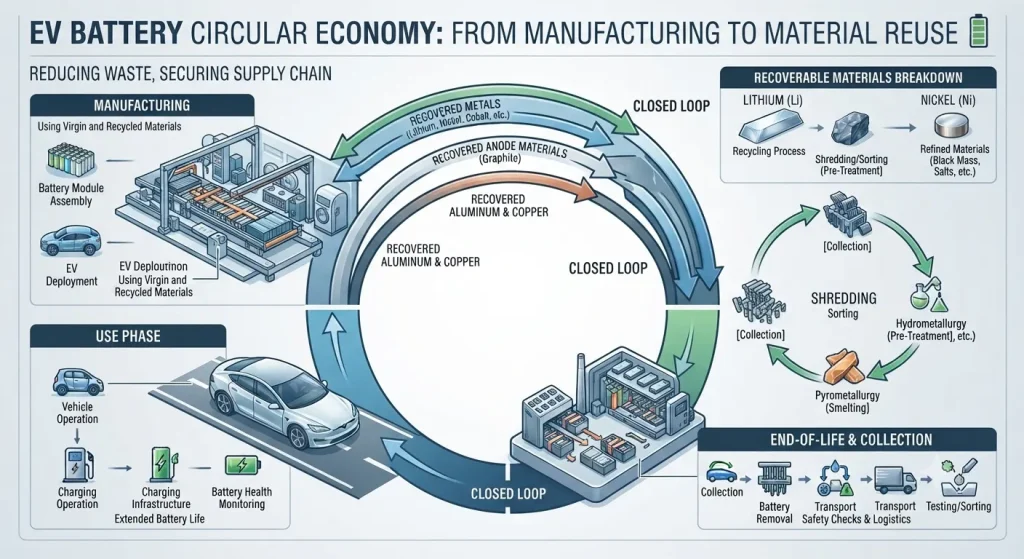
Battery recycling is becoming central to the circular economy, where valuable materials remain in continuous use instead of becoming waste. Recovered metals can be refined and returned to battery manufacturers, reducing both production costs and environmental impact.
This approach also lowers greenhouse gas emissions associated with mining and processing virgin materials while supporting long-term resource availability.
Challenges Ahead
Despite rapid growth, the industry faces several hurdles. Efficient collection systems, transportation safety regulations and standardized battery designs remain areas requiring further development. Continued innovation and supportive public policy will be essential to maximize recycling efficiency.
Organizations such as the U.S. Geological Survey (USGS) and the Argonne National Laboratory continue providing research that supports the evolution of America’s battery supply chain.
The battery recycling industry is positioned to become a cornerstone of America’s clean energy economy. As EV adoption expands and battery demand continues rising, recycled critical minerals will play an increasingly important role in securing domestic manufacturing and supporting sustainable growth.
#BatteryRecycling #ElectricVehicles #CleanEnergy #Lithium #CircularEconomy #Sustainability #EVBatteries #GreenTechnology #Innovation