

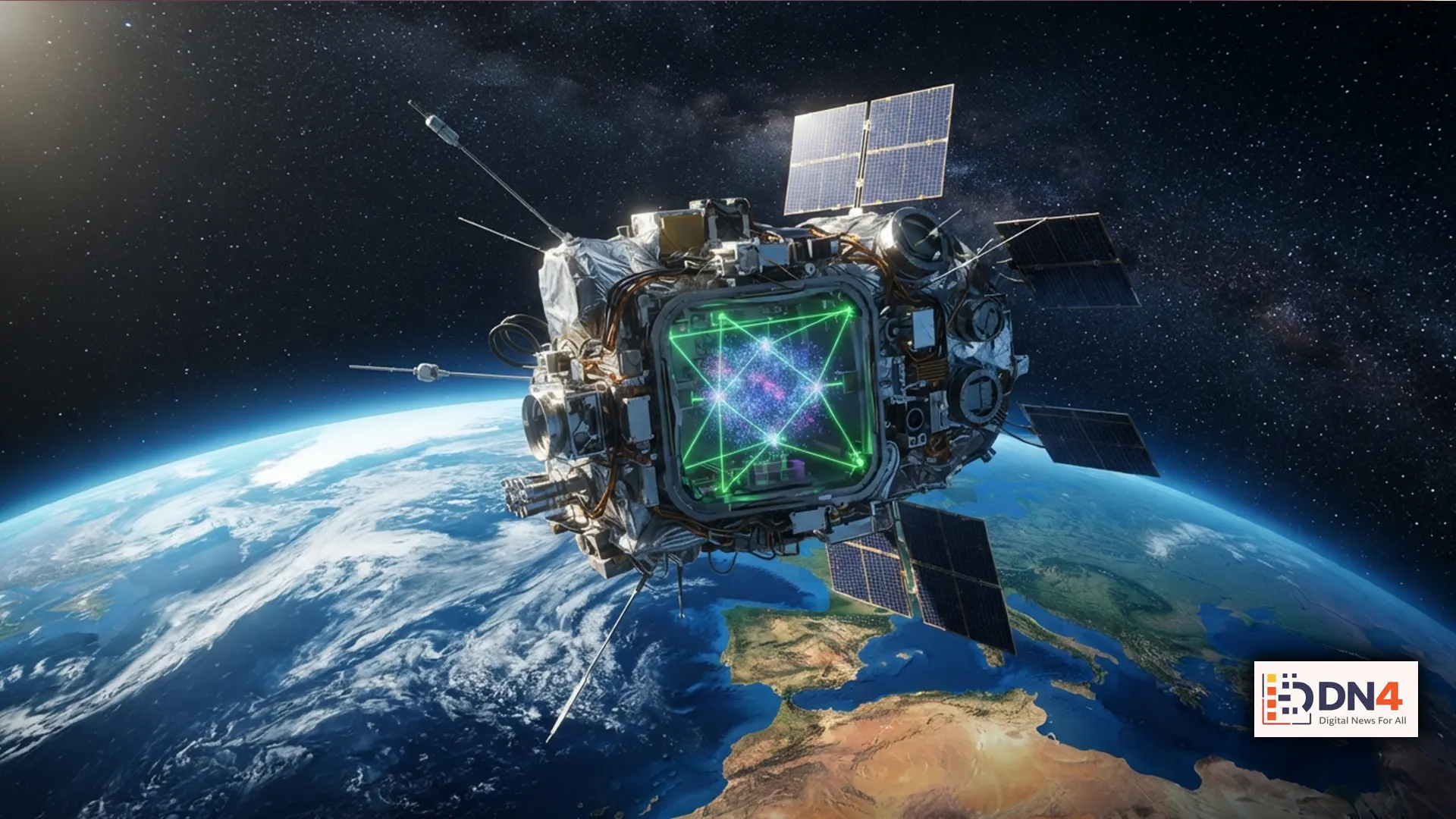
NASA is developing a new generation of quantum gravity sensors that could dramatically improve how scientists measure gravity from space. The technology, known as the Quantum Gravity Gradiometer Pathfinder (QGGPf), is being developed as a technology demonstration designed to test advanced atom-interferometry techniques in orbit. NASA says the mission is targeted for launch near the end of the decade.
What Is a Quantum Gravity Sensor?
Traditional gravity instruments measure tiny changes in gravitational acceleration. A quantum gravity sensor takes a different approach by using extremely cold atoms as highly consistent test masses.
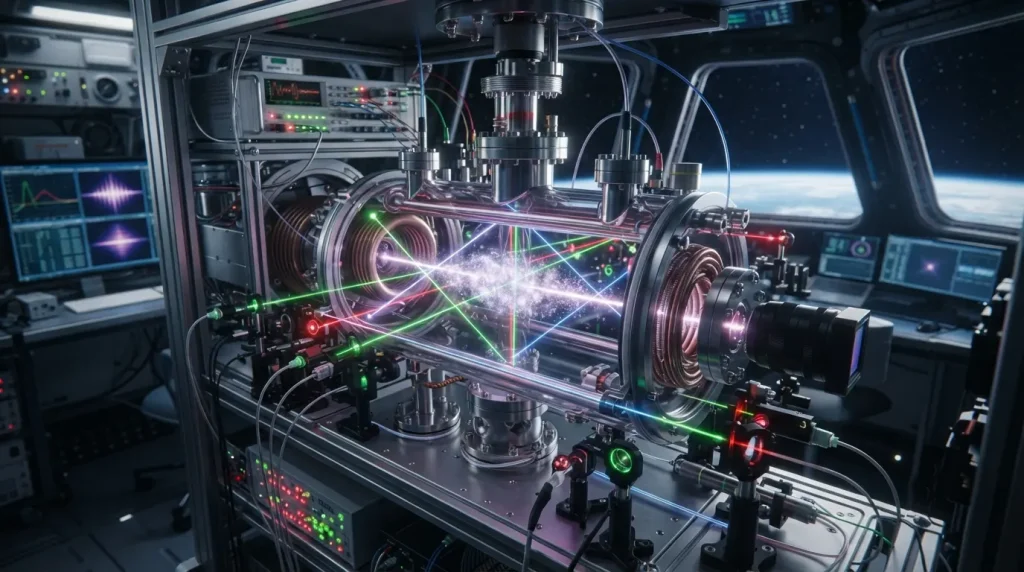
NASA’s technology uses atom interferometry. Lasers manipulate ultracold atoms, creating matter waves whose interference patterns can reveal extremely small changes in acceleration and gravity. NASA has already demonstrated atom interferometry aboard the International Space Station through its Cold Atom Lab research.
Why Gravity Mapping Matters
Gravity is not identical everywhere on Earth. Changes in the distribution of water, ice, rock, and other mass subtly alter the planet’s gravitational field. A highly sensitive gravity gradiometer could help scientists study phenomena such as changing ice sheets, groundwater supplies, and other changes in Earth’s mass distribution.
NASA estimates that a future science-grade quantum gravity gradiometer could potentially be up to 10 times more sensitive than classical sensors. The QGGPf is also designed to be compact enough for a single spacecraft, with NASA describing an anticipated volume of about 0.25 cubic meters and a mass of approximately 125 kilograms.
How It Could Transform Space Exploration
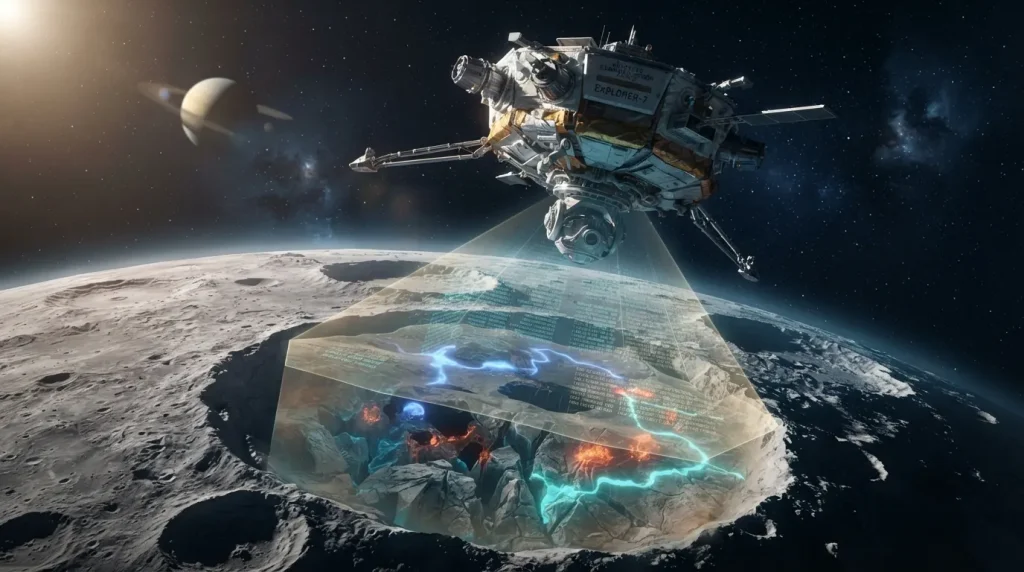
The technology could eventually extend beyond Earth science. Precise gravity measurements could help researchers investigate the internal structures of planets, moons, asteroids, and other celestial bodies.
NASA has also identified potential applications in spacecraft navigation and fundamental physics. Earlier Cold Atom Lab experiments demonstrated that quantum sensors can measure gravity and other forces in the microgravity environment of the International Space Station. Longer free-fall times in space can provide opportunities for more precise measurements.
From Earth Science to Deep Space
The long-term implications could be significant. A spacecraft carrying a quantum gravity sensor could potentially detect subtle variations in the gravitational field of another world and use those measurements to infer what lies beneath its surface.
NASA also sees atom interferometry as a possible tool for investigating fundamental questions about gravity and the universe, including tests of general relativity and research into unexplained cosmological phenomena.
A New Era of Precision
NASA’s quantum gravity work represents an important step toward making quantum technologies practical for space missions. The immediate goal is technology validation, but the broader vision is much larger: better maps of Earth, improved understanding of other worlds, more capable spacecraft navigation, and increasingly precise tests of the laws of physics.
If these sensors perform as expected, quantum gravity sensing could become an important tool in the next generation of space exploration.
#NASA #QuantumGravity #QuantumSensor #SpaceExploration #QuantumScience #AtomInterferometry #SpaceTechnology #EarthScience #PlanetaryScience #FutureOfSpace #ScienceNews