

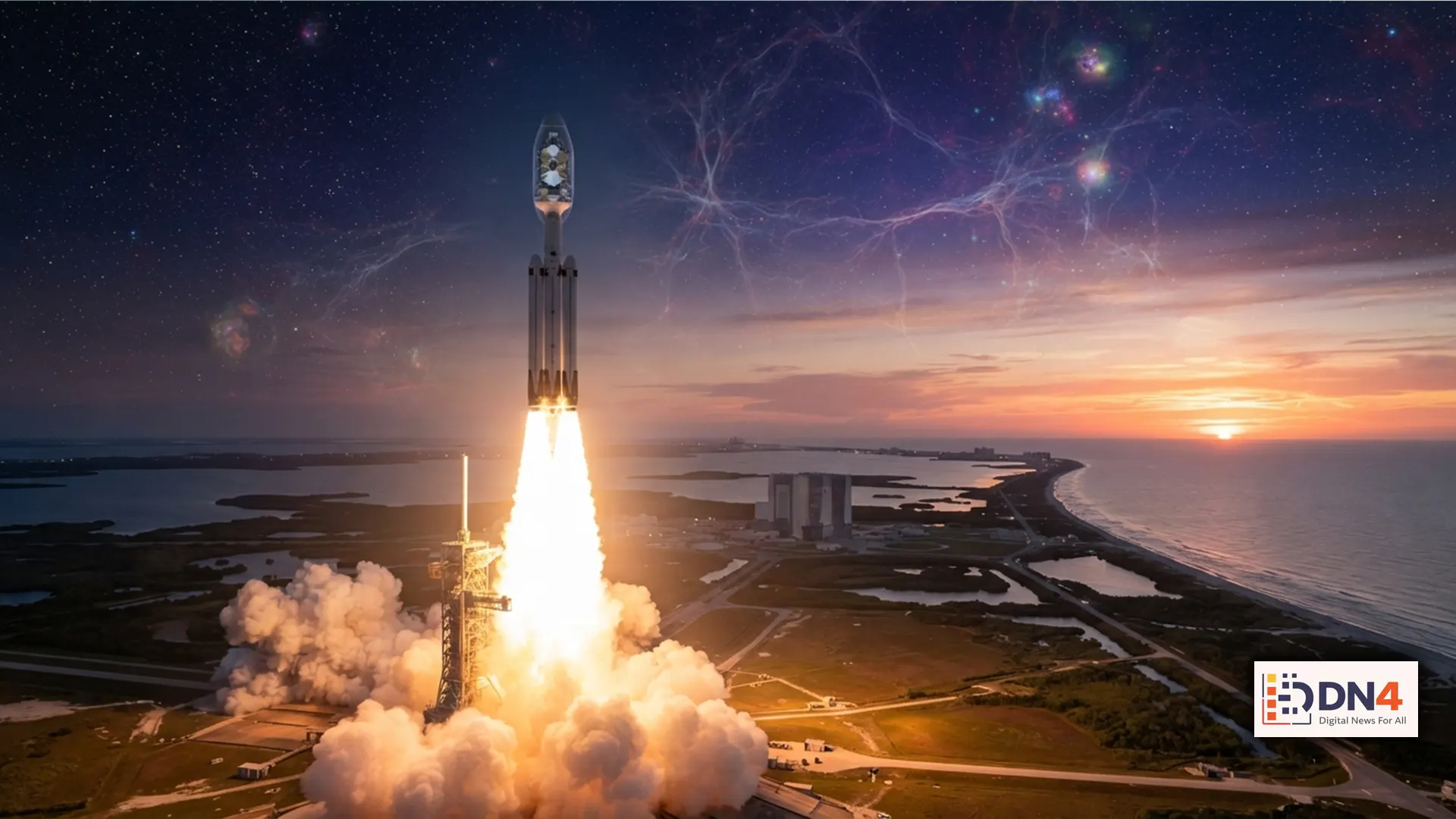
NASA has officially launched one of its most ambitious space observatories yet. The Nancy Grace Roman Space Telescope lifted off from Kennedy Space Center in Florida on August 30, 2026, aboard a SpaceX Falcon Heavy, beginning a journey that could transform scientists’ understanding of dark energy, dark matter and the evolution of the universe.
Roman launched at 7:26 a.m. EDT and is now heading toward its operating location roughly 1 million miles from Earth. NASA says the observatory will spend its five-year mission conducting enormous infrared surveys capable of mapping billions of galaxies. NASA’s official launch announcement describes the mission as a major effort to investigate some of the universe’s biggest unanswered questions.
A $4.3 Billion Window Into the Universe
Roman represents an estimated $4.3 billion lifecycle investment, a figure NASA established after a major mission replan increased projected costs. The telescope was designed to deliver an unusually wide view of the cosmos while maintaining powerful infrared sensitivity. NASA’s mission review puts the lifecycle cost at approximately $4.3 billion.
Unlike a conventional telescope designed primarily to study individual objects, Roman will survey enormous sections of the sky. NASA says its field of view is at least 100 times larger than Hubble’s, allowing scientists to collect vast quantities of data far more quickly. NASA Science estimates that Roman could measure light from as many as a billion galaxies over its mission.
Why Dark Energy Is the Big Mystery
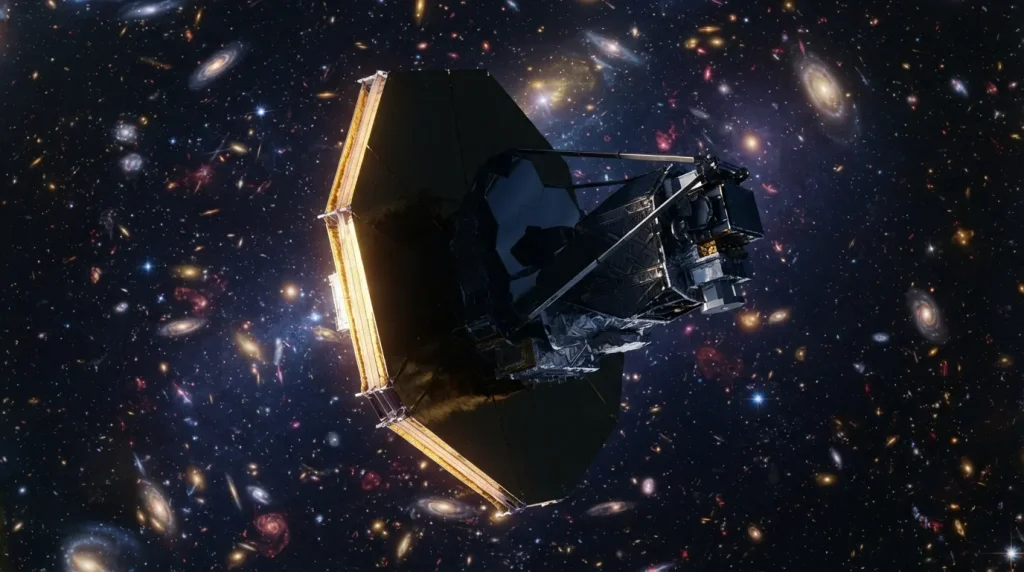
Dark energy is one of modern cosmology’s biggest puzzles. Scientists know that the expansion of the universe is accelerating, but they still do not know the physical nature of the phenomenon responsible.
Roman will attack the problem using several complementary techniques, including measurements of distant galaxies, supernovae and gravitational lensing. By examining how cosmic structures formed and changed over time, researchers hope to determine whether dark energy behaves like a cosmological constant or points toward new physics.
NASA’s planned wide-area surveys will cover thousands of square degrees and could provide hundreds of millions of galaxies for scientists to analyze. NASA says the data will provide an unprecedented look at the universe’s dark side.
More Than Dark Energy
Roman’s scientific ambitions extend well beyond cosmology. The telescope will also study dark matter, galaxy evolution, black holes and exoplanets.
Its ability to monitor huge numbers of stars could help researchers discover tens of thousands of previously unknown worlds. NASA expects the mission to identify roughly 100,000 new exoplanets, while its enormous public data archive could become a resource for astronomers studying everything from stellar evolution to distant galaxies.
The Beginning of a New Cosmic Survey
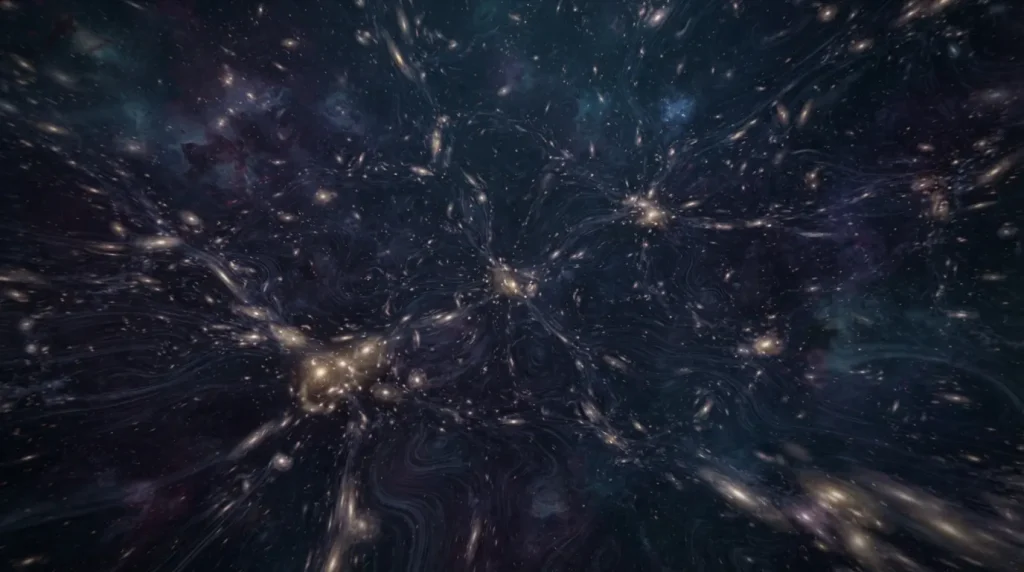
The launch is only the beginning. Roman faces a roughly three-month journey to its final orbit around the Sun-Earth L2 point, followed by deployment, commissioning and scientific calibration. Once operational, its surveys will generate enormous volumes of information for researchers worldwide.
The Roman Space Telescope may ultimately do more than answer questions about dark energy. By revealing billions of galaxies and countless planetary systems in unprecedented detail, it could uncover questions scientists have not yet thought to ask.
For a $4.3 billion mission, that may be the most exciting possibility of all: not simply confirming what humanity already believes about the cosmos, but discovering that some of it is wrong.
#RomanSpaceTelescope #NASA #DarkEnergy #DarkMatter #Space #Astronomy #Cosmology #NASAmission #JamesWebb #Hubble #SpaceExploration #Exoplanets #ScienceNews #SpaceNews