

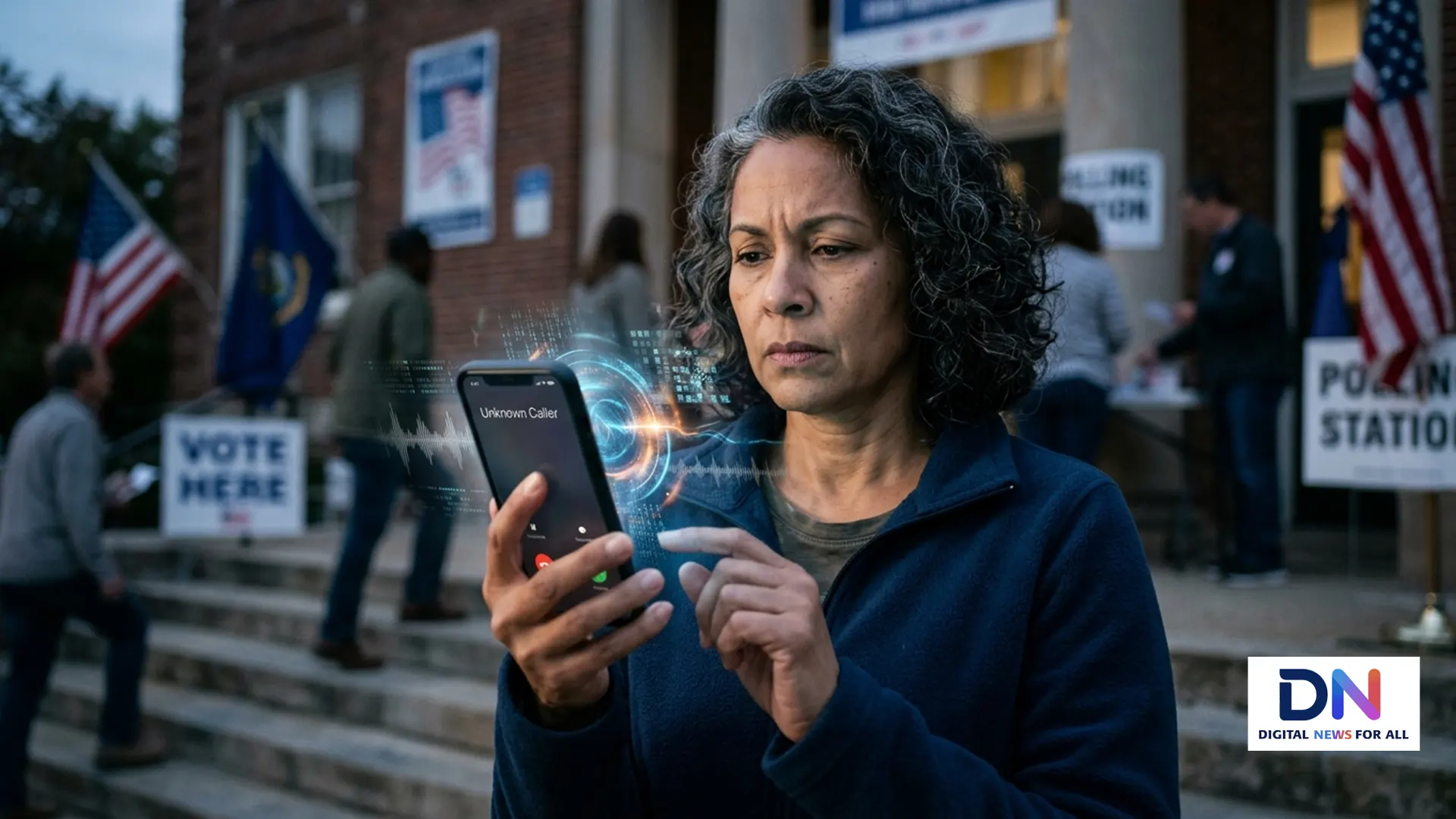
AI election robocalls are emerging as a major concern ahead of the November 2026 U.S. midterm elections. Artificial intelligence can generate convincing voices, automate phone conversations, and personalize political messages at scale. These capabilities create new opportunities for voter outreach, but they also raise serious questions about deception, misinformation, and election security.
On October 7, the Associated Press reported that the Federal Communications Commission (FCC) was considering a request to ease restrictions on certain political robocalls, including calls using AI-generated voices. The proposal has sparked debate over political speech, consumer privacy, and the risk of misleading voters. Read the Associated Press report for details.
How AI Robocalls Can Mislead Voters
Machine learning and voice-cloning technology can imitate a person’s speech patterns with increasingly convincing results. Fraudulent callers could use these tools to impersonate public officials, spread false election information, or encourage voters to disregard legitimate election instructions.
A prominent example occurred during the 2024 New Hampshire presidential primary. Thousands of voters received an AI-generated robocall imitating then-President Joe Biden’s voice and urging them not to vote in the primary.
The FCC subsequently proposed a $6 million penalty against the consultant responsible for the calls. Its official enforcement notice documents the agency’s findings and proposed penalty.
Why the October 2026 FCC Debate Matters
The FCC is considering a petition from conservative group Club for Growth seeking permission to make certain AI-generated political calls to mobile phones without prior consent.
According to Reuters, supporters argue that automated AI conversations could help political organizations reach voters more efficiently. Critics warn that removing consent requirements could increase unwanted calls and create opportunities for deceptive messages shortly before Election Day.
The public comment period is scheduled to close on October 19, 2026. The FCC has not yet made a final decision on the request.
How Voters Can Recognize Potential Election Scams
Voters should be cautious when a political call creates urgency, requests personal information, or provides unusual instructions about voting.
The Federal Election Commission provides information about federal campaign rules, while the Election Assistance Commission offers resources on election administration and voting procedures.
For consumer protection guidance, the Federal Trade Commission’s robocall resources explain how unwanted and deceptive automated calls can be reported.
Voters should independently verify polling locations, registration deadlines, and voting procedures through their official state or local election office. A familiar voice is not proof that a call is genuine.

Can Technology Help Protect Election Integrity?
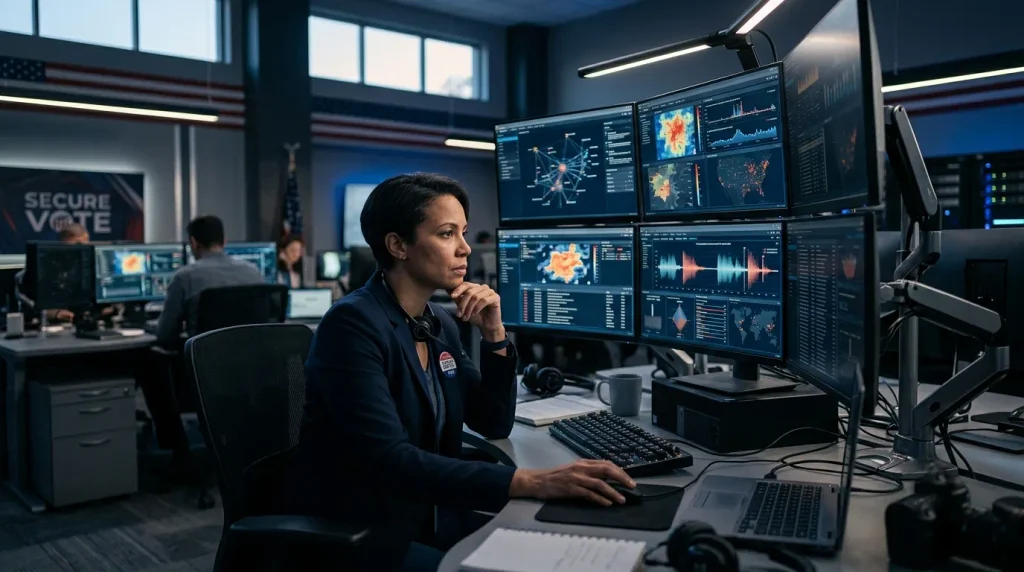
AI can also help identify suspicious calling patterns, detect synthetic audio, and flag coordinated misinformation campaigns. However, detection systems are imperfect, and legitimate political speech must be distinguished from fraud and unlawful voter interference.
Election officials, telecommunications providers, regulators, and technology companies all have roles in limiting abuse while protecting lawful communication.
AI election robocalls illustrate how quickly election security challenges are evolving. The technology can support legitimate voter engagement, but impersonation and false voting instructions can undermine public trust.
As the November midterms approach, voters should verify unexpected claims, rely on official election sources, and report suspected fraud. The central challenge is ensuring that increasingly realistic machine-generated voices do not become a tool for confusing voters or interfering with their ability to participate.
#AIRobocalls #ElectionSecurity #AI #Election2026 #VoterProtection #Deepfakes #USPolitics