

Renowned theoretical physicist David Gross, a recipient of the prestigious Breakthrough Prize, has sparked global debate with a bold prediction about the future of human knowledge. His insights challenge long-held assumptions about how far science can go—and whether there are limits we may never overcome.
A ‘Shocking’ Perspective on Knowledge
Gross suggests that humanity may be approaching a critical turning point in scientific discovery. While technological advancements continue at an unprecedented pace, he warns that the complexity of the universe may eventually outstrip our ability to fully understand it.
This perspective aligns with ongoing discussions in theoretical physics, where researchers grapple with questions about the fundamental nature of reality.
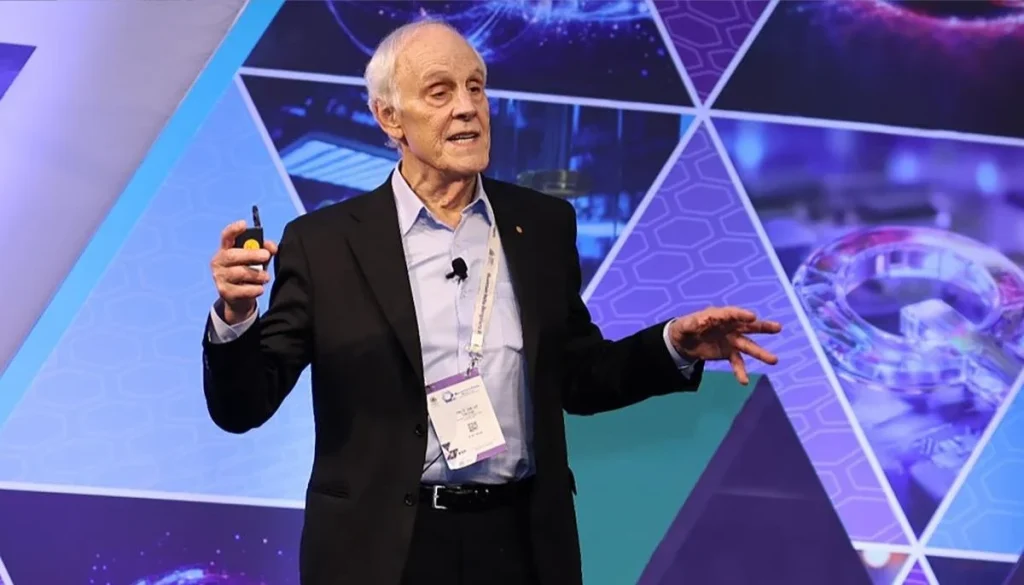
Are There Limits to Scientific Discovery?
For centuries, science has operated under the assumption that with enough time and effort, every mystery can be solved. However, Gross challenges this notion, suggesting that certain aspects of the universe may remain permanently beyond human comprehension.
- Increasing complexity of modern theories
- Dependence on advanced computational models
- Potential limits of human cognition
Institutions like CERN continue to push the boundaries of knowledge, yet even their groundbreaking research highlights how much remains unknown.
The Role of Artificial Intelligence
One of the most intriguing aspects of Gross’s prediction involves the role of artificial intelligence. As AI systems become more advanced, they are increasingly capable of analyzing data and generating insights that surpass human capabilities.
Platforms and research initiatives discussed by Nature suggest that AI could either bridge the gap in understanding—or deepen it by producing results that humans struggle to interpret.
A New Era of Collaboration
Despite these challenges, Gross remains optimistic about the future of scientific collaboration. He emphasizes that global cooperation, interdisciplinary research, and technological innovation will be key to advancing knowledge.
This collaborative approach is already evident in large-scale projects and international research efforts that bring together experts from diverse fields.
What This Means for Humanity
If Gross’s prediction holds true, it could fundamentally change how we approach education, research, and innovation. The focus may shift from seeking absolute answers to developing tools and frameworks that help us navigate uncertainty.
Such a shift would have profound implications for industries ranging from technology to healthcare, influencing how we solve complex global challenges.
David Gross’s “shocking” prediction invites us to rethink the boundaries of human knowledge. Whether we are nearing the limits of understanding or simply entering a new phase of discovery, one thing is certain: the quest for knowledge remains one of humanity’s most defining pursuits.
#DavidGross #FutureOfScience #HumanKnowledge #Physics #AIandScience #Innovation