

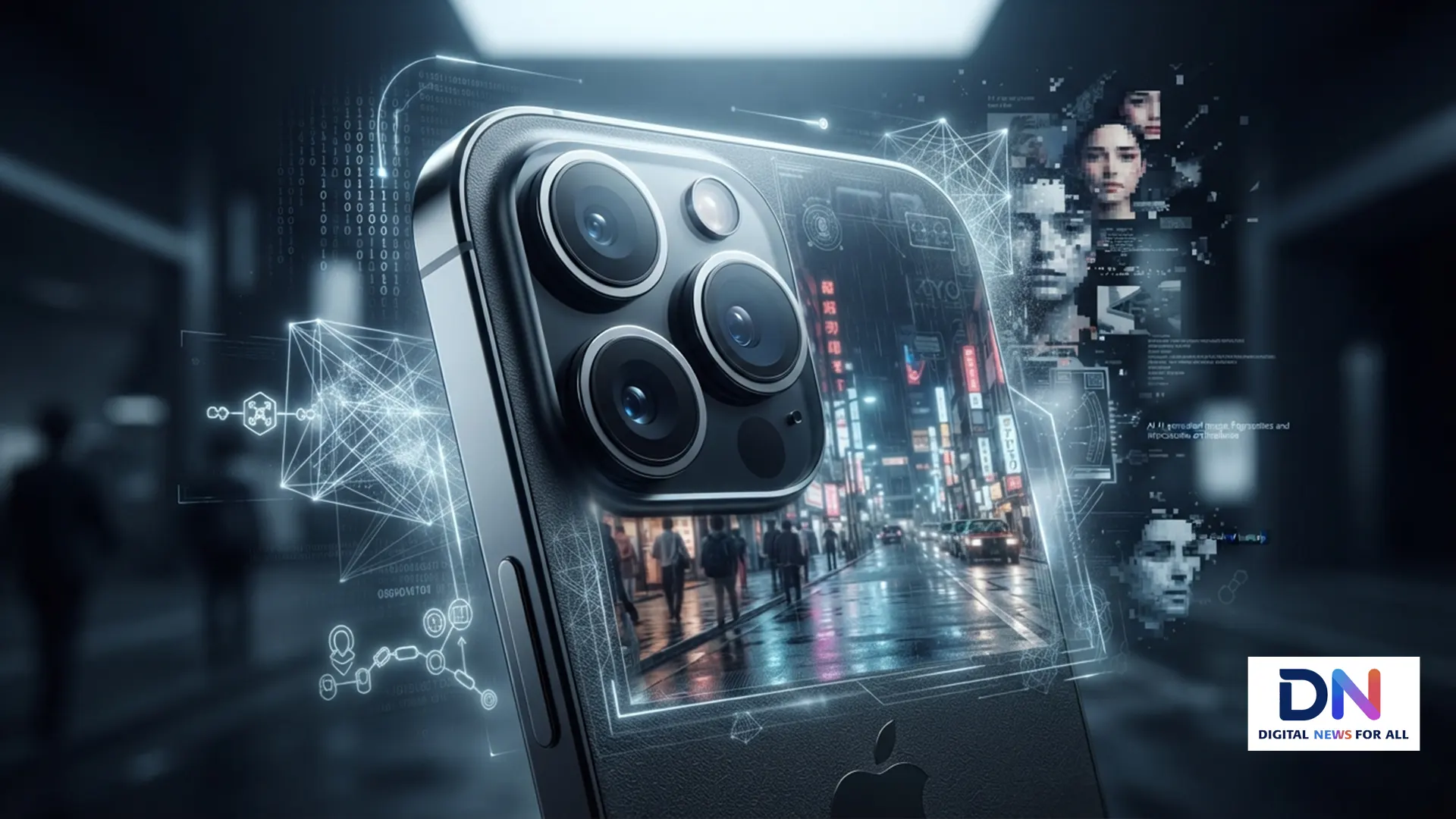
Apple Reference Image is Apple’s latest attempt to solve one of the biggest problems created by generative AI: knowing whether a photograph actually came from a camera or was digitally manufactured.
AI image generators can now create photorealistic scenes, while editing tools can make convincing changes to ordinary photographs. Apple says that simply looking realistic is no longer enough to establish that an image represents something that really happened.
Why This Matters in the Deepfake Era
The problem is becoming increasingly difficult because generative AI can produce images that look like conventional photographs. Apple’s own Image Playground can now create photorealistic images, while Photos provides increasingly sophisticated AI-powered editing tools.
Apple says generated images from Image Playground include a hidden SynthID watermark. However, a watermark and a secure photographic provenance system solve different problems. One can identify synthetic content, while the other can establish evidence about the origin of an actual camera capture.
The Apple Intelligence announcement explains the company’s use of photorealistic generation and hidden SynthID watermarks.
Apple Creates a Digital Negative
Apple Reference Image is an optional camera mode on the iPhone 18 Pro and iPhone 18 Pro Max. When enabled, the camera securely captures and signs data from the main camera sensor.
Apple describes the result as a kind of secure digital negative. It includes sensor data and cryptographic timestamp information designed to establish what the camera actually captured. The company says dedicated hardware protects the capture process while Private Cloud Compute is used to develop the reference image.
Apple’s technical explanation of Apple Reference Image details how the system uses hardware security, cryptographic signatures, timestamps and verification.
Reference Image Does Not Prove the Whole Story
There is an important limitation. Authentic provenance does not automatically prove that everything shown in a photograph is truthful or correctly interpreted.
For example, a genuine photograph can capture a real event while the accompanying caption provides a false location, date or explanation. A real camera can also photograph a staged scene.
The C2PA provenance standard makes the same distinction: provenance can provide evidence about an asset’s origin and history, but provenance by itself cannot establish whether the underlying claim is factually true.
How C2PA Fits Into the Bigger Picture
Apple Reference Image is arriving alongside a broader industry movement toward digital provenance. C2PA’s Content Credentials use cryptographically signed manifests to record information about how digital content was created or modified.
These credentials can document editing actions and provide a tamper-evident history. They can also use fingerprints and invisible watermarks to help recover provenance information when metadata is separated from an asset.
The C2PA Content Credentials specification explains how cryptographic bindings and provenance information can travel with digital media.
The Weak Point: Provenance Can Disappear
Digital provenance is powerful, but it is not automatically preserved everywhere. C2PA explicitly identifies the removal of provenance manifests as a security threat. A person can download an image, strip its provenance information and repost the altered file.
That does not necessarily mean the original provenance is destroyed. C2PA’s system includes mechanisms such as soft bindings and external manifest repositories that can help reconnect an asset with its provenance information.
The C2PA security documentation describes the risks of stripping provenance data and the mechanisms designed to mitigate them.

Apple’s Privacy Approach Is Also Significant
Apple says Reference Image was designed to preserve photographer privacy. The company says it cannot access the raw photograph during authentication, although device and sensor information and certain photo metadata are processed as part of the system.
The feature is also opt-in. Apple says users decide whether to enable Reference Image and whether to share reference information with others.
Apple’s Reference Image privacy documentation explains what information is processed during authentication and how the company handles the associated data.
Can You Trust a Photo Again?
Apple Reference Image cannot make every photograph on the internet trustworthy. What it can do is introduce a stronger category of evidence: a photograph that comes with verifiable information about its capture.
That distinction could become increasingly important for journalism, insurance claims, scientific documentation, legal evidence and eyewitness reporting.
Apple’s Reference Image support documentation explains that users can compare an authenticated reference image with the regular photograph and see changes such as crops, color adjustments and generative-AI edits.
The future of photography may therefore involve two separate questions: Did a camera actually capture this image? And does the image accurately represent what happened? Apple is addressing the first question. Humans, institutions and trusted sources will still have to answer the second.
#AppleReferenceImage #Deepfakes #AI #ArtificialIntelligence #PhotoAuthenticity #iPhone18Pro #DigitalProvenance #C2PA #ContentCredentials #AIImages #DeepfakeDetection #TechNews