

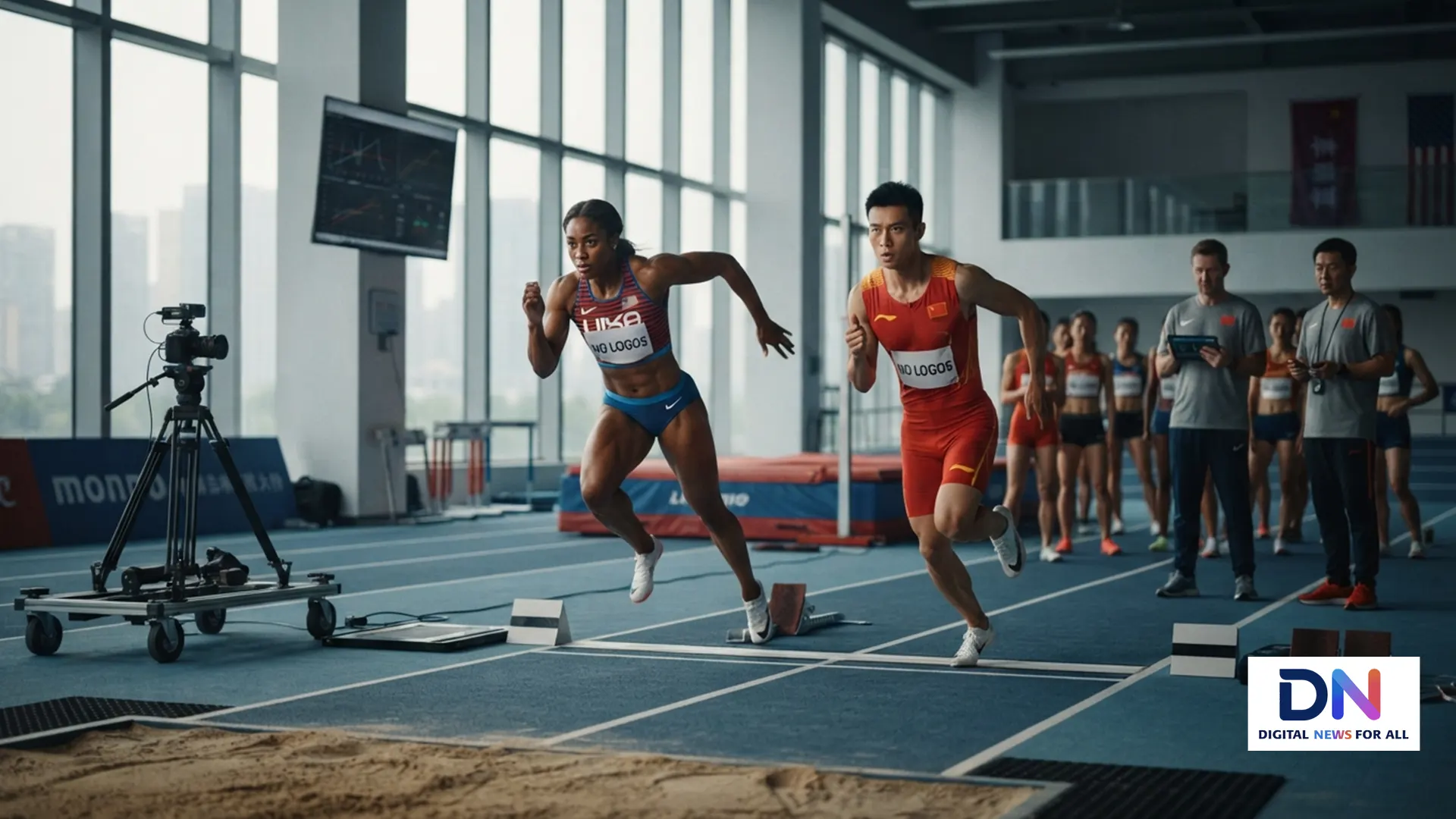
The China sports system is once again attracting global attention at the 2026 Asian Games. China has topped the Asian Games medal table at 11 consecutive editions, and its performance in Aichi-Nagoya is extending that remarkable run. The bigger question for the United States is not whether to copy China, but what lessons can be learned from its approach to developing athletes at scale.
The 2026 Games feature 469 medal events across 43 sports. China arrived with 815 athletes competing across 38 sports, with nearly two-thirds of its athletes making their Asian Games debuts. That emphasis on generational renewal gives the country a large pipeline of athletes moving toward future international competition.
The Reuters report on China’s Asian Games delegation details the scale of the country’s 2026 team.
China’s Pipeline Starts Young
One important feature of the China sports system is its emphasis on connecting youth development with elite competition. Shanghai, for example, has developed a three-part pathway linking sports schools, ordinary schools and private clubs.
China’s State General Administration of Sport has also emphasized youth training centers, school pathways and stronger development structures as part of its 2026–2035 competitive-sport planning.
The Chinese government’s sports development report describes the growing use of technology, youth programs and training infrastructure.
Sports Science Is Part of the Formula
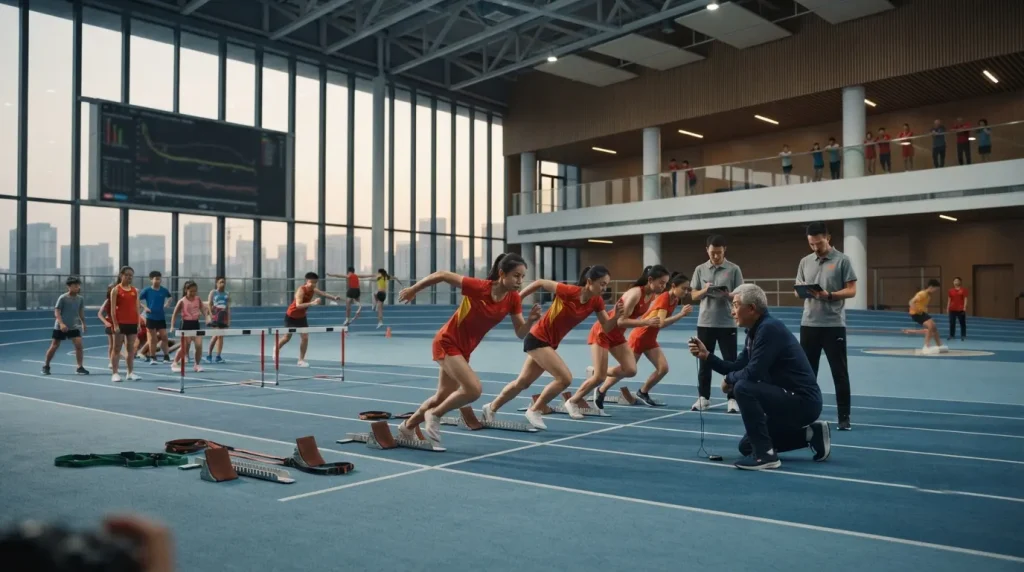
China’s system increasingly combines traditional coaching with technology. Artificial intelligence is being used to analyze diving movements, while specialized facilities and performance laboratories are being developed for different sports.
That does not mean technology guarantees medals. It does show how data, biomechanics, recovery and sport science can become integrated into athlete development rather than being treated as occasional additions.
The U.S. Olympic & Paralympic Committee’s high-performance program similarly uses nutrition, physiology, psychology, strength and conditioning, and performance technology to support American athletes.
America Already Has a Powerful Pipeline
The United States should not overlook its own advantage: the college sports system. The USOPC says 75% of the U.S. Olympic team at Paris 2024 had collegiate affiliations.
That system gives American athletes access to universities, coaches, facilities, competition and education while they develop. It is a very different model from China’s more centralized approach.
The USOPC’s collegiate impact data shows how deeply universities are connected to Team USA’s Olympic pipeline.
Where China Offers a Different Lesson
The clearest lesson may be depth. China’s current Asian Games strategy is designed around developing large numbers of athletes across many sports, not simply producing a handful of superstars.
China’s athletics program is also showing that broader depth matters. The Asian Athletics results currently show China leading the athletics medal table in Aichi-Nagoya.
For the United States, the potential lesson is to make talent identification and development more accessible before athletes reach college age. The USOPC’s American Development Model already promotes long-term development, multi-sport participation and quality coaching.
The U.S. Does Not Need a Copy of China
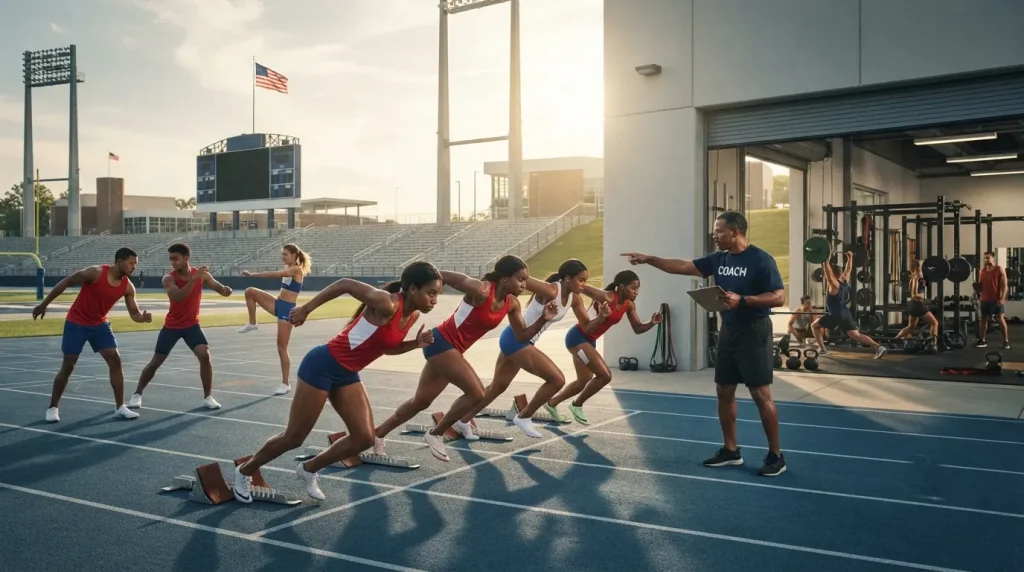
China’s system comes with characteristics that are difficult to reproduce in America’s decentralized sporting environment. The United States has thousands of schools, universities, private clubs, professional organizations and independent governing bodies.
The more relevant question is how those institutions can coordinate better. Earlier talent identification, stronger youth coaching, shared sports science and more financial support could expand the pool of athletes capable of reaching the international level.
The USOPC’s American Development Model already provides a framework built around age-appropriate development, universal access, multi-sport participation and coaching quality.
The Real Race Is for the Next Generation
China’s Asian Games success demonstrates the power of sustained investment and a deep talent pipeline. America’s strength comes from a different ecosystem, particularly its universities and enormous private sports sector.
The opportunity is to combine those strengths with earlier development, better access and more coordinated performance science. The medal table may measure today’s success, but the real competition is often being decided years earlier—in schools, clubs, training centers and communities.
#AsianGames2026 #China #ChinaSports #USAthletics #TeamUSA #Athletics #SportsScience #YouthSports #Olympics #AthleteDevelopment #SportsTraining