

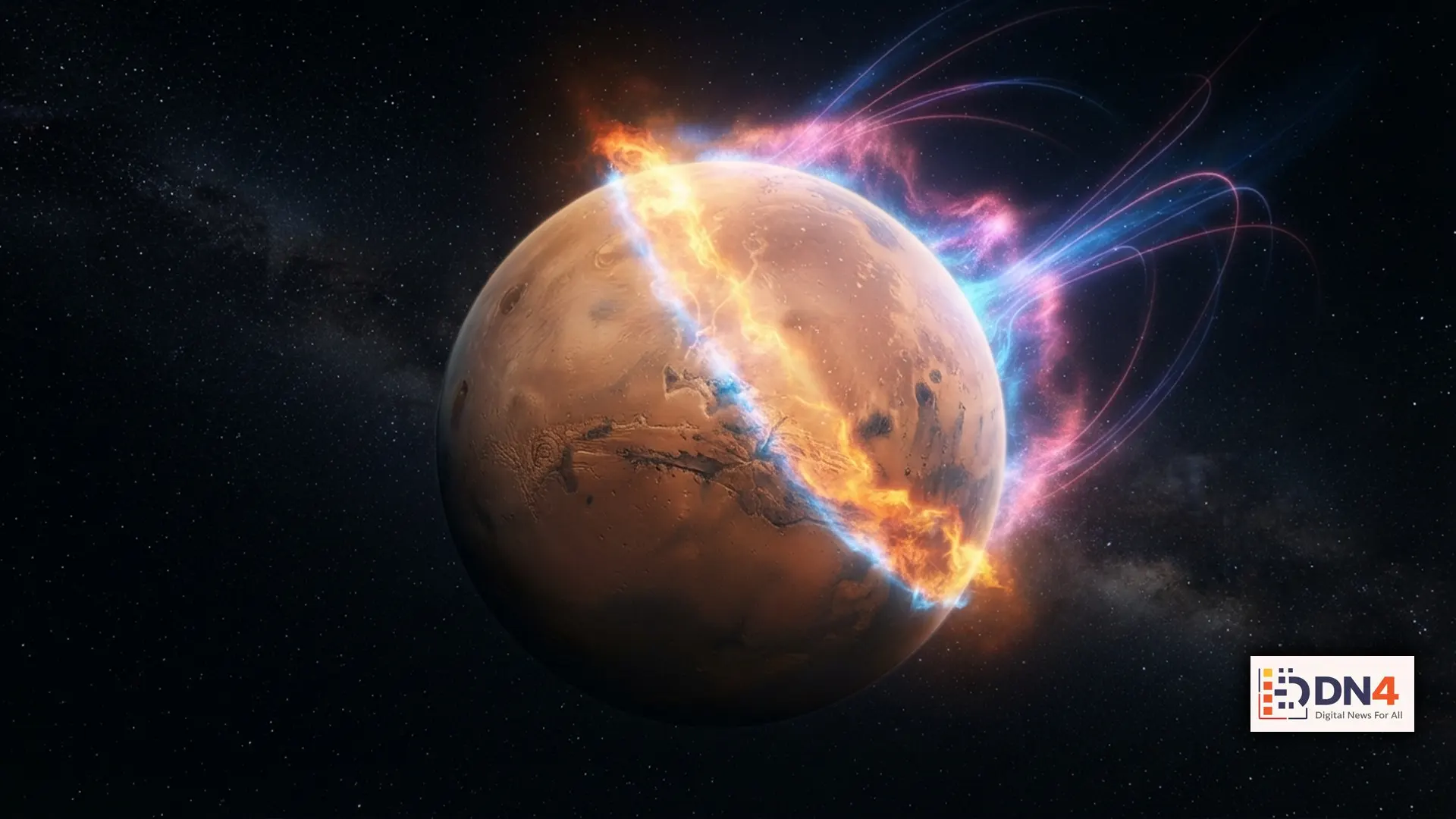
Scientists continue to uncover new evidence explaining why Mars transformed from a potentially habitable world into the cold, dry planet we see today. Recent observations suggest that powerful solar waves generated by the Sun are playing a major role in stripping away the Red Planet’s already thin atmosphere. The discovery provides fresh insight into Mars’ climate history and could help researchers better understand the evolution of rocky planets throughout the solar system.
The Sun’s Powerful Influence on Mars
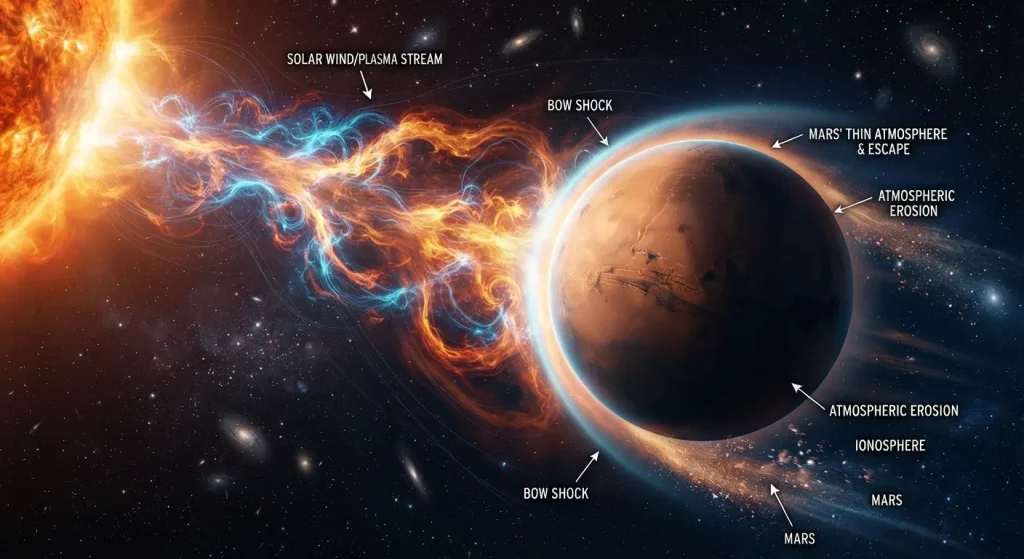
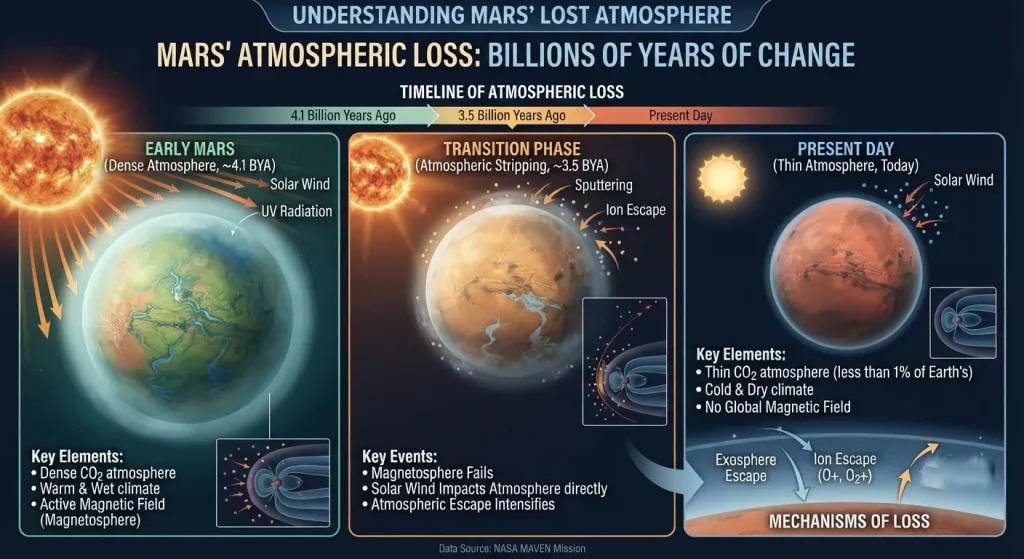
Unlike Earth, Mars lacks a strong global magnetic field capable of shielding its atmosphere from intense solar activity. As a result, energetic solar waves and charged particles regularly collide with the planet, gradually pushing atmospheric gases into space. Data collected by NASA’s MAVEN mission has revealed how these solar events accelerate atmospheric escape during periods of heightened solar activity.
Researchers believe these repeated interactions over billions of years have significantly reduced the planet’s atmosphere, making it difficult for liquid water to remain stable on the surface.
Why Mars Lost Its Thick Atmosphere
Billions of years ago, Mars likely possessed rivers, lakes, and a much denser atmosphere. However, once its internal magnetic field weakened, the planet became increasingly vulnerable to the Sun’s radiation. Studies published through NASA’s Mars Exploration Program indicate that intense solar storms can dramatically increase atmospheric loss in relatively short periods.
Understanding this process also helps scientists estimate whether similar atmospheric erosion could affect exoplanets orbiting active stars.
Why This Discovery Matters
The findings extend beyond Mars. They improve scientists’ understanding of planetary evolution, habitability, and the conditions necessary for sustaining life. Future human missions to Mars must also consider how continuous exposure to solar radiation affects astronauts, spacecraft, and long-term habitats.
Researchers from organizations including the European Space Agency (ESA) and studies referenced by the Nature scientific journal continue to investigate how solar activity shapes planetary atmospheres across the solar system.
What Comes Next?
Upcoming observations from NASA and international space agencies will continue monitoring Mars during the Sun’s active solar cycle. Scientists hope these missions will reveal how different types of solar waves influence atmospheric escape and improve future models of planetary climate evolution.
These discoveries will not only deepen our understanding of Mars but also guide the search for potentially habitable worlds beyond our solar system.
The story of Mars is increasingly becoming a story about the Sun. Giant solar waves appear to be one of the key forces gradually stripping away the Red Planet’s atmosphere, offering valuable clues about planetary evolution, space weather, and the conditions required for life. As new missions continue exploring Mars, researchers expect even more discoveries that could reshape our understanding of the solar system.
#Mars #SpaceScience #NASA #SolarStorms #PlanetaryScience #RedPlanet #SpaceExploration #Astronomy #ScienceNews