

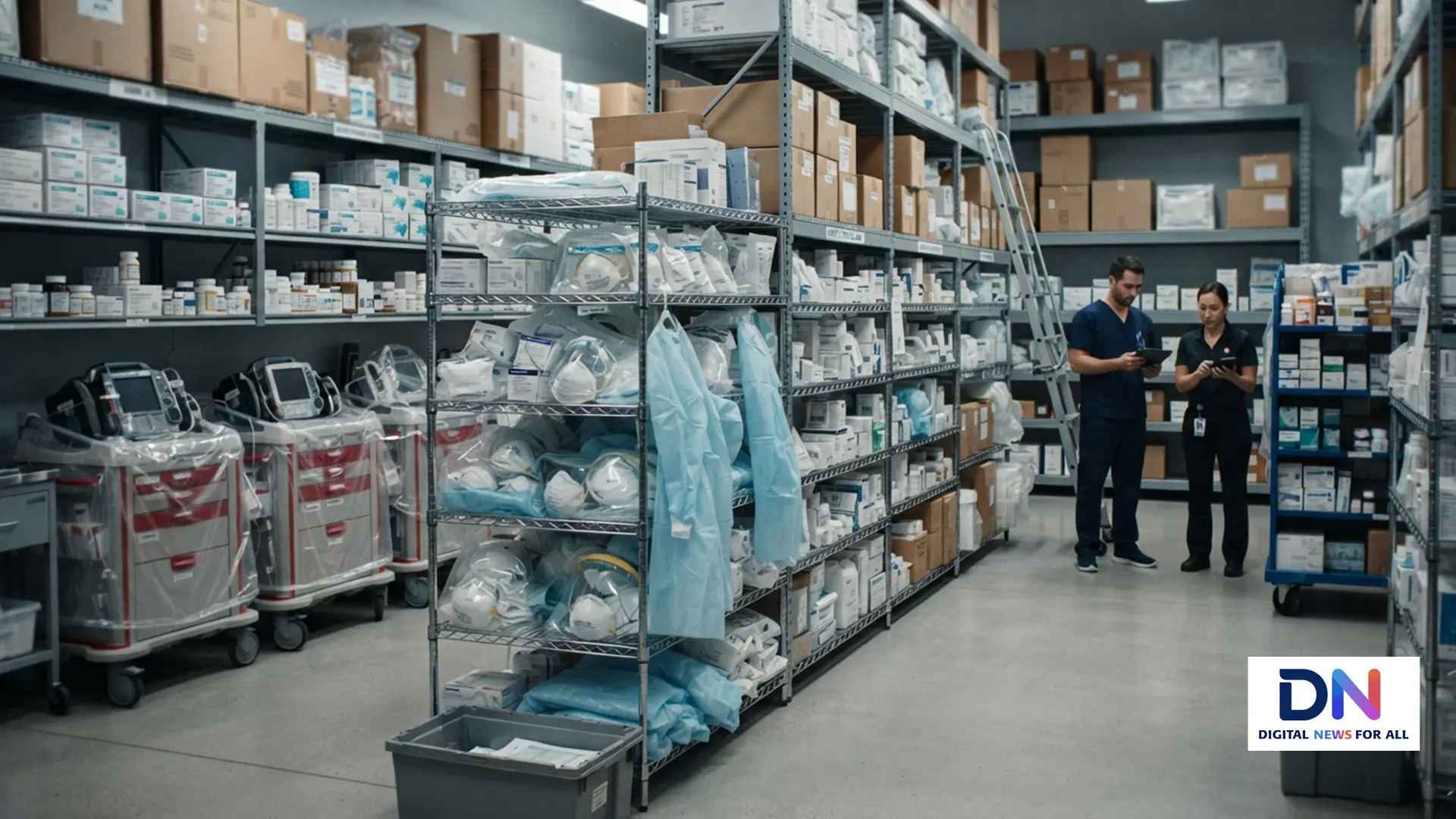
Medical stockpiles have become a critical part of U.S. hospital preparedness as global supply chains face repeated disruptions. COVID-19 exposed weaknesses in medical logistics. New shortages involving drugs, devices and basic hospital supplies show that the problem has not disappeared.
The challenge is bigger than keeping boxes in a warehouse. Hospitals need reliable suppliers, alternative distribution routes, adequate inventories and plans for conserving essential products. The ASPR TRACIE DASH Tool helps hospitals estimate the supplies they may need during mass-casualty incidents and infectious-disease emergencies.
Why Hospital Stockpiles Matter
Modern hospitals often depend on complex, interconnected supply networks. A disruption at one manufacturer can eventually affect operating rooms, emergency departments or intensive-care units.
That vulnerability became particularly visible during the pandemic. The FDA’s medical-device preparedness guidance recommends risk assessments, additional inventory, alternative suppliers and contingency plans for emergencies.
Recent disruptions show why those measures remain relevant. In May 2026, the FDA said interruptions involving neurosurgical patties, sponges and strips were expected to affect supply through the end of the year. The agency recommended conservation strategies and clinically appropriate alternatives.
The Strategic National Stockpile Has Limits
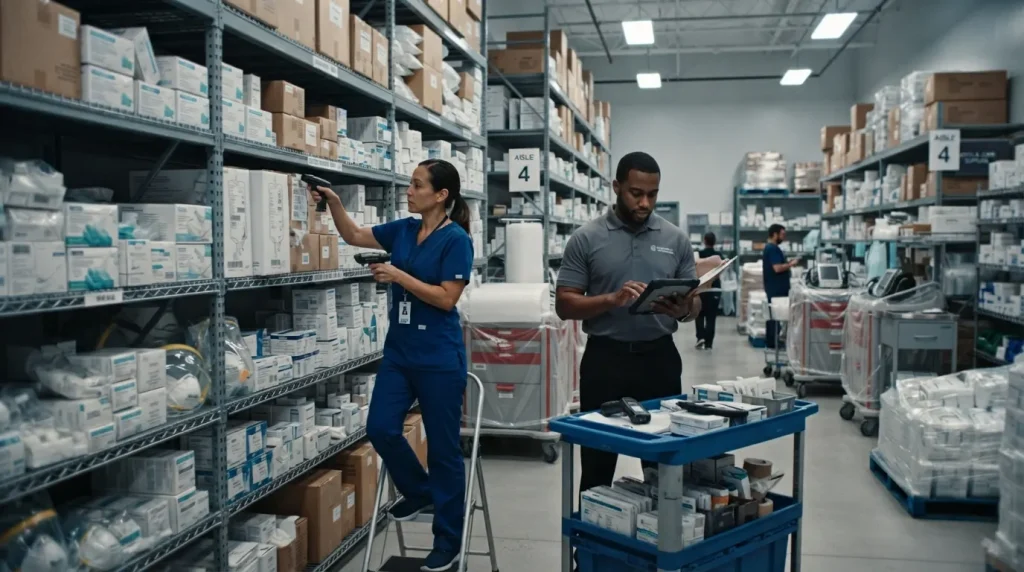
The federal government also maintains the Strategic National Stockpile. It stores medical countermeasures that can be deployed during major public-health emergencies.
However, the stockpile is not designed to replace every hospital warehouse. A Government Accountability Office review found that the stockpile contained most recommended types of medical countermeasures but sometimes held less than recommended quantities. GAO also identified the need for stronger risk management around inventory gaps.
That distinction matters. National reserves can provide a critical emergency buffer. They cannot eliminate vulnerabilities across thousands of hospitals and suppliers.
Global Manufacturing Adds Another Risk
Many medical products depend on international manufacturing networks. Raw materials, active pharmaceutical ingredients, packaging and finished products can cross multiple borders before reaching a U.S. hospital.
A recent Council on Foreign Relations analysis of pharmaceutical supply chains highlighted the concentration of manufacturing and pharmaceutical inputs overseas. Such concentration can make shortages more difficult to resolve when geopolitical tensions, trade restrictions or production failures affect key suppliers.
Saline provides another warning. Research published in 2025 examined how disruptions to U.S. saline production exposed hospitals using just-in-time inventory systems to supply shocks. The experience demonstrated how a disruption at a concentrated manufacturing location can quickly spread through hospital operations.
What Hospitals Can Do
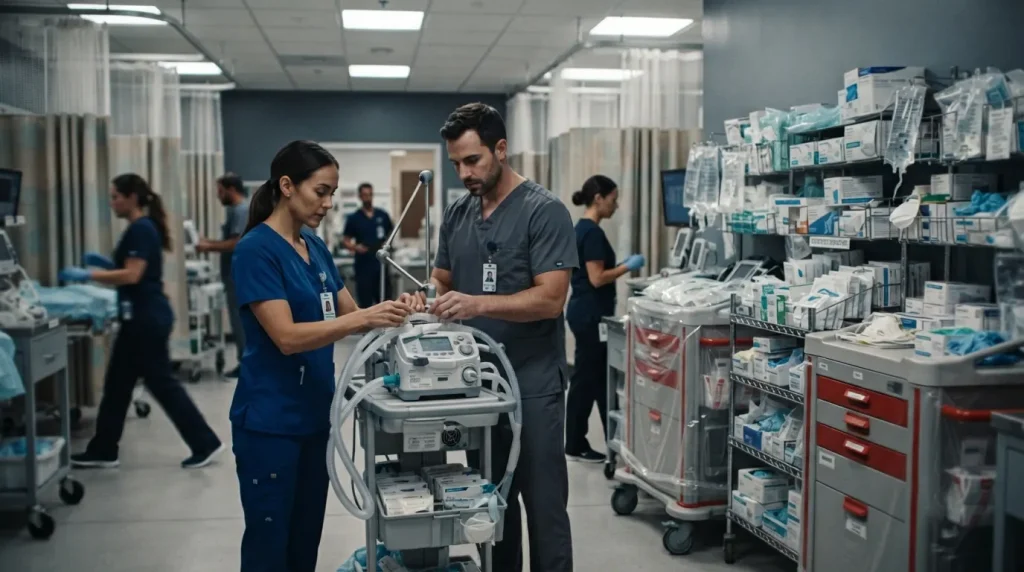
Building larger warehouses is only one part of the solution. Hospitals can diversify suppliers, identify substitute products, establish emergency purchasing agreements and monitor critical inventories more closely.
The FDA’s drug-shortage resources can help health systems monitor shortages and identify available information about affected medicines.
Hospitals also need clear conservation protocols. When supplies become scarce, clinicians may need to prioritize essential procedures, reduce unnecessary consumption and use approved alternatives when appropriate.
The Next Test May Be a Combination Crisis
The greatest challenge may not come from one isolated shortage. A hurricane, cyberattack, geopolitical disruption or manufacturing failure could occur while another supply problem is already underway.
That is why emergency preparedness increasingly depends on resilience rather than simple inventory size. Medical stockpiles can buy time, but diversified suppliers, domestic production capacity, reliable logistics and coordinated emergency planning determine how effectively that time is used.
For U.S. hospitals, the lesson from recent disruptions is straightforward: preparedness cannot begin when the shipment stops. The supply chain itself has become part of emergency medicine.
#MedicalStockpiles | #USHospitals | #Healthcare | #SupplyChain | #EmergencyPreparedness | #DrugShortages | #HealthSecurity