

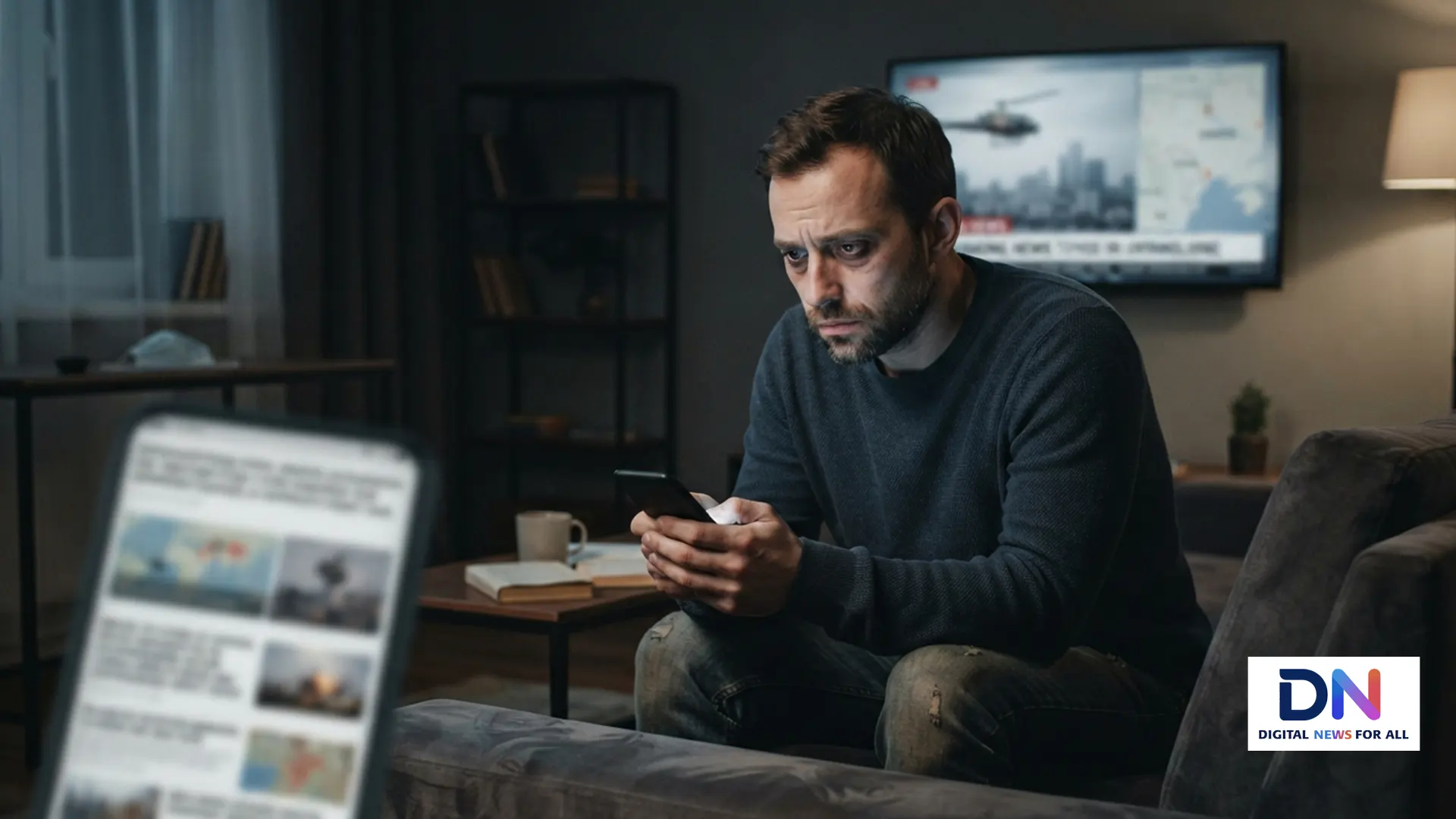
Forever war fatigue is becoming an uncomfortable reality for Americans who have spent years watching one international crisis follow another. After the disruption of the COVID-19 pandemic, conflicts, political instability and constant breaking-news alerts can create a sense that another emergency is always waiting.
That does not mean every person watching war coverage develops a mental health disorder. However, mental-health experts recognize that prolonged exposure to disturbing events can contribute to stress, anxiety and sleep problems. The American Psychological Association’s Stress in America report found that 76% of U.S. adults considered the nation’s future a significant source of stress.
Why the News Never Feels Finished
The modern news cycle has changed how Americans experience distant conflicts. Television coverage once arrived in scheduled broadcasts. Today, smartphones can deliver battlefield footage, casualty reports and geopolitical updates at any hour.
The National Institute of Mental Health notes that traumatic experiences can produce anxiety, sadness, anger, sleep difficulties and trouble concentrating. While watching a conflict from thousands of miles away is different from experiencing trauma directly, repeated exposure can still become emotionally exhausting.
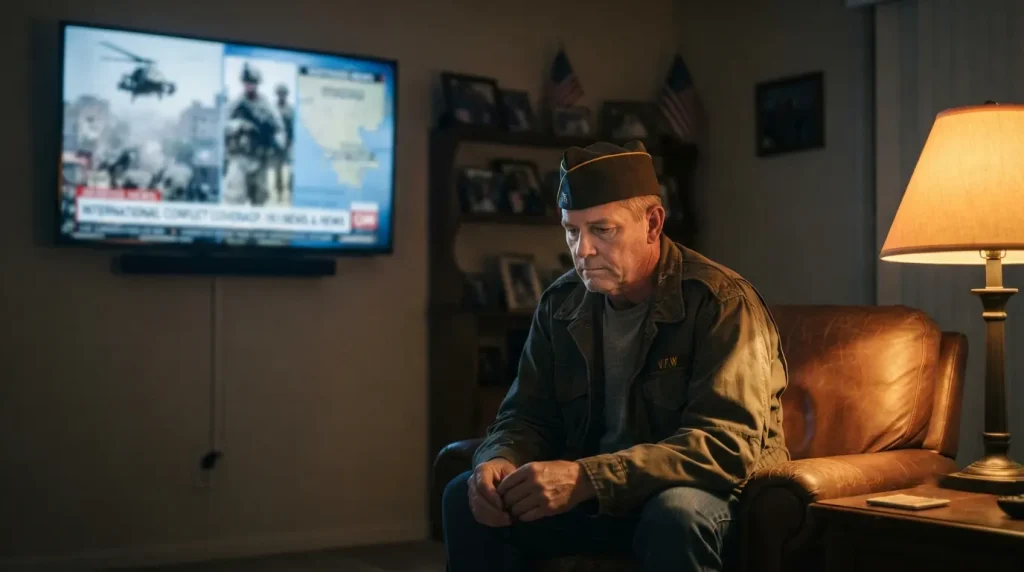
APA psychologists have specifically warned that continuous conflict coverage can create a cycle of media exposure, stress and worry. Veterans and people with personal connections to conflict zones may also experience stronger reactions when news coverage resembles previous traumatic experiences.
The Post-Pandemic Layer
For many Americans, war fatigue does not exist in isolation. The pandemic changed routines, work patterns, finances and social relationships. Economic uncertainty and political division have added more sources of background stress.
The CDC’s stress guidance explains that long-term stress can contribute to worsening health problems. That makes recovery time important when people are repeatedly exposed to stressful headlines.
When News Consumption Becomes Overload
One warning sign is losing the ability to disconnect. Checking updates before sleeping can keep the nervous system activated. Constantly scrolling through graphic images can also make distant events feel psychologically immediate.
The Substance Abuse and Mental Health Services Administration recommends limiting news consumption after traumatic events, maintaining routines, staying connected with trusted people and seeking help when distress becomes difficult to manage.
Veterans may need particular attention. The VA’s National Center for PTSD notes that war-related media coverage can trigger memories and distress among some veterans.

Building a Healthier Information Routine
The answer is not ignoring the world. Instead, Americans can create boundaries around how they consume it. Checking reliable sources at defined times can reduce endless scrolling. Taking breaks from graphic footage can also create psychological distance.
Sleep, exercise, social connection and normal daily routines remain important. The SAMHSA Disaster Distress Helpline also provides free, confidential crisis counseling at 1-800-985-5990 for people experiencing distress related to disasters and other traumatic events.
Forever war fatigue may not have a single diagnosis, but the underlying problem is recognizable: people need recovery time between crises. In a post-pandemic America already carrying substantial stress, creating space to disconnect may be an important part of protecting mental well-being.
#ForeverWarFatigue | #MentalHealth | #America | #PostPandemic | #WarAnxiety | #StressAwareness | #NewsFatigue | #Wellbeing