

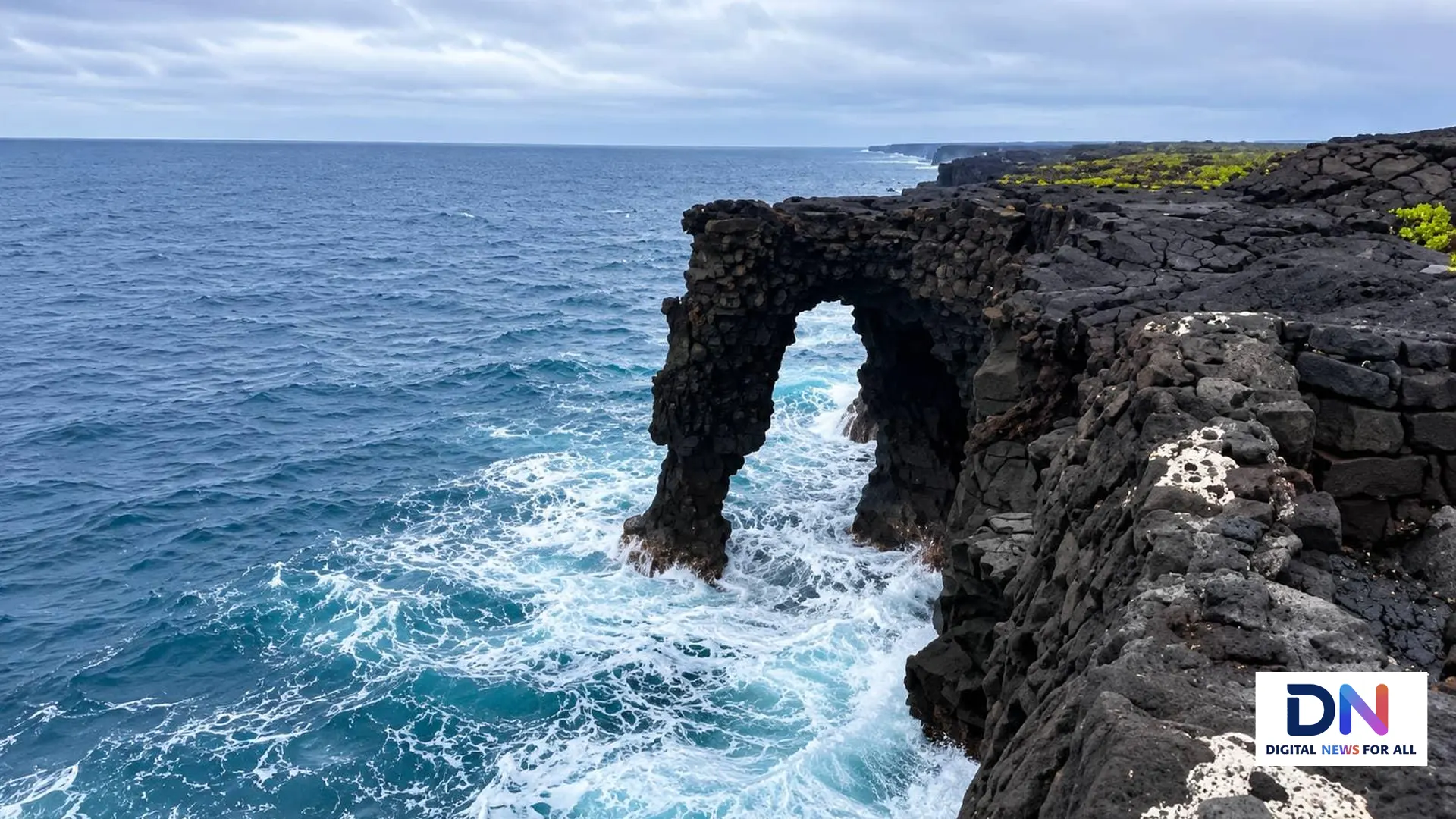
The Hōlei Sea Arch collapse has changed one of Hawaii’s most recognizable coastal landscapes. The approximately 90-foot natural formation in Hawaiʻi Volcanoes National Park disappeared into the Pacific Ocean after standing for roughly 550 years. Its collapse is a reminder that coastal erosion can work slowly for centuries before producing a dramatic change in a matter of moments.
The National Park Service confirmed the collapse on October 1, 2026. The arch was last seen standing on September 23 and was gone by the night of September 27. Officials have not identified the exact moment it fell.
How Did Hōlei Sea Arch Form?
The landmark developed in an ancient lava flow after volcanic rock reached the ocean. Over time, powerful Pacific waves exploited cracks and weaker sections of the cliff. They gradually carved a sea cave and widened it until a natural opening formed through the rock.
This process is known as differential erosion. Softer or more fractured material wears away faster than stronger rock, eventually leaving a narrow bridge that can no longer support its own weight.
The National Park Service’s explanation of sea arches describes how continued wave action eventually causes these formations to collapse, sometimes leaving a sea stack behind.
Why Did the Arch Collapse So Suddenly?
The collapse may have appeared sudden, but the warning signs had existed for years. Earthquakes associated with the 2018 Kīlauea eruption and summit collapse damaged nearby cliffs. New cracks and instability led park officials to close the original viewing area in January 2020.
Later that year, powerful surf from Tropical Storm Darby broke away part of the arch’s lower section. Officials warned that the remaining structure could collapse at any time.
The arch was still standing shortly before Tropical Storm Nolo affected Hawaii in September 2026. However, the National Park Service has not confirmed that the storm directly caused the collapse.
According to Associated Press reporting, the formation’s disappearance was not unexpected given the coastline’s long history of instability.
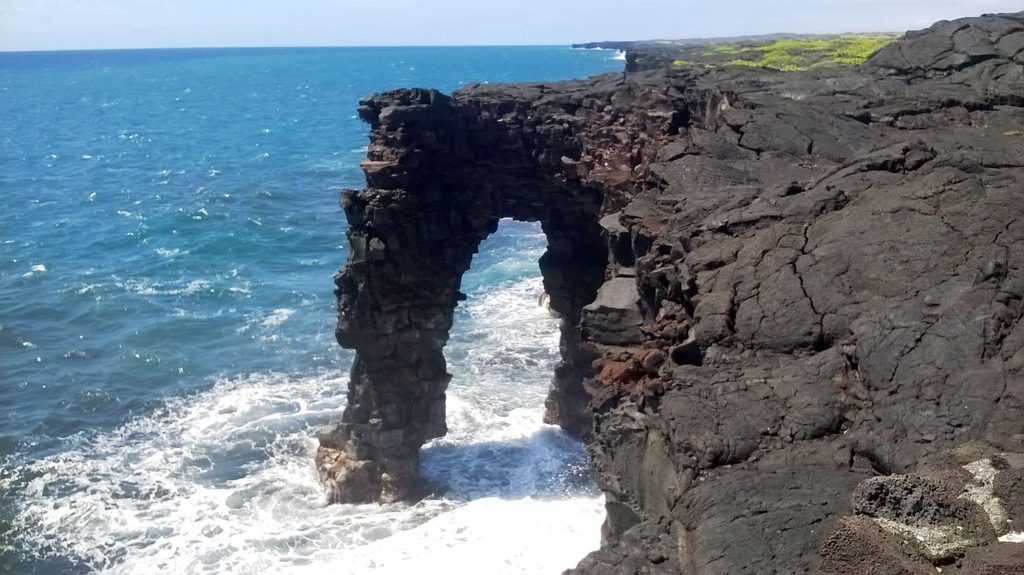
What Does This Reveal About Coastal Erosion Speed?
Coastal erosion does not happen at one constant speed. Waves gradually remove material, widen fractures, and weaken cliffs. During powerful storms, higher-energy waves can accelerate damage and dislodge large sections of rock.
The National Park Service’s coastal erosion research explains how wave impact, compressed air, and moving sediment contribute to shoreline deterioration.
Importantly, the Hōlei collapse does not establish a new erosion rate or prove that every coastline is retreating faster. It demonstrates how long-term weakening can culminate in a sudden structural failure.
Are Rising Seas Increasing Coastal Risks?
Sea-level rise adds another pressure to vulnerable shorelines. Higher water levels can allow waves and storm surges to reach farther inland, increasing erosion and flooding risks in many locations.
The National Oceanic and Atmospheric Administration explains that global sea levels are rising, although local rates differ because of land movement, currents, and regional conditions.
The U.S. Geological Survey also identifies storms, waves, and higher seas as important drivers of coastal change. These factors can threaten beaches, infrastructure, and sensitive ecosystems.
What Happens to Hawaii’s Coastline Next?
Hōlei Sea Arch’s disappearance does not mean coastal erosion has stopped. Waves will continue reshaping the volcanic cliffs, and new sea caves and arches may form over time.
For visitors, the immediate concern is safety. Park officials have warned people to stay away from closed areas and unstable cliff edges, which can collapse without warning.
The official park announcement reinforces the danger of approaching the former landmark or entering restricted coastal areas.
The Hōlei Sea Arch collapse is more than the loss of a scenic attraction. It illustrates a fundamental coastal process: landscapes can appear stable for generations while erosion quietly weakens them. When the final supporting rock gives way, centuries of change can become visible in a single event.
#HoleiSeaArch #Hawaii #CoastalErosion #ClimateScience #OceanConservation #Geology #EnvironmentalNews