

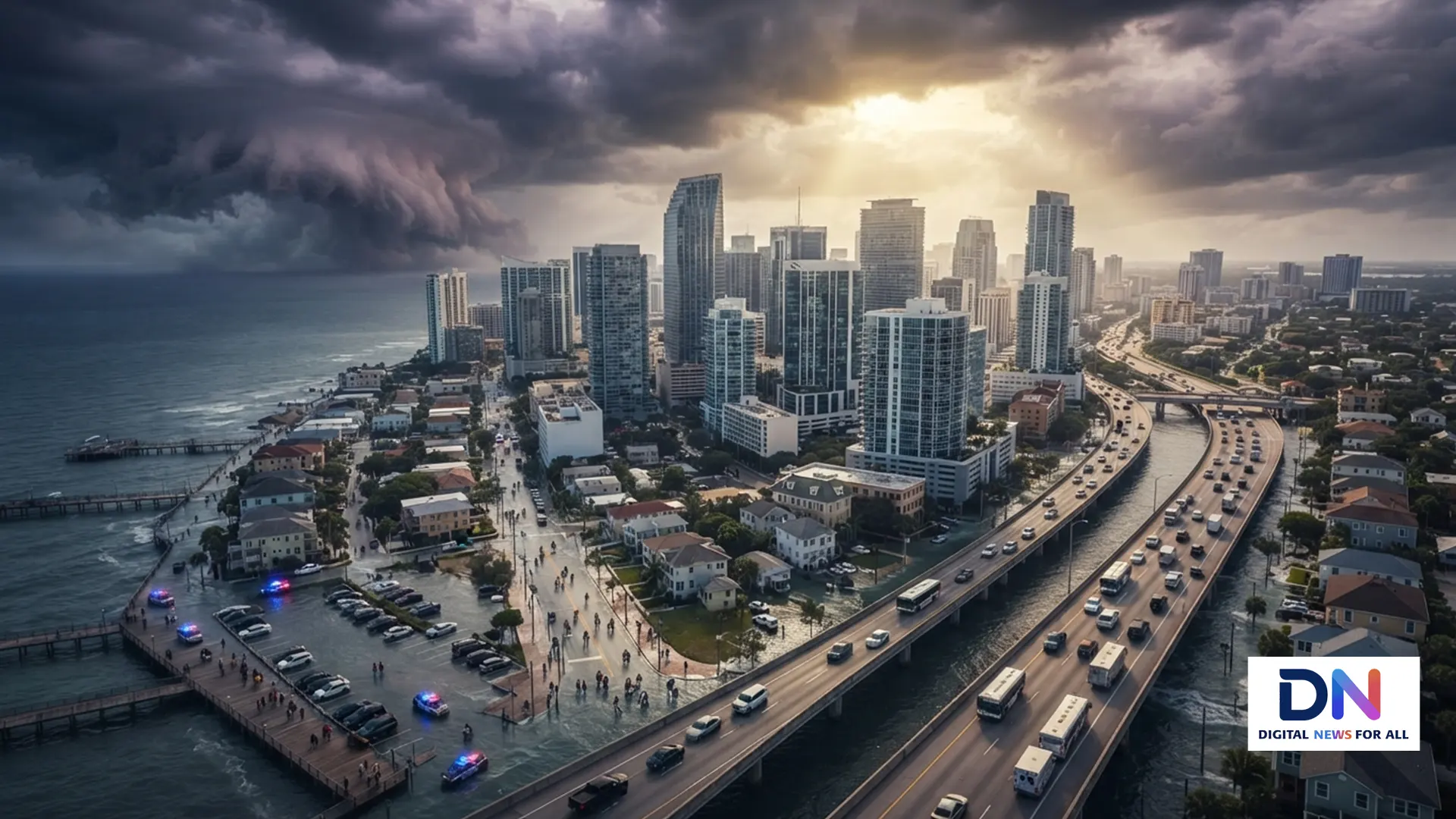
America is entering a new era of climate migration. Americans are not suddenly emptying entire coastal cities. Instead, they are increasingly making quieter decisions about where to buy, rent, rebuild and retire.
Flood risk, hurricanes, rising insurance costs, extreme heat and repeated disasters can influence those decisions. New research finds that climate-related movers often relocate relatively short distances, rather than abandoning an entire region.
Here are five major coastal cities where that tension is becoming increasingly visible.
1. Miami: The Climate Migration Contradiction
Miami may be the clearest example of why climate migration is complicated.
Miami-Dade County remained one of America’s largest population centers in 2025. Yet it recorded nearly 73,000 more domestic departures than arrivals, according to University of Florida researchers analyzing Census data. International migration helped offset some of the losses, but the domestic outflow was substantial.
The pressure is not only sea-level rise. Flooding, hurricanes, extreme heat and property insurance costs increasingly influence household economics.
At the same time, Miami continues attracting wealthy residents and international migrants. That creates a strange two-speed city: desirable high-value areas can keep growing while vulnerable neighborhoods face increasing pressure.
2. New Orleans: The Most Extreme Warning
New Orleans represents the hardest version of the problem.
The city sits in a low-lying landscape protected by levees, pumps and flood-control infrastructure. Sea-level rise, land subsidence, coastal erosion and hurricane exposure create risks that cannot be solved simply by moving a few buildings.
A 2026 analysis in Nature Sustainability examined climate-driven depopulation along the Gulf Coast and argued that recent out-migration from some of the region’s most vulnerable areas deserves serious attention.
New Orleans therefore offers an uncomfortable question: when does adaptation become more expensive than relocation?
3. Tampa: The Insurance Warning
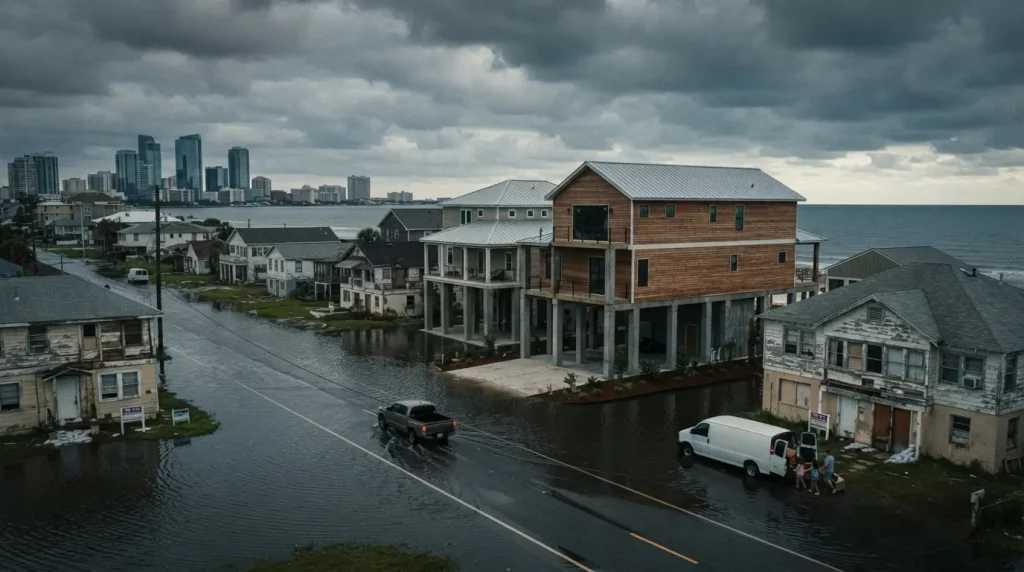
Tampa remains a growing city, but growth does not mean climate risk has disappeared.
The Tampa Bay region faces hurricane storm surge, coastal flooding and heavy rainfall. Florida’s broader migration story is also changing. Hillsborough and Pinellas counties, which benefited from strong migration earlier in the decade, recorded net domestic outmigration in 2025.
That does not prove residents are leaving because of climate change. Housing costs, insurance, employment and broader migration trends all matter.
But insurance increasingly turns climate risk into a household financial calculation.
4. Houston: Flood Risk Without Population Collapse
Houston demonstrates why calling climate migration an “exodus” can be misleading.
Houston’s population actually increased by more than 11,000 between 2024 and 2025, reaching roughly 2.4 million.
Yet the region remains highly exposed to flooding and hurricanes. After Hurricane Harvey, Houston became an important receiving community for people displaced from New Orleans and other vulnerable Gulf Coast areas.
The bigger story may therefore be internal movement within metropolitan regions. Residents can leave a flood-prone neighborhood without leaving Houston altogether.
5. Charleston: The Coastal Growth Trap
Charleston is another reminder that population growth and climate vulnerability can happen simultaneously.
The city grew to about 159,000 residents by 2025, up from its 2020 Census population.
But flooding remains a major planning concern. Charleston’s government has strengthened floodplain rules and construction requirements because coastal flooding is an increasingly important risk.
The challenge is obvious: people continue moving toward attractive coastal communities even as the cost of protecting those communities rises.
The Quiet Revolution Is Happening Block by Block
The biggest misconception about climate migration is that millions of people will suddenly pack their belongings and flee coastal America.
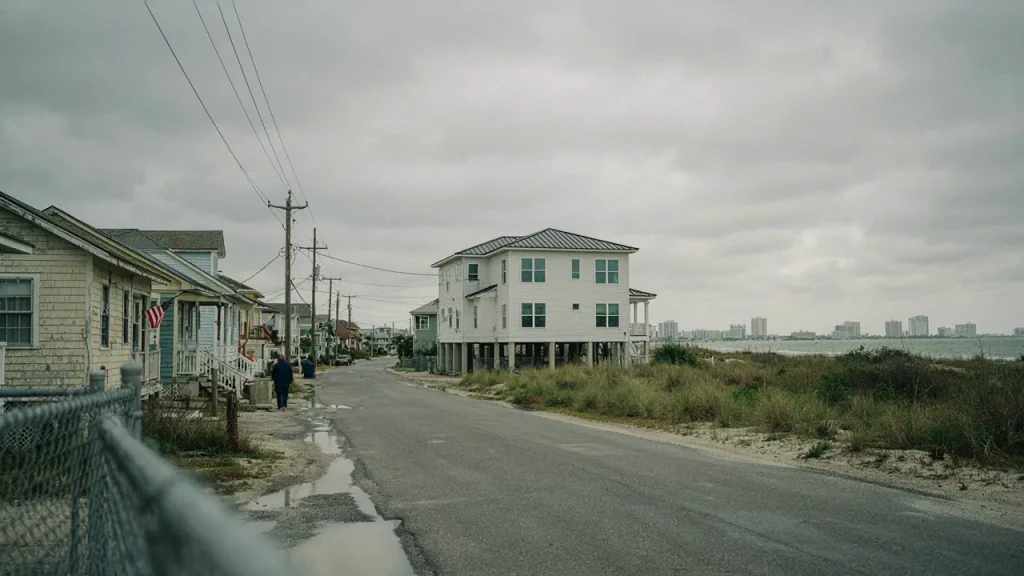
Research suggests something subtler is already happening. People often move nearby, choosing higher ground, safer neighborhoods or communities with lower perceived risk.
That means America’s climate migration map may not initially look like mass abandonment. It may look like changing home prices, insurance premiums, construction patterns and neighborhood populations.
America’s Coastal Future Is Becoming a Housing Question
The United States is not simply deciding which cities will survive climate change. It is deciding which neighborhoods remain affordable, insurable and attractive.
That distinction matters.
A coastal city can continue growing while its most vulnerable neighborhoods lose residents. Wealthier households may move toward safer elevations while lower-income residents remain exposed. Researchers have warned that this dynamic can deepen inequality and create climate-driven gentrification.
The future of American coastal cities may therefore be determined less by whether people leave and more by who can afford to stay.
#ClimateMigration #ClimateChange #Miami #NewOrleans #Tampa #Houston #Charleston #SeaLevelRise #Flooding #USNews #Housing