

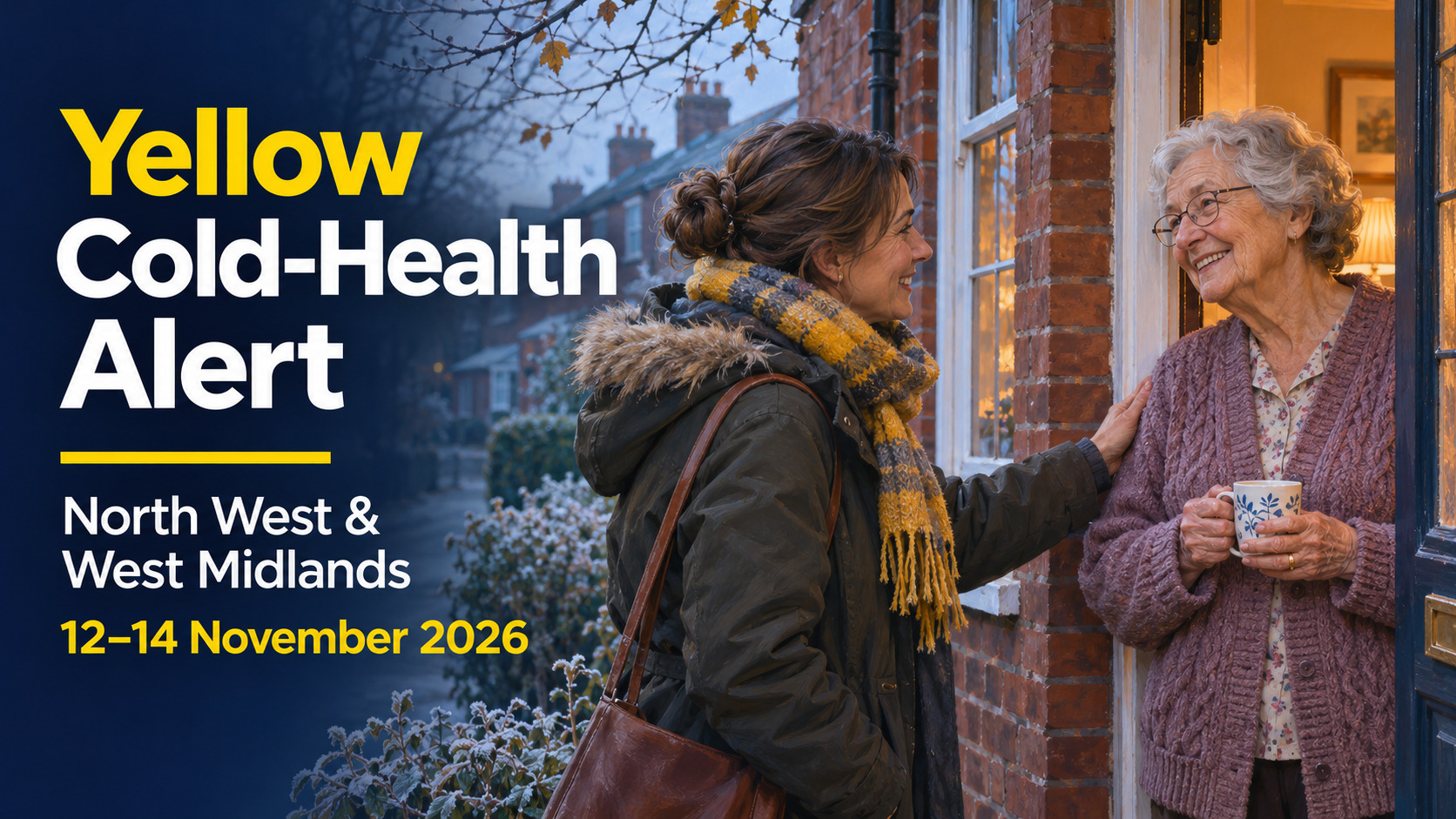
England’s North West and West Midlands are covered by a yellow cold-health alert scheduled from Thursday, November 12, to Saturday, November 14, 2026. For residents, the practical message is to check the dates, understand who may need extra support and follow official updates.
The UK Health Security Agency’s announcement identifies this as the first cold-health alert of the 2026/27 winter season.
Which areas are affected?
The official UKHSA dashboard lists the following alert:
| Region | Alert level | Starts | Ends |
|---|---|---|---|
| North West | Yellow | November 12, 9am | November 14, noon |
| West Midlands | Yellow | November 12, 9am | November 14, noon |
All times are UK local time, which is GMT in November.
The other English regions shown on the dashboard had no cold-health alert at the time of checking. Readers should revisit the official dashboard because alert coverage and timings can change.
What does a yellow cold-health alert mean?
A yellow alert signals that cold conditions could affect people who are particularly vulnerable, even when most people are unlikely to experience significant health impacts.
UKHSA highlights older adults, people with existing heart or respiratory conditions and people sleeping rough among those who may face greater risks.
For households, this makes checking on a relative or neighbour a useful response. Someone who lives alone may appreciate a call to ask whether they are warm enough and have the support they need.
Is this the same as a weather warning?
Cold-health alerts and severe weather warnings serve different purposes.
UKHSA’s system focuses on health impacts in England and helps health services, care providers and other responders prepare. The Met Office’s National Severe Weather Warning Service covers wider weather hazards across the UK.
A yellow cold-health alert therefore does not, by itself, establish that snow is forecast, roads will close or schools will shut. Check separate weather warnings and local announcements for those details.
What should residents do?
UKHSA advises keeping warm, heating homes where possible, dressing appropriately and checking on people who may be vulnerable.
For more detailed advice, its Keeping warm and well guidance brings together information on staying well during colder weather, including heating and financial support.
Before travelling or making outdoor plans, check the latest local forecast as well as any relevant warnings.
Where can you check for changes?
Use the UKHSA dashboard for current cold-health alert coverage and the Met Office for weather forecasts and severe weather warnings.
The key details for this alert are the two affected English regions and the November 12–14 window. Checking those details again before making plans is more useful than relying on a headline that simply says “UK cold alert.”