


Workplace AI surveillance is creating a growing conflict between corporate efficiency and employee privacy. Companies increasingly use artificial intelligence to track computer activity, analyze communications, measure productivity and evaluate worker performance. But employees are questioning how much monitoring is acceptable, who can access their data and whether automated systems can fairly judge their work.
How AI Surveillance Is Changing the Workplace
Modern employee-monitoring software goes beyond traditional attendance tracking. Some tools record keystrokes, mouse movements, application usage, screen activity, location data and time spent on individual tasks. AI systems can analyze these records to generate productivity scores, identify patterns and flag workers for management review.
For employers, these tools promise operational efficiency and faster performance analysis. However, continuous monitoring can blur the boundary between legitimate business oversight and intrusive surveillance.
Meta Employees Push Back Against Monitoring
A notable example emerged at Meta in June 2026. The company paused an internal program called the Model Capability Initiative after more than 1,600 employees signed a petition opposing the collection of computer-use data for AI training.
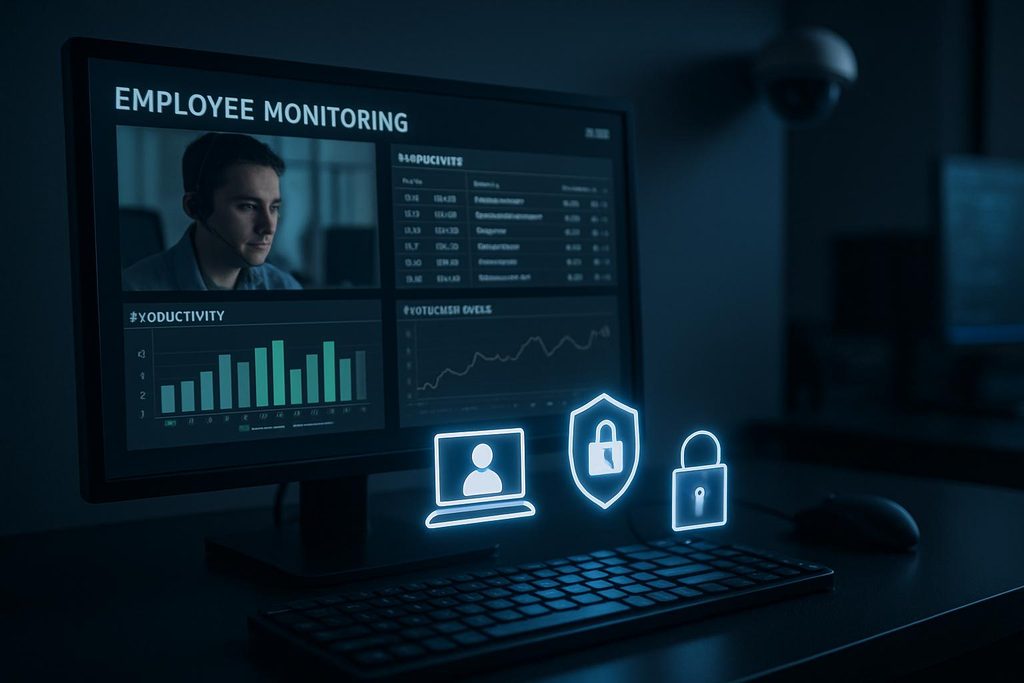
The proposed system tracked employee keystrokes, mouse clicks and screen content. Workers raised concerns about privacy, consent and trust. Meta said it was pausing the program while investigating, adding that it had no indication that employee data had been improperly accessed.
The episode demonstrates that resistance is not limited to factory floors or call centers. Technology employees are also questioning how companies collect and reuse workplace data.
Why Employees Are Concerned
Privacy is only one concern. Employees may worry that automated systems misunderstand legitimate work patterns, overlook complex assignments or penalize activities that do not fit standardized productivity measurements.
A 2026 Columbia Law School and Northeastern University investigation examined nine workplace-monitoring platforms. It found that all nine shared identifying worker data with third parties and shared information about employees’ online activities. The findings raise questions about how monitoring data moves beyond an employer’s immediate systems.
Research published in 2026 also links AI-based job monitoring with surveillance anxiety and concerns about privacy. These findings do not prove that every monitored workplace experiences backlash, but they highlight potential risks to employee trust and workplace relationships.
What Employers and Workers Need to Consider
Responsible monitoring requires clear communication about what information is collected, why it is needed, how long it is retained and who can access it. Employers should test automated performance systems for accuracy, provide ways to challenge incorrect assessments and keep human managers involved in consequential decisions.
Workers can review company monitoring policies, ask how personal data is used and check applicable privacy and employment laws. Rules differ by jurisdiction, so employees should not assume the same protections apply everywhere.
The Future of AI at Work
AI monitoring is unlikely to disappear as companies automate more management functions. But productivity gains will be difficult to sustain if employees lose confidence in how these systems operate.
The emerging workplace debate is therefore not simply about whether companies should use AI. It is about transparency, proportionality and accountability. Businesses that explain their monitoring practices and respect employee privacy may be better positioned to build trust as workplace technology evolves.
Sources and Further Reading
- The Guardian: Meta pauses employee tracker after staff backlash
- Associated Press: How workplace surveillance is expanding
- Columbia Law School: Workplace monitoring platforms and data sharing
- Journal of the Australian Library and Information Association: Privacy challenges of AI-enabled workplace monitoring
- Humanities and Social Sciences Communications: Employee responses to AI job monitoring
- National Employment Law Project: When Bossware Manages Workers
#WorkplaceAI #EmployeePrivacy #AISurveillance #CorporateMonitoring #Bossware #FutureOfWork #ArtificialIntelligence #WorkerRights #DataPrivacy #CorporateTechnology