

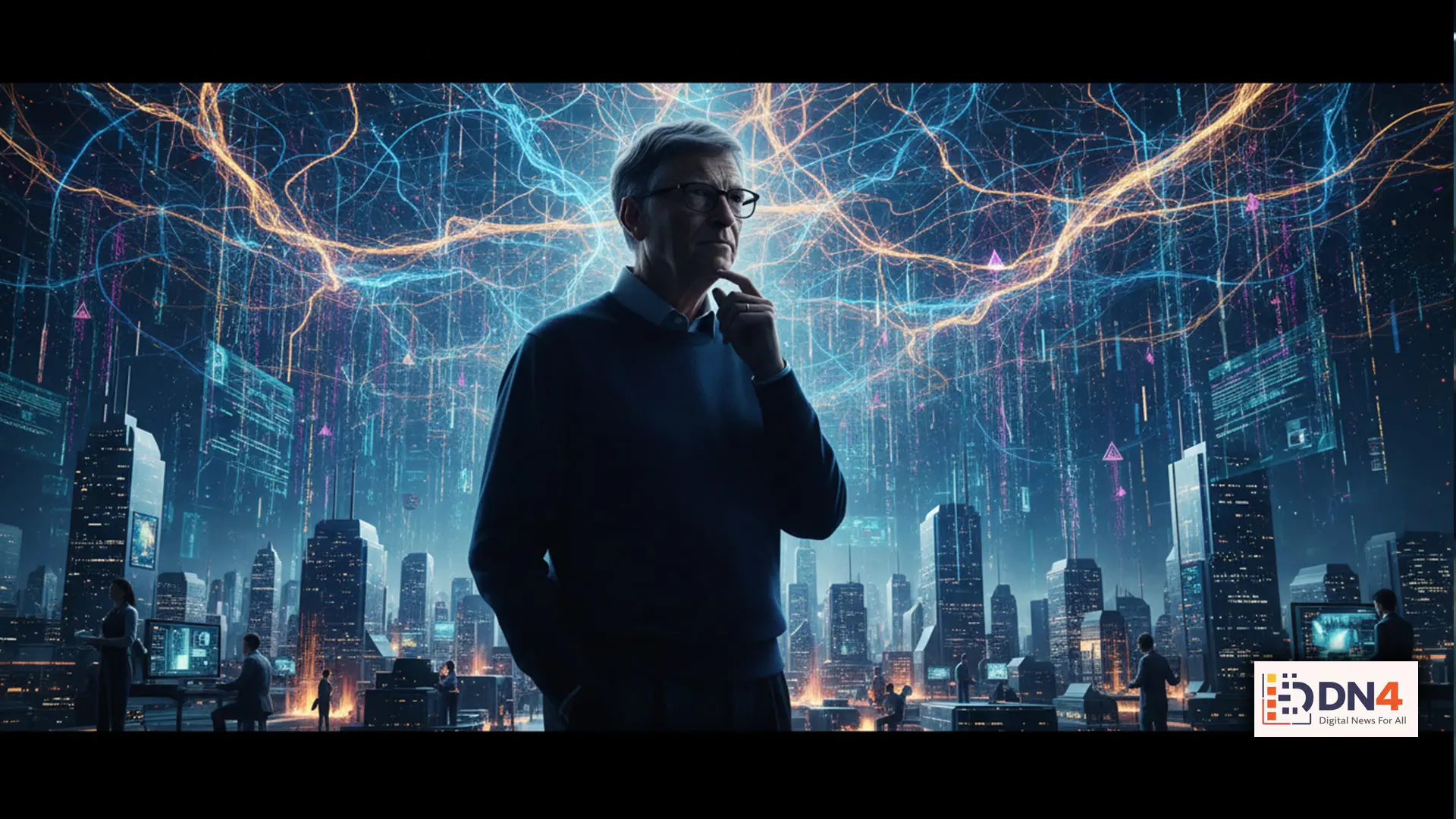
Artificial intelligence has moved from a futuristic concept to an everyday technology, powering search, productivity software, healthcare research and creative tools. But Bill Gates has repeatedly argued that the technology’s extraordinary potential comes with serious risks. His warnings are less about rejecting AI and more about understanding how quickly society must adapt to it.
The Productivity Revolution—and Its Disruption
Gates has described AI as a major technological shift comparable in importance to earlier breakthroughs in computing. In his Gates Notes analysis of the AI era, he argued that AI could transform how people work, learn, communicate and access healthcare.
The economic opportunity is substantial, but automation also raises difficult questions about employment. The International Monetary Fund has similarly warned that AI could affect a significant share of jobs globally while potentially increasing productivity and inequality.

AI Risks Go Beyond Lost Jobs
Employment disruption is only one piece of the puzzle. AI can generate convincing misinformation, amplify bias and create new cybersecurity challenges. The National Institute of Standards and Technology’s AI Risk Management Framework emphasizes the importance of identifying and managing risks throughout an AI system’s lifecycle.
Gates has also discussed the possibility that increasingly capable AI systems could eventually create challenges that are difficult for humans to control. Such scenarios remain the subject of intense debate, but they have helped move AI safety from a niche technical concern into mainstream policy discussions.
The Case for Responsible Development
The most useful interpretation of Gates’ warnings is not that AI should be stopped. Instead, his arguments point toward responsible deployment: stronger safeguards, appropriate regulation, workforce preparation and continued investment in research.
The OECD’s AI policy work similarly focuses on developing trustworthy AI while encouraging innovation. Meanwhile, the UNESCO Recommendation on the Ethics of Artificial Intelligence addresses issues including human rights, transparency and accountability.

Separating Warning From Prediction
It is important to distinguish a warning about a possible outcome from a prediction that the outcome is inevitable. AI development remains highly uncertain. Some feared consequences may prove overstated, while unexpected problems could emerge as systems become more capable and widespread.
That distinction makes Gates’ broader message particularly relevant: society should prepare before technological change becomes impossible to manage. The challenge is balancing innovation with governance, ensuring that AI’s productivity gains are accompanied by safeguards for workers, consumers and democratic institutions.
Beyond the hype, the AI debate is therefore not simply about whether machines will replace humans. It is about how humans choose to design, regulate and use increasingly powerful technology.
#BillGates #ArtificialIntelligence #AIRisks #AIWarnings #AI #TechNews #FutureOfAI #AIJobs #AISafety #ResponsibleAI #Technology #Innovation #DigitalTransformation