

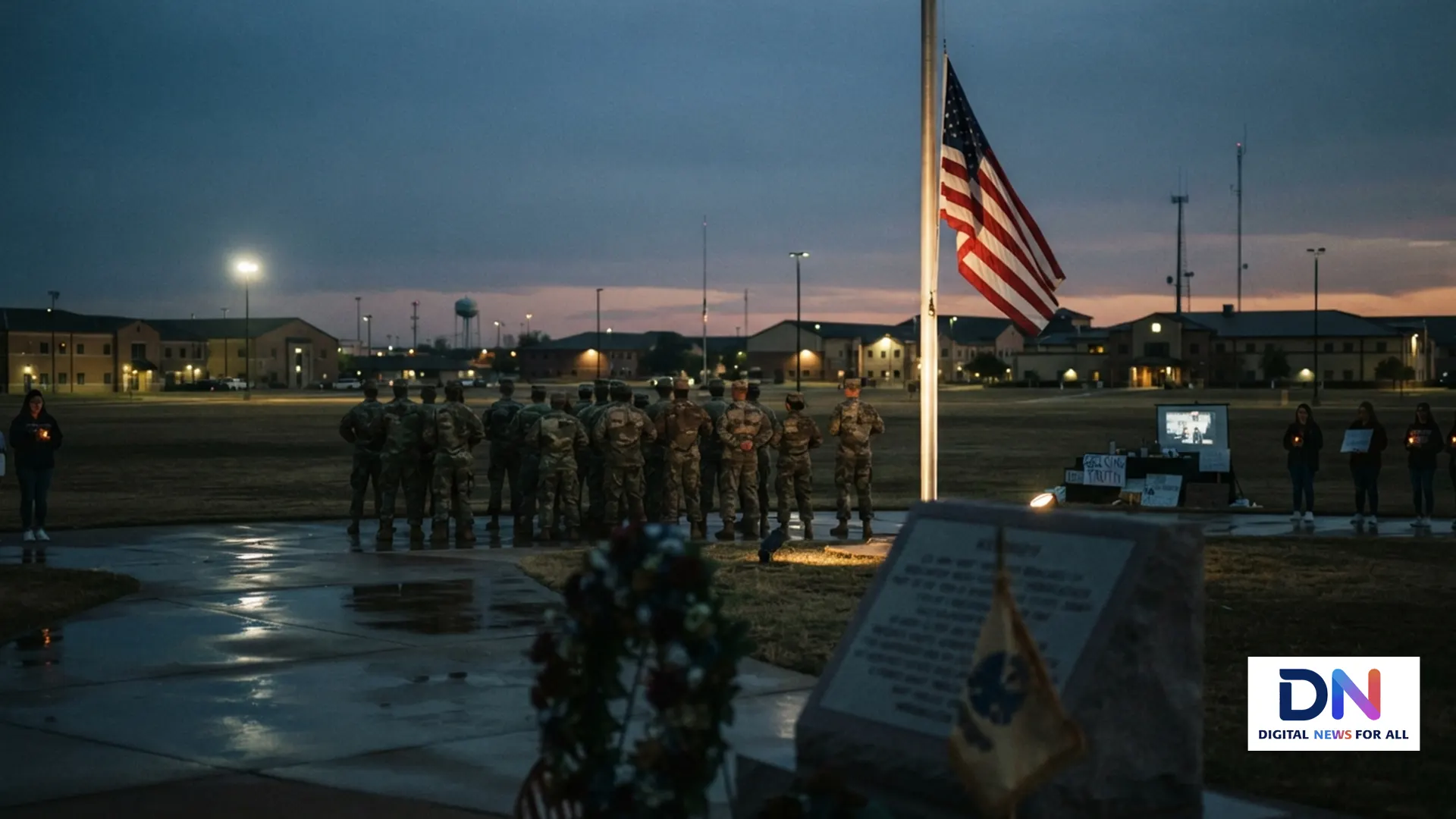
The Fort Hood firing squad decision has reopened one of America’s most difficult debates over military justice, capital punishment, and presidential power. President Donald Trump has approved the execution of former Army Maj. Nidal Malik Hasan by firing squad after Defense Secretary Pete Hegseth recommended the method.
Hasan was convicted in 2013 for the 2009 Fort Hood attack that killed 13 people and wounded 32 others. The military jury convicted him of 13 counts of premeditated murder and 32 counts of attempted premeditated murder. The U.S. Army’s historical account of the attack documents the immediate impact on the Fort Hood community.
Why the Decision Is So Unusual
The biggest reason this case has attracted national attention is its rarity. The U.S. military has not carried out an execution since 1961. If Hasan’s execution proceeds, it would represent the first military execution in more than six decades.
The firing squad is even more unusual. Military executions have historically used methods including hanging and firing squads, but executions have become extremely rare. The Death Penalty Information Center’s military death penalty resource explains why presidential approval is a central feature of the military capital punishment system.

How Military Justice Reached This Point
Hasan’s death sentence followed a military court-martial rather than a civilian criminal trial. Under Article 118 of the Uniform Code of Military Justice, premeditated murder can carry the death penalty.
Military law also gives the president a crucial role. Federal law states that a death sentence imposed by court-martial cannot be executed until it receives presidential approval. The U.S. Code’s sentencing provisions outline this requirement.
The Appeals Question
Trump’s approval does not necessarily mean Hasan will be executed immediately. His case has already moved through years of appellate litigation. In March 2025, the U.S. Supreme Court denied Hasan’s petition for review.
However, capital cases can involve additional federal court proceedings. A recent Army Lawyer analysis of modern military death sentences emphasizes that presidential approval is an important step, but it does not automatically eliminate every possible legal proceeding.

Why the Firing Squad Is Controversial
Supporters can argue that Hasan received a lawful military conviction and death sentence after one of the deadliest attacks against U.S. service members on an American military installation. Critics, however, question whether firing squads represent an appropriate method of state-sanctioned execution.
The controversy also arrives as several jurisdictions reconsider execution methods because of difficulties surrounding lethal injection. The Death Penalty Information Center’s historical analysis shows just how uncommon military executions have become.
What Happens Next?
The Secretary of the Army is expected to determine the time and place of the execution. Until then, Hasan remains on military death row. The case is likely to remain a major test of how the United States balances military authority, presidential power, appellate rights, and the finality of capital punishment.
For families affected by the Fort Hood attack, the decision represents another major chapter in a case that has remained unresolved for nearly two decades. For the wider country, the Fort Hood firing squad controversy raises a broader question: how should America’s military exercise the ultimate punishment in the modern era?
#FortHood #NidalHasan #FiringSquad #MilitaryJustice #DeathPenalty #USMilitary #CapitalPunishment #BreakingNews #USNews