

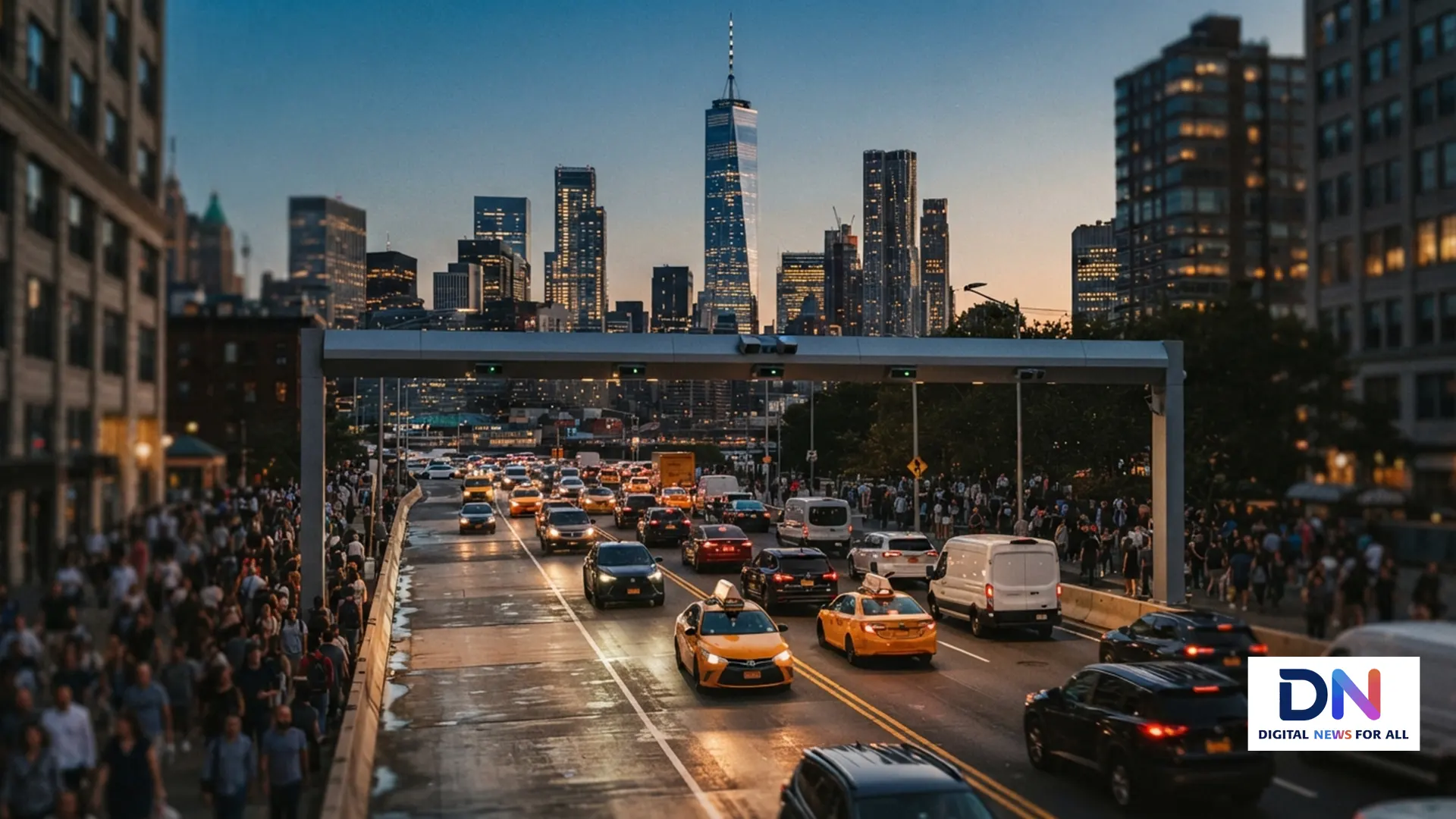
When NYC congestion pricing launched in January 2025, critics warned that drivers would simply pay more while traffic problems moved elsewhere. More than a year later, the evidence is more complicated.
The toll has clearly changed driving behavior. But the biggest surprise may be that traffic speeds improved beyond Manhattan’s toll zone, challenging the idea that congestion was simply pushed onto suburban roads.
Traffic Actually Fell
New York’s congestion relief zone charges most passenger vehicles entering Manhattan south of 60th Street during applicable hours. The policy aims to reduce gridlock while generating money for public transportation.
According to the New York Metropolitan Transportation Council, vehicle crossings to and from Manhattan’s congestion zone fell across most major river crossings during the fourth quarter of 2025 compared with the same period in 2024.
The Yale Tobin Center found that speeds inside the cordon increased by about 11%. More importantly, speeds also improved on many roads outside the priced area.
Did Suburbs Pay the Price?
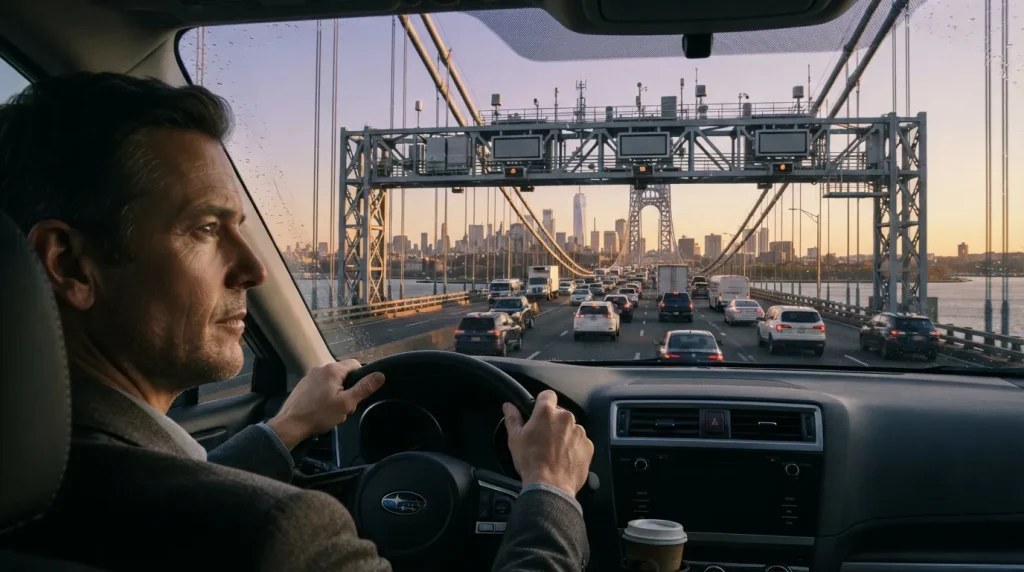
This is where the story gets interesting. Suburban commuters often have fewer alternatives to driving. A driver entering Manhattan can face the congestion charge on top of existing bridge, tunnel, parking and fuel costs.
Yet Yale researchers found that many unpriced trips also became faster. The average time saving was small, but those trips vastly outnumbered trips entering the priced zone.
That does not mean every commuter benefited equally. Drivers who must enter Manhattan by car still face a direct financial cost. For households with inflexible schedules or limited transit options, that burden can be significant.
What About Pollution?
Early fears centered on traffic diversion and pollution in neighborhoods outside the zone. However, the New York City Health Department found that neighborhood air quality remained stable or improved during the program’s first year.
A separate Columbia Climate School analysis released in October 2026 found fine particulate pollution inside the congestion zone was about 13% lower than expected after accounting for broader trends and weather.
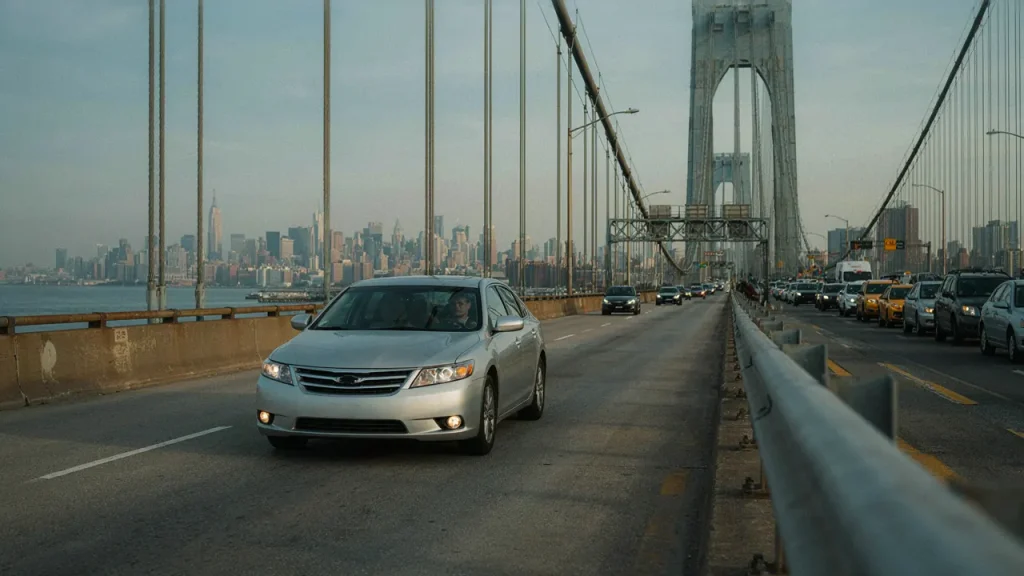
The $15 Billion Question
The other major purpose of the toll is transit funding. The Metropolitan Transportation Authority says congestion-pricing revenue supports $15 billion in capital funding, including subway signals, accessibility upgrades, railcars and the Second Avenue Subway.
That makes the program more than a traffic fee. It is also a long-term transportation investment strategy.
The fallout, therefore, is not simply “Manhattan wins and the suburbs lose.” Traffic has fallen, speeds have improved across parts of the network and transit has gained a major funding source. But the financial burden remains concentrated on drivers who need to enter the zone.
New York’s experiment has not eliminated the transportation trade-off. It has made that trade-off impossible to ignore.
#NYC #CongestionPricing #NewYorkCity #Manhattan #Traffic #MTA #SuburbanCommuters #PublicTransit #Transportation #NYCNews #UrbanPolicy