

The debate over presidential military authority has once again returned to the spotlight as members of the U.S. House of Representatives push a new War Powers Resolution. The measure seeks to limit or end certain U.S. military operations unless Congress explicitly authorizes them, reviving a decades-old constitutional debate over who has the authority to commit American forces to armed conflict.
The War Powers Resolution, enacted in 1973 following the Vietnam War, was designed to ensure that Congress retains its constitutional power to declare war while allowing the president to respond quickly to emergencies. Under the law, presidents must notify Congress within 48 hours of deploying U.S. forces into hostilities and generally cannot continue military action beyond 60 days without congressional approval. The full text is available through the Constitution Annotated.
Why Lawmakers Are Introducing the Resolution
Supporters argue that recent military actions have expanded executive authority beyond what the Constitution intended. By introducing the resolution, House members aim to require greater congressional oversight before prolonged military engagements continue. According to Congress.gov, War Powers resolutions are privileged measures that can receive expedited consideration in Congress.
Backers believe that requiring congressional approval promotes transparency, accountability, and public debate before committing U.S. troops to potentially lengthy conflicts. They also contend that elected representatives should have a direct voice in decisions that involve military risks and significant taxpayer funding.
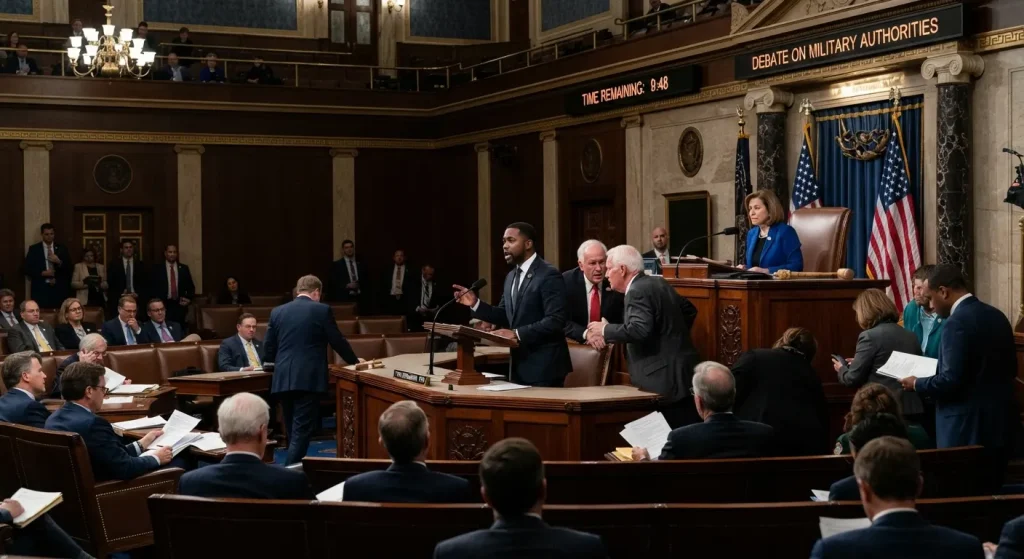
Constitutional Debate Continues
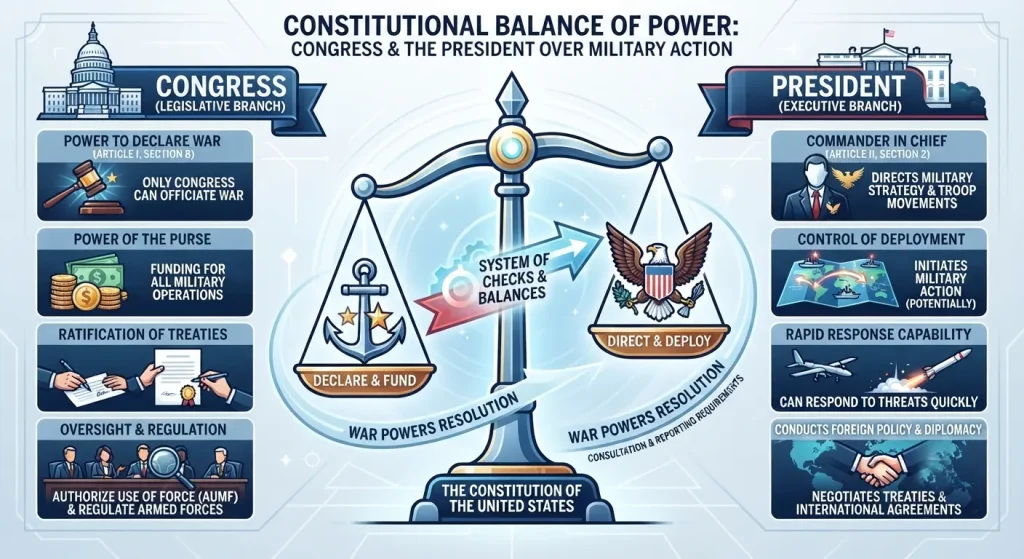
The U.S. Constitution grants Congress the power to declare war while designating the president as Commander in Chief. Over the decades, both Democratic and Republican administrations have interpreted these powers differently, leading to recurring legal and political disputes. The U.S. House of Representatives and the U.S. Senate continue to debate where that constitutional balance should lie.
Critics of the resolution argue that presidents require operational flexibility to respond immediately to emerging threats, particularly when American personnel or allies face imminent danger. Supporters counter that emergency responses should not become open-ended military commitments without legislative approval.
What Happens Next?
If approved by the House, the resolution would place additional political pressure on the administration to justify ongoing military operations. Whether it ultimately becomes law depends on congressional approval and potential presidential action. Historical analysis from the Congressional Research Service shows that War Powers debates have shaped U.S. foreign policy for decades.
The outcome could influence future discussions about executive authority, congressional oversight, and America’s military role abroad. Official historical records maintained by the U.S. National Archives and current policy updates from the White House provide additional context for how these constitutional powers have evolved.
#WarPowersResolution #Congress #USPolitics #ForeignPolicy #Military #BreakingNews #Constitution