


For a generation raised with smartphones, social media, and on-demand entertainment, Gen Z’s growing interest in physical media may seem surprising. Yet vinyl records, printed books, board games, and other offline activities are finding new audiences among younger consumers. The trend isn’t necessarily about abandoning technology. Instead, it reflects a growing desire for Gen Z offline entertainment that feels more intentional and tangible.
Streaming Has Become Background Noise
Streaming gives consumers almost unlimited choices, but that abundance can also create decision fatigue. Multiple subscriptions, constantly changing catalogs, advertisements, recommendations, and short-form content can make entertainment feel less satisfying.
Physical entertainment offers a different experience. Choosing a record, opening a book, or setting up a board game creates a deliberate beginning and end rather than an endless digital feed.
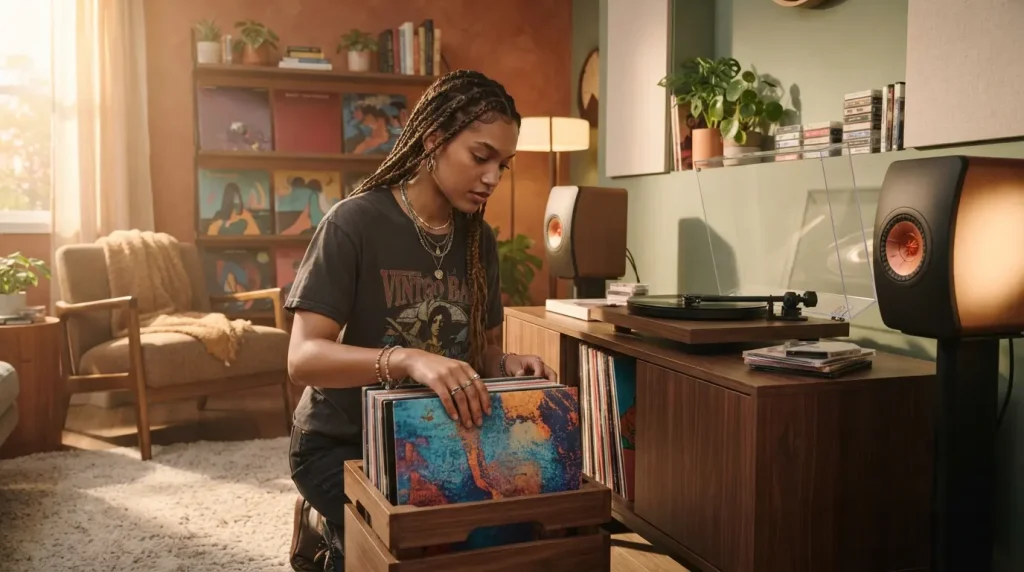
Vinyl Turns Music Into an Experience
Vinyl has become one of the clearest examples of the physical-media revival. According to the Recording Industry Association of America, vinyl revenue has continued to play an important role in the U.S. recorded-music market.
For younger listeners, buying a record can be about more than sound quality. Album artwork, collectible editions, physical ownership, and the ritual of playing a record provide an experience that a streaming subscription cannot completely reproduce.
Books Offer an Escape From Screens
Printed books provide another form of offline entertainment. Reading a physical book removes notifications and many of the distractions associated with connected devices. The American Library Association also highlights the continuing cultural importance of books and reading across communities.
For some Gen Z consumers, physical books can also become part of their personal identity. Shelves, annotated pages, special editions, and book recommendations shared through social platforms turn reading into both a private activity and a social experience.
Board Games Make Socializing More Intentional
Board games are benefiting from the same desire for tactile, face-to-face experiences. Instead of everyone looking at separate screens, players sit around one table and interact directly.
The Toy Association has tracked the continuing importance of games and toys within the broader U.S. entertainment and consumer market. Modern board games also extend far beyond traditional classics, with strategy, cooperative, party, and role-playing formats attracting different audiences.

It’s Not Really Anti-Digital
The resurgence of physical entertainment doesn’t mean Gen Z is rejecting streaming or smartphones. Digital platforms often help drive the discovery of vinyl records, books, games, and other physical products in the first place.
Instead, the trend represents a shift toward intentional consumption. After spending much of their lives surrounded by digital content, younger consumers may increasingly value entertainment they can physically own, share, display, and experience with other people.
The Bigger Consumer Trend
Gen Z’s interest in physical entertainment reflects a broader consumer shift: digital convenience is valuable, but convenience isn’t everything. When entertainment becomes abundant and disposable, scarcity, ownership, nostalgia, and real-world interaction can become valuable again.
That could give vinyl stores, independent bookstores, board-game retailers, and other physical entertainment businesses new opportunities. For Gen Z, the future of entertainment may not be entirely digital—it could be a combination of streaming convenience and physical experiences that feel more personal.
#GenZ #GenZTrends #Vinyl #VinylRecords #Books #BookTok #BoardGames #Streaming #OfflineEntertainment #DigitalDetox #Nostalgia #ConsumerTrends #EntertainmentTrends