

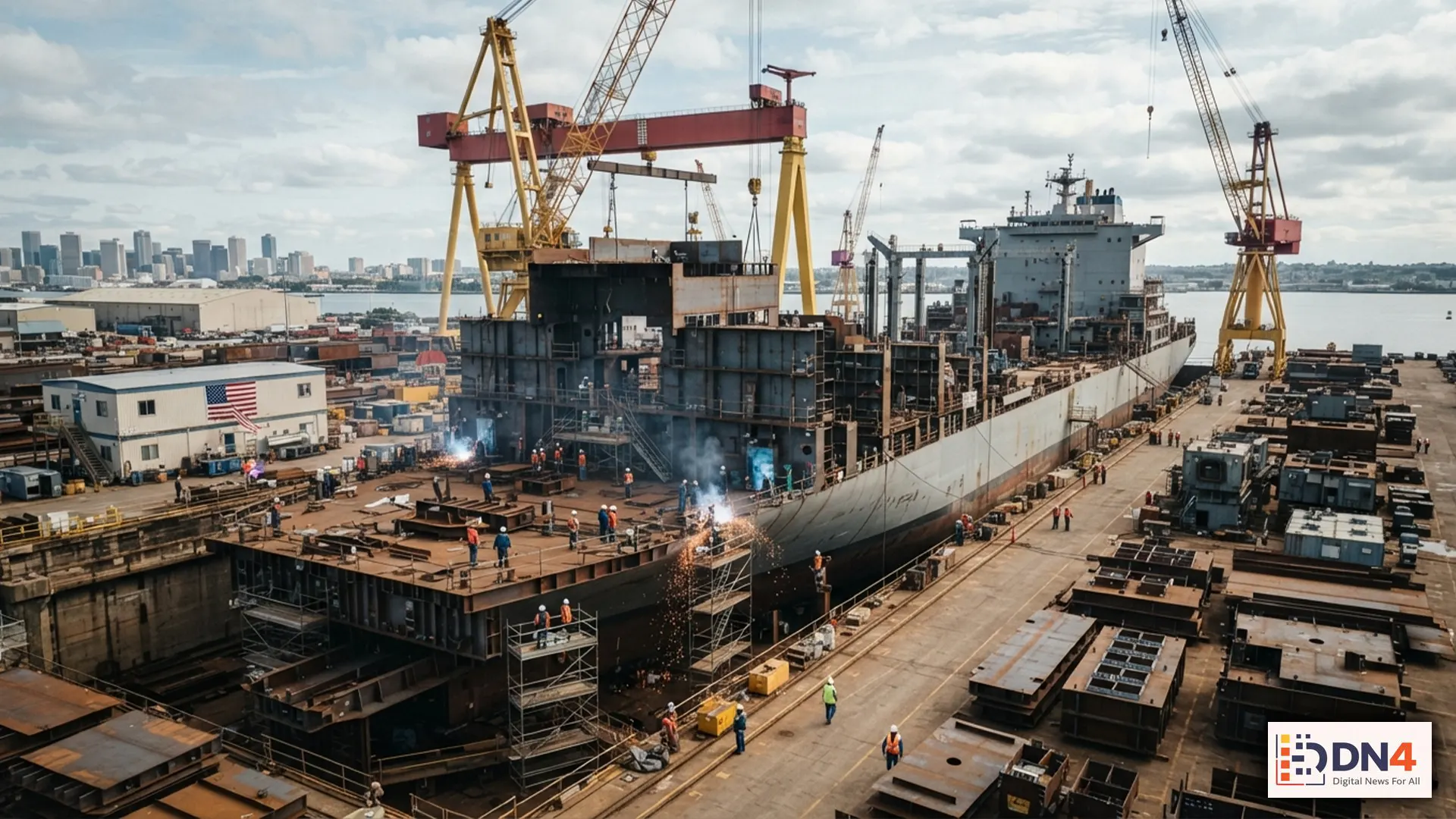
America’s shipbuilding industrial base is at the center of a renewed effort to strengthen domestic manufacturing, reduce supply-chain vulnerabilities and expand the country’s maritime capacity. The push combines federal investment, shipyard modernization, workforce development and efforts to secure critical suppliers.
The urgency is substantial. The U.S. Government Accountability Office found that the Navy’s private shipbuilding industrial base has struggled with infrastructure and workforce constraints, while ships have frequently arrived later and cost more than planned.
Why Shipbuilding Has Become a Supply-Chain Issue
Shipbuilding is not simply about assembling a vessel. It depends on a large network of suppliers, specialized manufacturers, skilled tradespeople, dry docks, ports and engineering capabilities.
America’s 2026 Maritime Action Plan says the United States builds less than one percent of commercial ships globally and identifies a limited number of large U.S. shipyards, concentrated suppliers and skilled-worker shortages as major constraints.
That creates a resilience problem. If a critical component has only one qualified supplier, a disruption can affect an entire production schedule. Expanding the supplier base and creating alternative sources could therefore be as important as adding physical shipyard capacity.
The Federal Push to Rebuild Capacity
President Donald Trump signed Executive Order 14269, “Restoring America’s Maritime Dominance,” in April 2025. The order called for a Maritime Action Plan and directed federal agencies to examine investments in commercial and defense shipbuilding, component supply chains, ship repair, ports and the maritime workforce.
The resulting strategy goes beyond simply ordering more ships. The administration’s approach calls for predictable demand, investment incentives, modernized procurement and expanded workforce training.
The U.S. Department of Transportation has identified domestic shipbuilding incentives, infrastructure improvements, maritime technology and workforce development as important parts of the effort.
Workforce May Be the Hardest Bottleneck
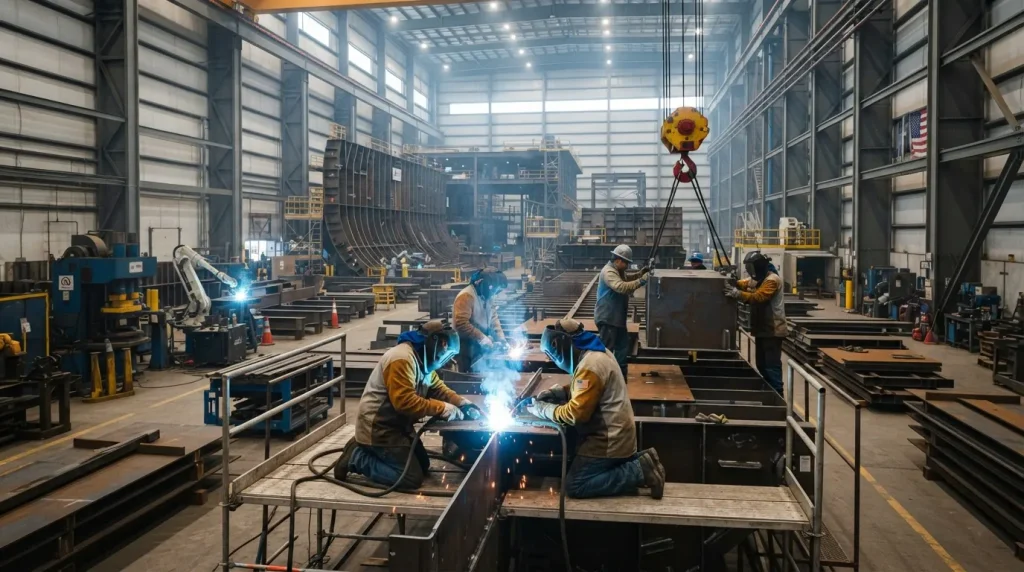
New facilities cannot solve the problem without people capable of designing, welding, assembling, repairing and maintaining complex vessels.
The GAO’s review of Maritime Administration workforce challenges highlights broader concerns about maritime staffing and the need for better workforce planning. The shipbuilding strategy therefore depends heavily on apprenticeships, technical education and long-term recruitment.
MARAD has already used its Small Shipyard Grant Program to support infrastructure modernization, advanced training and apprenticeship programs. In 2025, the agency announced $8.75 million in grants for 17 recipients across 12 states. Transportation Department grant information details the program.
The Investment Challenge
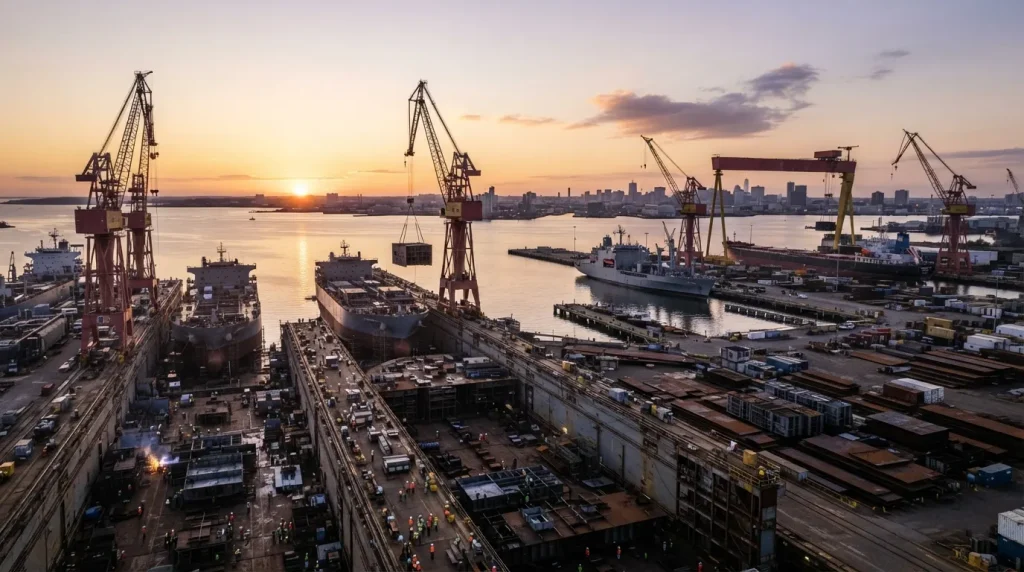
Federal spending can provide an important catalyst, but rebuilding an industrial base requires sustained demand. Shipyards and suppliers are more likely to invest in equipment and workers when they can anticipate orders several years into the future.
GAO reported that the Department of Defense spent more than $5.8 billion supporting the shipbuilding industrial base from fiscal years 2014 through 2023 and planned another $12.6 billion through 2028. Yet the agency also warned that the Navy lacked a comprehensive strategy for managing these investments effectively.
Can the Strategy Deliver?
The opportunity is significant, but rebuilding America’s shipbuilding capacity will not happen quickly. GAO’s 2026 assessment says Navy and Coast Guard shipbuilding programs have continued to experience cost growth and schedule delays, while infrastructure and workforce challenges could become more difficult as government demand rises.
The central test will therefore be coordination. Government agencies, shipyards, suppliers, educators and private investors will need a sufficiently stable pipeline of work to justify long-term capacity expansion.
Rebuilding the shipbuilding industrial base is increasingly being treated as both a national-security priority and a supply-chain resilience project. More shipyards matter, but so do reliable suppliers, skilled workers, modern infrastructure and predictable demand. The success of the effort will ultimately depend on whether those pieces can be developed together rather than through isolated investments.
#USShipbuilding #Shipbuilding #SupplyChain #MaritimeIndustry #IndustrialBase #NationalSecurity #Manufacturing #DefenseIndustry #EconomicSecurity